
Trappist beer
Beers brewed under the supervision of Trappist monks in certain monasteries, known for traditional styles (Dubbel, Tripel), charitable aims, and a protected authenticity label.
Overview
Trappist beer refers to beers produced within, or under the control of, a Trappist monastery by members of the monastic community. These beers are usually crafted using traditional methods and recipes developed over centuries. While many famous Trappist breweries are located in Belgium, the Trappist tradition also includes houses in other countries such as the Netherlands and Austria. Trappist brewing combines practical self-sufficiency with an emphasis on quality, modesty and support for the monastery’s works.
Image gallery
8 Images


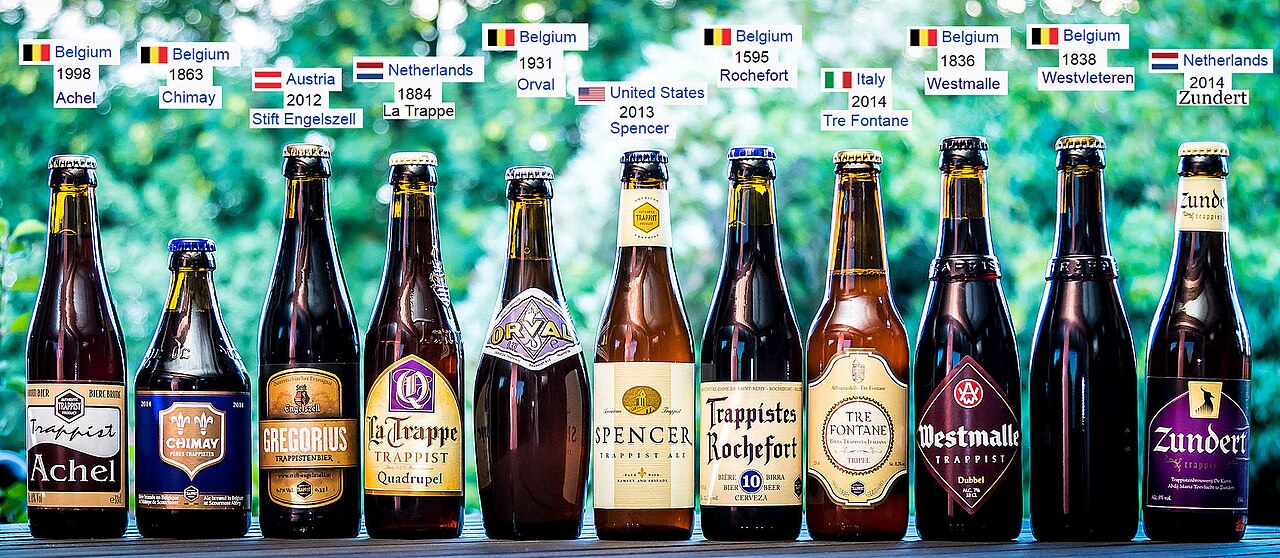


Characteristics and styles
Trappist beers are not defined by a single flavor profile but by who brews them and how the proceeds are used. Common beer styles associated with Trappist breweries include:
- Dubbel — darker, malty, often caramel-like.
- Tripel — lighter in color, higher in alcohol, with fruity and spicy yeast notes.
- Quadrupel — strong, full-bodied ales with rich, complex flavors.
Typical features include bottle-conditioning, careful fermentation with distinctive yeast strains, and a focus on balanced malt and yeast character rather than strong hop bitterness. Labels and bottle marks often emphasize the monastery name, rather than commercial branding.
History and development
Monastic brewing in Europe dates back to the Middle Ages, when monasteries kept brewhouses to supply nourishment for monks and pilgrims. The Trappist branch of the Cistercian order adopted its own brewing practices as communities spread across the continent; monastery brewhouses were a common presence in medieval religious life (see historical context). Over time many abbeys refined recipes now linked to the Trappist identity. Several communities suffered closures or destruction during upheavals such as the French Revolution and later conflicts including the World Wars, but brewing traditions were revived at surviving houses and at new foundations.
Production, purpose and uses
Historically, beer provided nutrition and calories; today Trappist breweries generally brew to support the monastery and charitable activities. Income from sales helps maintain the monastery, support social projects, and fund local works. Brewing is often carried out on-site in a small brewhouse, or production may be overseen by the monks even when some processing is outsourced. The emphasis remains on modest, sustainable operation rather than profit maximization.
Regulation and notable facts
To protect authenticity, an official mark or label is used to indicate a product genuinely produced by a Trappist community. That designation requires that the beer be brewed within the monastery or under the direct authority of the community, that the monks supervise production, and that revenues are used for the monastery and charity. Trappist beers are prized by enthusiasts for their heritage, consistent quality and the variety of traditional styles they preserve. Many individual Trappist breweries have become internationally recognized for specific flagship beers while maintaining their monastic character.
Practical examples and further reading
Examples of well-known Trappist-style beers include representations of the Dubbel, Tripel and Quadrupel families; individual monasteries often have signature bottles enjoyed worldwide. For summaries of monastic brewing history and listings of monasteries and their products, consult specialized sources and brewery guides (Belgium listings, Dutch examples, Austrian houses). For broader historical context on monastic breweries in Europe see materials on medieval monastic life and industry (monastic brewhouses) and the effects of major historical events such as the French Revolution and the World Wars on abbeys and their economic activities.
Questions and answers
Q: Who brews Trappist beer?
A: Trappist beer is brewed by Trappist monks.
Q: How many Trappist monasteries are there?
A: There are eight Trappist monasteries--six in Belgium, one in the Netherlands, and one in Austria.
Q: When did the monastery of La Trappe in Soligny have its own brewery?
A: The monastery of La Trappe in Soligny had its own brewery in 1685.
Q: Why did the Trappists first brew beer?
A: The Trappists, like many other religious people, first brewed beer to feed the community.
Q: What is the purpose of Trappist breweries today?
A: Now, Trappist breweries also brew beer to pay for their works and for good causes.
Q: Were many Trappist breweries destroyed throughout history?
A: Yes, many of the Trappist monasteries and breweries were destroyed during the French Revolution and the World Wars.
Q: How long have monastery brewhouses been around in Europe?
A: Monastery brewhouses, from different religious orders, have been across Europe since the Middle Ages.
Related articles
Author
AlegsaOnline.com Trappist beer Leandro Alegsa
URL: https://en.alegsaonline.com/art/101221
Sources
- tompgalvin.com : "Tomp P Galvin on Orval"