
Tincture of iodine
An alcohol-based antiseptic solution of elemental iodine and iodide used as a topical disinfectant and laboratory reagent; formulation, chemistry, uses, and safety considerations.
Tincture of iodine is a clear, brownish antiseptic solution composed mainly of elemental iodine, an iodide salt and ethanol in water. It has been used for generations as a topical disinfectant for minor cuts, abrasions and scrapes, and as a general-purpose antiseptic in field and home settings. Because it contains free iodine and alcohol, tincture of iodine is intended for external use only and stains skin and fabrics.
Image gallery
2 Images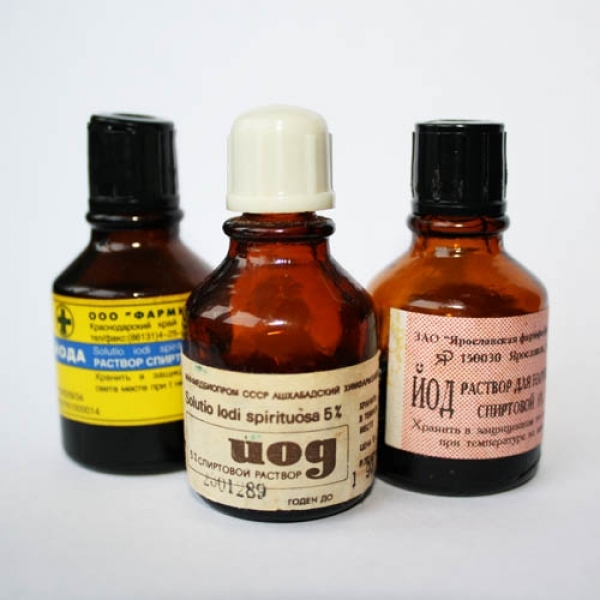

Composition and chemical basis
Elemental iodine is poorly soluble in water by itself. In tinctures, potassium iodide supplies iodide ions that react with iodine to form soluble polyiodide species (for example I3−), and ethanol further increases iodine's solubility. Formulations vary by manufacturer and pharmacopeial standard. One common pharmacopeial example contains roughly 6.8–7.5 grams of iodine and 4.7–5.5 grams of potassium iodide per 100 mL, together with about 50 mL of ethanol; the remainder is water. These ingredients together produce a solution that releases molecular iodine at the surface where it acts as a broad‑spectrum antimicrobial.
Common uses and examples
- Topical antiseptic: applied to minor wounds, abrasions, and superficial burns to reduce bacterial contamination.
- Preliminary skin preparation: historically used before minor surgical procedures or injections, though many settings now prefer povidone‑iodine or chlorhexidine.
- Water disinfection: in emergency or expedition settings a small number of drops have been used to disinfect drinking water, but this is not an ideal or primary method and is not suitable for long‑term consumption.
- Laboratory reagent: used in schools and labs as a starch indicator (it turns dark blue/black in presence of starch) and as a general iodine reagent in simple chemical demonstrations.
For practical guidance on antiseptic choice and application, refer to clinical or public health resources such as antiseptic guidelines.
Variants and distinctions
Lugol's solution (often called Lugol's iodine) is a related preparation that contains iodine and potassium iodide dissolved in water without alcohol; it is commonly used for laboratory and medical purposes where an alcohol‑free preparation is preferred. Other iodine products include povidone‑iodine, a complexed form that releases iodine more slowly and is less staining and less irritating to skin.
For chemical background on how iodide increases iodine solubility, see general references on halogen chemistry at chemical solubility and on iodide reagents at reagent summaries.
Safety, precautions and limitations
Tincture of iodine is for external use only. It stains and can cause skin irritation, contact dermatitis, or allergic reactions in susceptible people. Significant absorption of iodine through large wounds or prolonged use can affect thyroid function, so caution is advised in people with thyroid disease, pregnant or breastfeeding individuals, and infants. The ethanol content makes tincture flammable and unsuitable for use on or near open flames. Ingesting tincture of iodine can be toxic and should be avoided; medical advice should be sought in cases of accidental ingestion or extensive exposure.
When selecting an antiseptic or using iodine for emergency water treatment, consult reliable guidance such as government or medical sources: safety and usage advice.
Overall, tincture of iodine remains a simple, effective topical antimicrobial with well‑understood chemistry and limitations. Modern practice often favors less staining, better‑tolerated iodine formulations for routine clinical use, while tinctures continue to be useful in specific circumstances and educational settings.
Related articles
Author
AlegsaOnline.com Tincture of iodine Leandro Alegsa
URL: https://en.alegsaonline.com/art/100002