
The Twelve Days of Christmas (song)
An English cumulative Christmas carol first printed c.1780, known for its growing list of symbolic gifts, varied musical settings, disputed origin stories, and many modern recordings and parodies.
Overview
"The Twelve Days of Christmas" is a cumulative English carol traditionally associated with the festive period between Christmas Day and Epiphany, often called the Twelve Days. The song lists a sequence of increasingly elaborate presents given on each of twelve mornings, with each verse repeating all earlier gifts. Its first known printed appearance dates to around 1780 in England, and since then it has become a staple of holiday repertoires and popular culture.
Image gallery
10 Images


Structure and lyrics
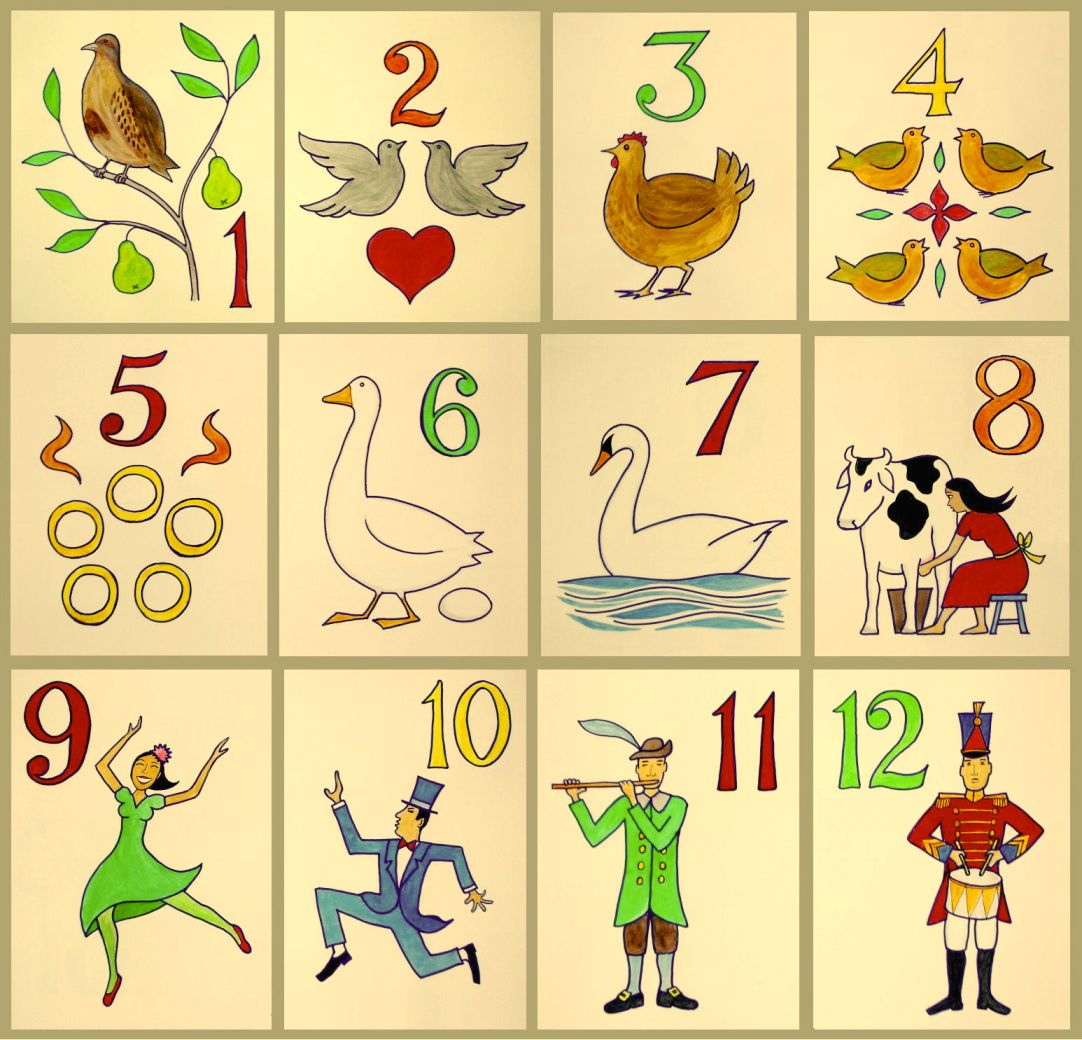
The song is built on a cumulative form: each verse adds one new gift and then repeats the full list from the previous verses, which makes the lyrics progressively longer. The modern standard list of gifts runs as follows:
- 1. A partridge in a pear tree
- 2. Two turtle doves
- 3. Three French hens
- 4. Four calling birds
- 5. Five gold rings
- 6. Six geese a-laying
- 7. Seven swans a-swimming
- 8. Eight maids a-milking
- 9. Nine ladies dancing
- 10. Ten lords a-leaping
- 11. Eleven pipers piping
- 12. Twelve drummers drumming
The repetitive pattern invites participation and memory, which has helped the carol persist in schools, gatherings, and recordings. The arithmetic curiosity often noted is that the total number of gifts given over the twelve days equals 364, one short of a full year.
Origins and contested symbolism
Scholars consider the song to be of folk and possibly educational origin rather than a single authored piece. Some modern accounts assert a hidden catechism taught by persecuted Catholics during Elizabethan times, with each gift symbolizing a religious truth. This claim lacks reliable historical documentation and is regarded by many historians as a later legend rather than established fact. Variants in older printings show different words—early versions used "colly" (black) birds rather than "calling" birds—illustrating how lyrics evolved over time. For discussion of variants and interpretations see gift symbolism and the history of the Twelve Days.
Musical settings and recordings
The melody associated with the carol today developed through folk practice and later arrangements. A widely heard musical setting was popularized in the early 20th century and helped establish the familiar tune and the emphatic "five gold rings" phrase. The song has been recorded and adapted by many artists across genres; notable versions and parodies appear in both traditional choral arrangements and contemporary popular recordings. Examples of artists and groups who have engaged the song include mainstream singers and novelty performers, and it frequently appears on holiday albums and in television specials. For recorded versions and interpretations see recordings, arrangements, and selected covers.
Cultural impact and notable facts
Beyond music, the song has inspired parodies, mathematical puzzles, merchandising, and adaptations for charity drives or community events. Different regions and performers sometimes alter gifts for humor or local color—"calling birds" versus older "colly birds" being a common example. Its cumulative design makes it useful for memory games in teaching contexts and for creative reinterpretation in media. For modern parodies and uses in popular culture see examples at parodies, media appearances, and popular covers.
Further reading and resources
Readers seeking more historical detail, variant texts, and multimedia examples can consult collections of folk songs, annotated lyric histories, and recordings. General reference entries and musicological treatments offer differing views on the song's origin and evolution; for additional perspectives consult folk song studies, music history, and curated compilations of Christmas music at holiday music resources.
Related articles
Author
AlegsaOnline.com The Twelve Days of Christmas (song) Leandro Alegsa
URL: https://en.alegsaonline.com/art/99015