
The Troubles (Northern Ireland conflict)
A concise overview of the Northern Ireland conflict known as the Troubles: origins, main actors, casualties, key events, the peace process and enduring legacy.
Overview
The Troubles was a prolonged period of political violence and communal tension in Northern Ireland that began in the late 1960s and is usually considered to have largely ended with the Good Friday Agreement of 1998. The conflict is sometimes described as an "irregular" or "low‑level" war and involved armed campaigns, riots, policing controversies and civil rights protests. The name in Irish is Na Trioblóidí, and the conflict has been described in some sources as a guerrilla-style struggle: Irish name, guerrilla.
Image gallery
10 Images



Causes and characteristics
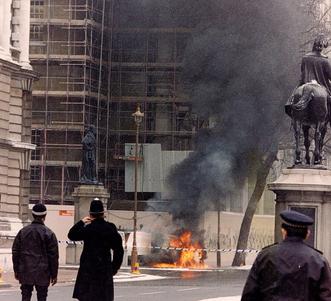
The Troubles grew out of a mix of constitutional, social and sectarian issues. A central political divide was between those who supported continued union with the United Kingdom (mainly unionists and loyalists, many of whom were Protestant) and those who sought a united Ireland (mainly nationalists and republicans, many of whom were Catholic). Longstanding grievances included discrimination in housing, employment and voting, as well as controversies over policing, parades and civil rights. Violence took the form of paramilitary campaigns, street clashes, bombings and targeted killings, and occasionally spilled across borders into the Republic of Ireland and into Great Britain and continental Europe: Northern Ireland, Republic of Ireland, mainland Europe.
Major actors and notable events
- Paramilitary organisations on the republican side (including groups identifying as the Irish Republican movement) and on the loyalist side; state security forces were also heavily involved. See references to republicans and paramilitary activity.
- Key episodes that shaped the conflict include early civil rights demonstrations, periods of intense urban violence in the early 1970s, the 1972 shootings on Bloody Sunday, hunger strikes in 1981, and numerous high-profile attacks at home and abroad.
- The political process that produced the 1998 agreement required sustained negotiation among local parties and the UK and Irish governments and created new institutions for shared governance.
Casualties and social impact
The human cost was substantial. Estimates put the number of people killed at roughly 3,500; analyses of victims note that a substantial portion were civilians, alongside members of security forces and paramilitary organisations. Casualty breakdowns commonly emphasise the large civilian toll and the long-term effects on families and communities: civilian casualties. Beyond fatalities, thousands were injured, homes and businesses were damaged, and many communities experienced lasting trauma and demographic change.
Peace process and legacy
The Good Friday Agreement established a framework for power sharing, cross-border cooperation and decommissioning of weapons, and it remains the foundation of the political settlement today. The Agreement reduced large-scale violence, but sectarian tensions, segregated communities and disputes around cultural symbols persist. Commemoration, truth-seeking initiatives and discussions about victims' rights and legacy issues continue to be focal points of public debate.
Distinctive features and continuing relevance
The Troubles combined elements of political nationalism, sectarian animosity and armed struggle, producing an episode notable for urban guerrilla tactics, sustained community division and international concern. Its outcomes influenced conflict resolution practice elsewhere and shaped contemporary politics in both Northern Ireland and the Republic of Ireland. For readers seeking more detailed histories, legal analyses or personal testimonies, consult specialist histories and archival collections: United Ireland context, language and names, military characteristics, regional focus, cross-border effects, international incidents, constitutional context, political movements, victim data, paramilitary organisations.
Related articles
Author
AlegsaOnline.com The Troubles (Northern Ireland conflict) Leandro Alegsa
URL: https://en.alegsaonline.com/art/99007
Sources
- cain.ulster.ac.uk : "Frequently Asked Questions – The Northern Ireland Conflict"
- worldcat.org : 55962335
- worldcat.org : 38012191
- official-documents.gov.uk : Ministry of Defence Annual Report and Accounts 2006–2007
- cain.ulster.ac.uk : "Sutton Index of Deaths"
- cain.ulster.ac.uk : "CAIN: Abstracts of Organisations – 'U'"
- cain.ulst.ac.uk : "Sutton Index of Deaths – Status Summary"
- cain.ulster.ac.uk : "Northern Ireland Society – Security and Defence"
- bbc.co.uk : "History – The Troubles – Violence" · webcitation.org
- ucd.ie : ucd.ie
- cain.ulster.ac.uk : "Glossary of Terms on Northern Ireland Conflict"
- worldcat.org : 232570935
- newsletter.co.uk : "Special Branch officer's insider view of Northern Ireland's 'secret war'"
- bbc.co.uk : "Who Won The War? Revisiting NI on 20th anniversary of ceasefires"