
Continental Europe
The European mainland excluding offshore islands. An overview of its geographic scope, historical usage of the phrase “the Continent,” cultural and legal distinctions, and typical uses in speech and policy.
Continental Europe commonly denotes the contiguous landmass of Europe, distinct from the many offshore islands and archipelagos that lie around it. In English usage, especially in the British Isles and some island communities, people often refer to the mainland simply as "the Continent." The expression highlights differences in travel, law, customs and everyday life between island populations and the larger European landmass. See the geographic sense: European mainland.
Image gallery
2 Images
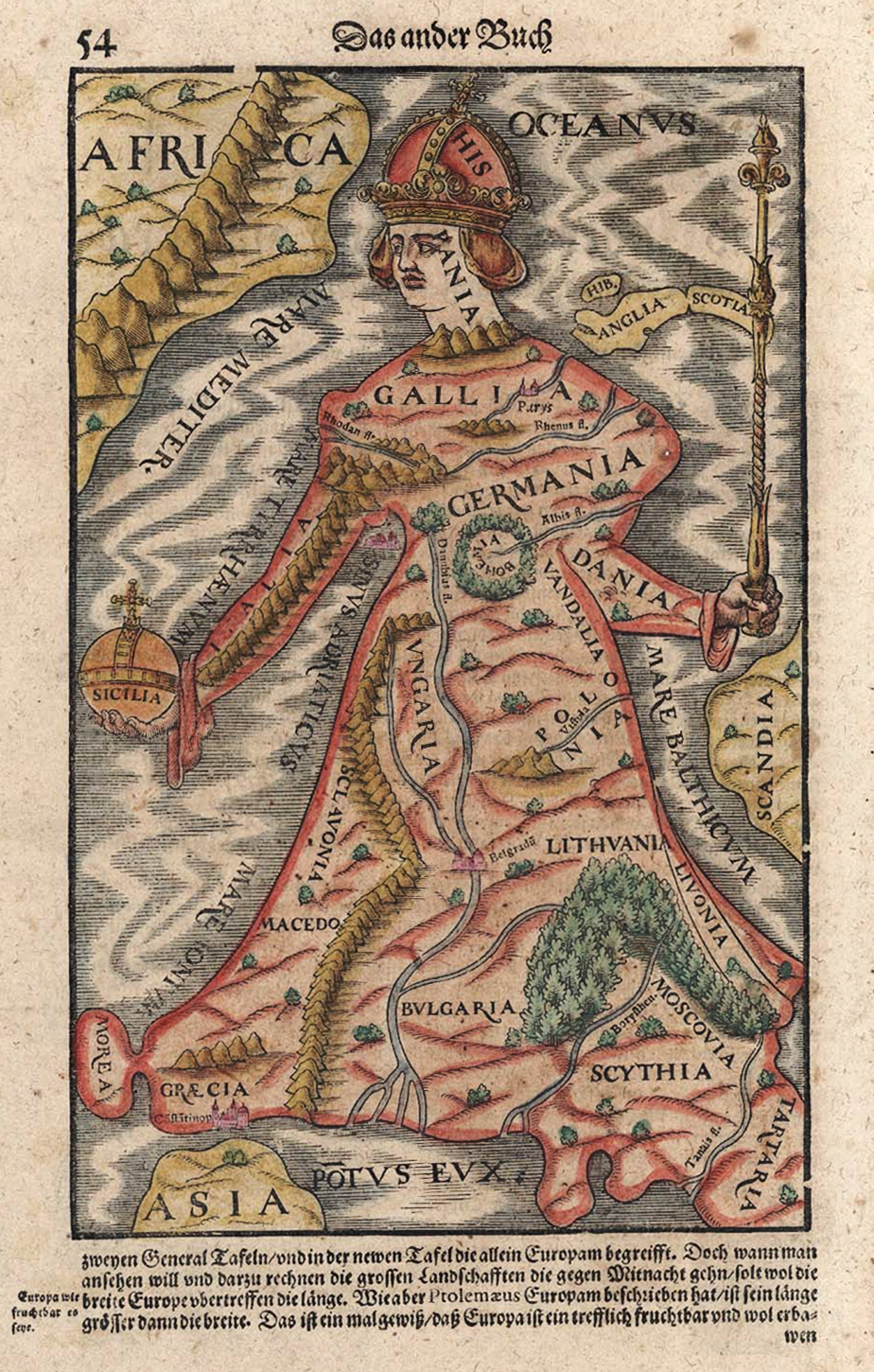
Geography and scope
The term covers the continuous continent stretching from the Atlantic coasts of Portugal and Spain eastwards to the Ural foothills in Russia, and from the Arctic seaboard south to the Mediterranean. By convention it excludes independent or semi-independent islands and island groups that lie offshore, such as the British Isles, Iceland, the Balearic Islands, Corsica, plus many Italian and Greek islands. Within the mainland are a variety of peninsulas (for example Iberian, Italian, and Balkan) and major geographic regions—mountain chains, river plains and coastlines—whose features shape regional economies and transport routes.
History and usage of the phrase
The idea of "the Continent" has been used for centuries as a practical shorthand: for travellers, merchants and diplomats it distinguished journeys to the European mainland from voyages to nearby islands. In modern everyday speech the phrase persists as a cultural and geographic label rather than a precise legal boundary. It may be used differently in different languages and contexts, and its meaning can shift depending on whether the discussion is about physical geography, political arrangements or cultural practices.
Cultural, legal and transport distinctions
Continental Europe includes a range of legal and institutional traditions—many countries follow civil law systems that developed on the mainland, for example—while several island jurisdictions historically used distinct common-law traditions. Transport connections also differ: the mainland is linked by extensive road and rail networks and by fixed links such as bridges or tunnels in some places, while ferry and air services are more important for island connections. These practical differences influence trade, migration, and everyday life.
Common uses and importance
People use the term in travel advice, cultural descriptions and political discussion to contrast mainland conditions with island lifestyles. In tourism it signals destination type; in commerce it can refer to mainland markets and regulatory regimes; and in social talk it often marks perceived contrasts in speech, diet or habits between islanders and continental residents. The phrase remains useful because it encapsulates a bundle of geographical, historical and cultural distinctions in a single expression.
Notable points and nuances
- Flexible boundary: The distinction is practical and not a strict administrative border; some coastal areas identify closely with island neighbours.
- Multiple senses: "The Continent" can mean purely geographic mainland, a cultural sphere, or a political-economic reference depending on context.
- Local perspectives: Islanders may use the term to emphasize their own distinct identity and customs compared with mainlanders.
Questions and answers
Q: What is Continental Europe?
A: Continental Europe is the European mainland.
Q: What distinguishes Continental Europe from offshore islands?
A: Continental Europe is distinct from various offshore islands such as the British Isles, Iceland, the Balearic Islands, Corsica, the Italian islands, and the Greek islands.
Q: Who uses the term Continental Europe to refer to the differences in customs and speech?
A: People living on offshore islands use the term Continental Europe to refer to ways in which the customs and speech of mainlanders differ from their own.
Q: Are the British Isles part of Continental Europe?
A: No, the British Isles are offshore islands and not part of Continental Europe.
Q: Name some of the offshore islands that are not part of Continental Europe.
A: Iceland, the Balearic Islands, Corsica, the Italian islands, and the Greek islands are some of the offshore islands that are not part of Continental Europe.
Q: What are some differences between mainlanders and people living on offshore islands?
A: The customs and speech of mainlanders differ from those of people living on offshore islands.
Q: Is the term Continental Europe applicable only to geography?
A: No, the term Continental Europe is also applicable to differences in customs and speech.
Related articles
Author
AlegsaOnline.com Continental Europe Leandro Alegsa
URL: https://en.alegsaonline.com/art/22771