
Tapaculo: secretive ground‑dwelling passerines of the Americas
Tapaculos are small, skulking passerine birds of the family Rhinocryptidae, mostly in South America and the northern Andes; they are cryptic in appearance but notable for distinctive songs and varied nesting habits.
Tapaculos (often pronounced ta‑pa‑COO‑lo) are a group of small, ground‑oriented passerine birds traditionally placed in the family Rhinocryptidae. They belong to the order of passeriform birds and occur mainly in South America, with a few species reaching the montane forests of southern Central America. Most tapaculos are secretive, preferring dense undergrowth where they are more often heard than seen.
Image gallery
2 Images
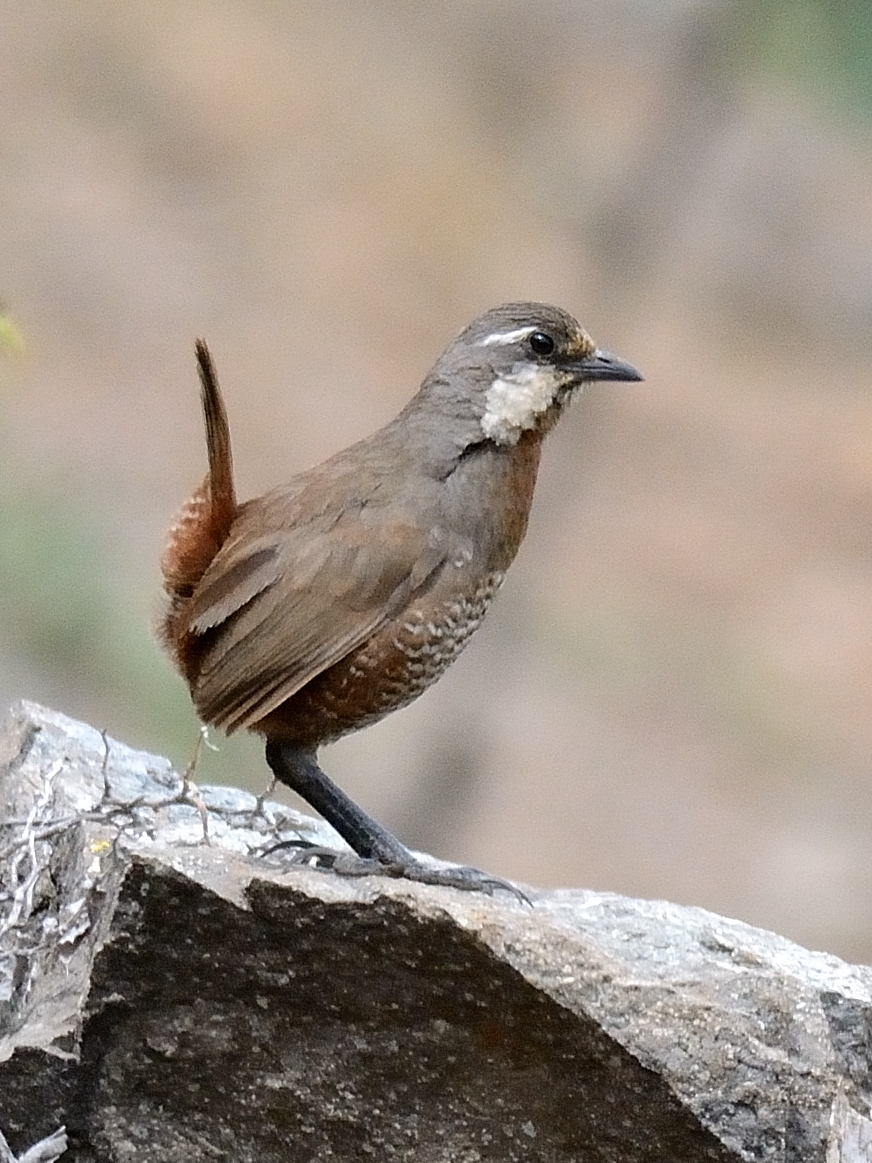
Physical characteristics
Tapaculos are generally small and compact, with short wings, strong legs and tails often held upright or flicked. Plumage tends to be dull—shades of brown, gray or black—helping them blend into leaf litter and brush. Flight is usually low and labored; they are more adapted to hopping and running through vegetation than sustained flight. Many species show minimal visible sexual dimorphism.
Behavior, diet and habitat
These birds inhabit a range of forested and scrubby environments: cloud forest understory, bamboo thickets, montane paramo edges and lowland tangles. They forage close to the ground for insects and other small invertebrates, sometimes flipping leaf litter with quick hops. Tapaculos are famously skulking and elusive, and their loud, characteristic songs and calls are the best way to detect and distinguish species in the field.
Nesting and reproduction
Tapaculo nesting habits are varied. Some species excavate tunnels or burrows in embankments or use natural cavities, while others nest in tree holes or build domed or ball‑shaped nests in dense bushes. Examples of nest sites include both ground burrows and tree hollows, and parental care is typically provided by both adults until young are fledged.
Taxonomy and identification
Many tapaculos are cryptic in appearance, and taxonomy has been difficult; vocalizations and genetic studies have been essential in recognizing distinct species, especially within the diverse genus Scytalopus. Birdwatchers and ornithologists rely heavily on song patterns to separate visually similar taxa, and new species have been described as surveys expand into remote mountain habitats.
Conservation and significance
Because several tapaculo species occupy narrow elevational ranges or restricted regions, they can be vulnerable to habitat loss and fragmentation. Conserving intact understory and montane forest is crucial for their survival. Though often overlooked, tapaculos contribute to insect control and the ecological complexity of understory bird communities, and they are of particular interest to specialists studying avian diversity and evolution.
Related articles
Author
AlegsaOnline.com Tapaculo: secretive ground‑dwelling passerines of the Americas Leandro Alegsa
URL: https://en.alegsaonline.com/art/96339
Sources
- britannica.com : "tapaculo (bird) -- Britannica Online Encyclopedia"