
Tarantula hawk (Pepsis and Hemipepsis spider wasps)
Large spider-hunting wasps in the family Pompilidae that paralyze tarantulas for their larvae, notable for powerful stings, bright coloration, and ecological roles as predators and pollinators.
The term "tarantula hawk" refers to large spider wasps in the family Pompilidae, principally the genera Pepsis and Hemipepsis. These solitary wasps are best known for hunting large ground-dwelling spiders such as tarantulas, which they paralyze to provide living food for a single developing larva. Adults and larvae occupy very different ecological roles: adults feed on nectar while larvae feed on the immobilized spider.
Image gallery
4 Images
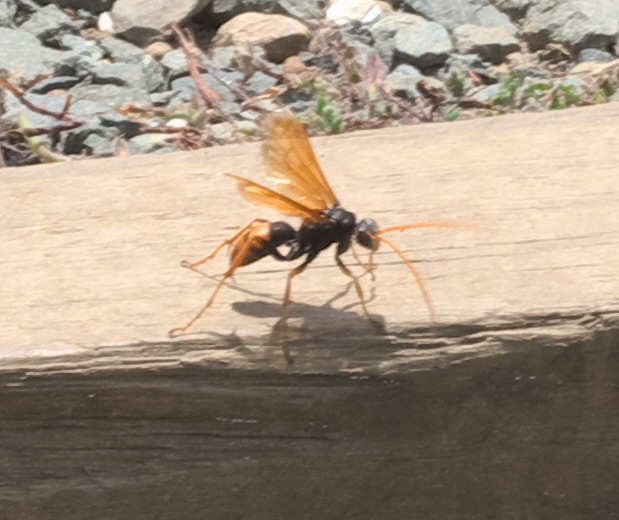


Characteristics
Tarantula hawks are conspicuous: many species reach several centimetres in length and combine dark, often metallic bodies with vividly colored wings (commonly orange or rust). The legs are long and adapted for grappling with spiders, and the females possess a strong ovipositor/stinger used to inject venom that paralyzes prey. The sting is renowned for its intensity and is cited among the most painful insect stings.
Life cycle and behavior
A hunting female locates a spider, engages and stings to induce paralysis, then drags the immobilized spider to a burrow or sheltered site. She lays a single egg on the spider and seals the chamber; the emerging larva consumes the spider gradually, remaining protected while it develops. Adult tarantula hawks visit flowers for nectar and can be effective pollinators for certain desert and tropical plants.
Distribution and ecology
These wasps occur mainly in warm regions where suitable large spiders are present, including arid and tropical parts of the Americas. They interact with many plants and animals: their bright coloration serves as an aposematic signal, and various insects participate in mimicry complexes that imitate their warning colors to deter predators.
Human interactions and notable facts
- Despite the painful sting, tarantula hawks are not aggressive and rarely sting unless handled or restrained.
- They are solitary hunters rather than social wasps with nests or colonies.
- Several species are locally familiar to people in deserts and woodlands and are important components of food webs.
Taxonomically, the common name groups species by behavior (hunting tarantulas) rather than by a single species; the genera Pepsis and Hemipepsis contain most of the large, tarantula-hunting forms. Their striking appearance, dramatic life history, and ecological roles make tarantula hawks a widely recognized example of specialized predator–parasite relationships.
Related articles
Author
AlegsaOnline.com Tarantula hawk (Pepsis and Hemipepsis spider wasps) Leandro Alegsa
URL: https://en.alegsaonline.com/art/96359