
Talarurus — armored ankylosaur from the Late Cretaceous of Mongolia
Talarurus is an ankylosaurine dinosaur from the Late Cretaceous of Mongolia, notable for heavy body armor, a robust build and a bony tail club. It helps document Asian ankylosaur evolution.
Overview
Talarurus is an extinct genus of armored ankylosaur dinosaur that lived during the Late Cretaceous. Known from fossil beds in what is now central Asia, it dates to roughly 90 million years ago. The genus name is often rendered as meaning "wicker tail," a descriptive reference to the appearance of its tail armour in the type specimen.
Image gallery
10 Images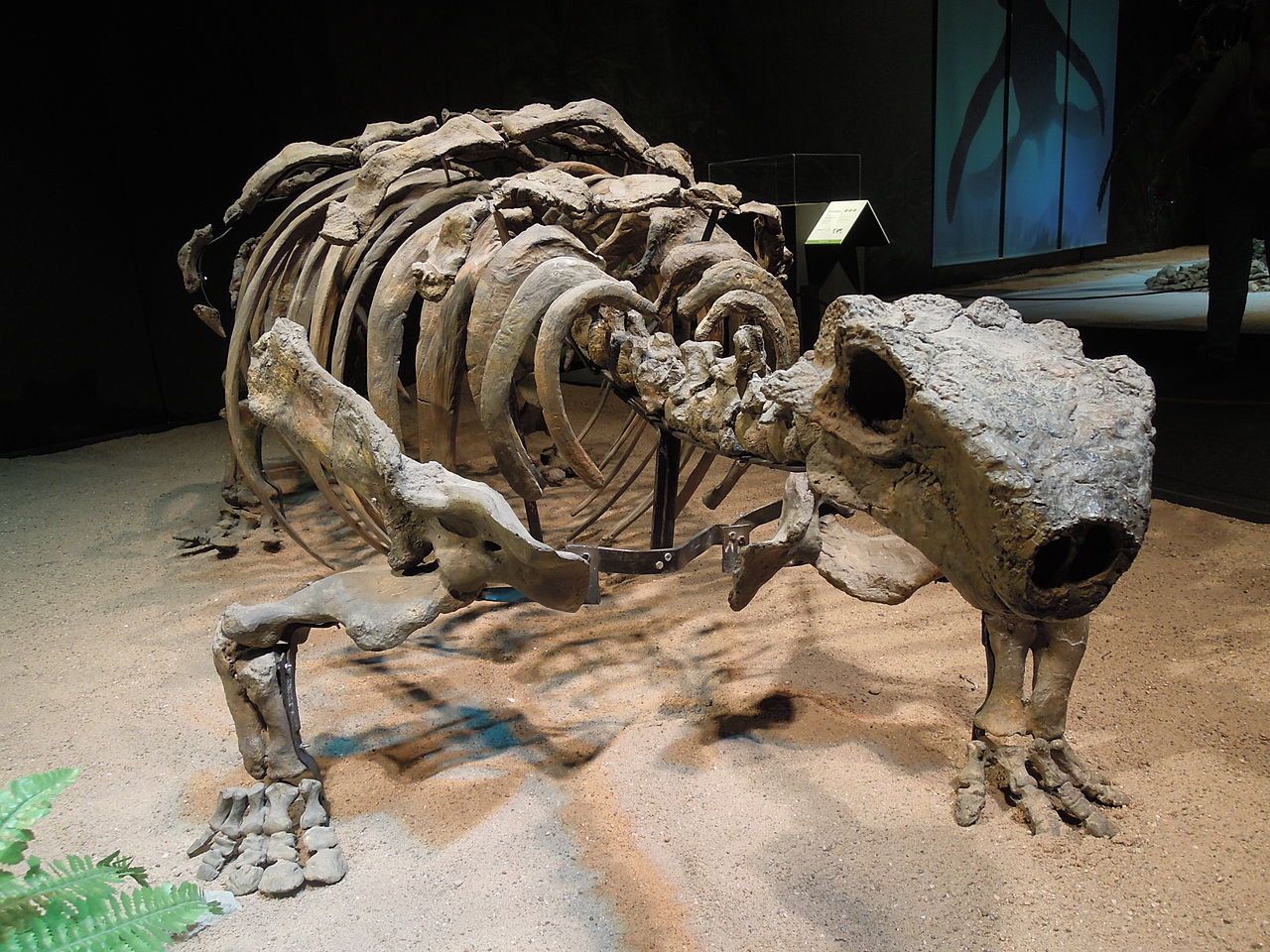


Physical characteristics
Talarurus was a low-slung, heavily built quadruped. Adult individuals are estimated to have reached lengths of around six metres, comparable in bulk to a modern hippopotamus in overall mass rather than in shape. Like other ankylosaurs it carried extensive dermal armour and bony plates across the back and flanks, and possessed a reinforced, knobbed tail used as a defensive weapon.
- Body plan: broad, stiff torso with short limbs adapted for supporting heavy armour.
- Armour: large osteoderms and smaller ossicles formed an outer layer of protection (armour).
- Tail: terminal expansion forming a functional club that could be swung against predators.
Discovery and naming
Fossils of Talarurus were recovered from Cretaceous deposits in Mongolia and described during the 20th century as part of broader palaeontological work in the region. The remains come from strata assigned to the Upper Cretaceous, and their geographic provenance in Mongolia places Talarurus among several other well-known Asian ankylosaur taxa.
Paleoecology and behavior
Talarurus was a ground-dwelling herbivore that likely fed on low-growing vegetation, using its robust skull and teeth to process tough plant material. Its heavy armour and tail club would have been effective deterrents against contemporary predators. Limb proportions and the arrangement of armour suggest limited speed but considerable resilience to attack.
Importance and distinguishing features
As one of the better-known ankylosaurines from Mongolia, Talarurus contributes to understanding the diversity and dispersal of ankylosaurs in Asia. It helps clarify anatomical trends within the group, such as the development of the tail club and the distribution of osteoderms across the body. Comparisons with related genera illuminate differences in size, armour patterning and tail morphology that paleontologists use to reconstruct ankylosaur relationships and palaeoecology.
Further notes
Material referred to Talarurus continues to be reassessed as new finds and improved techniques refine the anatomy and classification of ankylosaurs. For general context about armored dinosaurs and their biology see introductory resources on ankylosaurs and Cretaceous faunas (Talarurus overview, ankylosaur, dinosaur).
Related articles
Author
AlegsaOnline.com Talarurus — armored ankylosaur from the Late Cretaceous of Mongolia Leandro Alegsa
URL: https://en.alegsaonline.com/art/96101