
Taj Mahal: history, architecture, significance and preservation
Comprehensive overview of the Taj Mahal: its origin, design, construction, cultural role, and conservation challenges for the 17th‑century Mughal mausoleum in Agra, India.
Overview
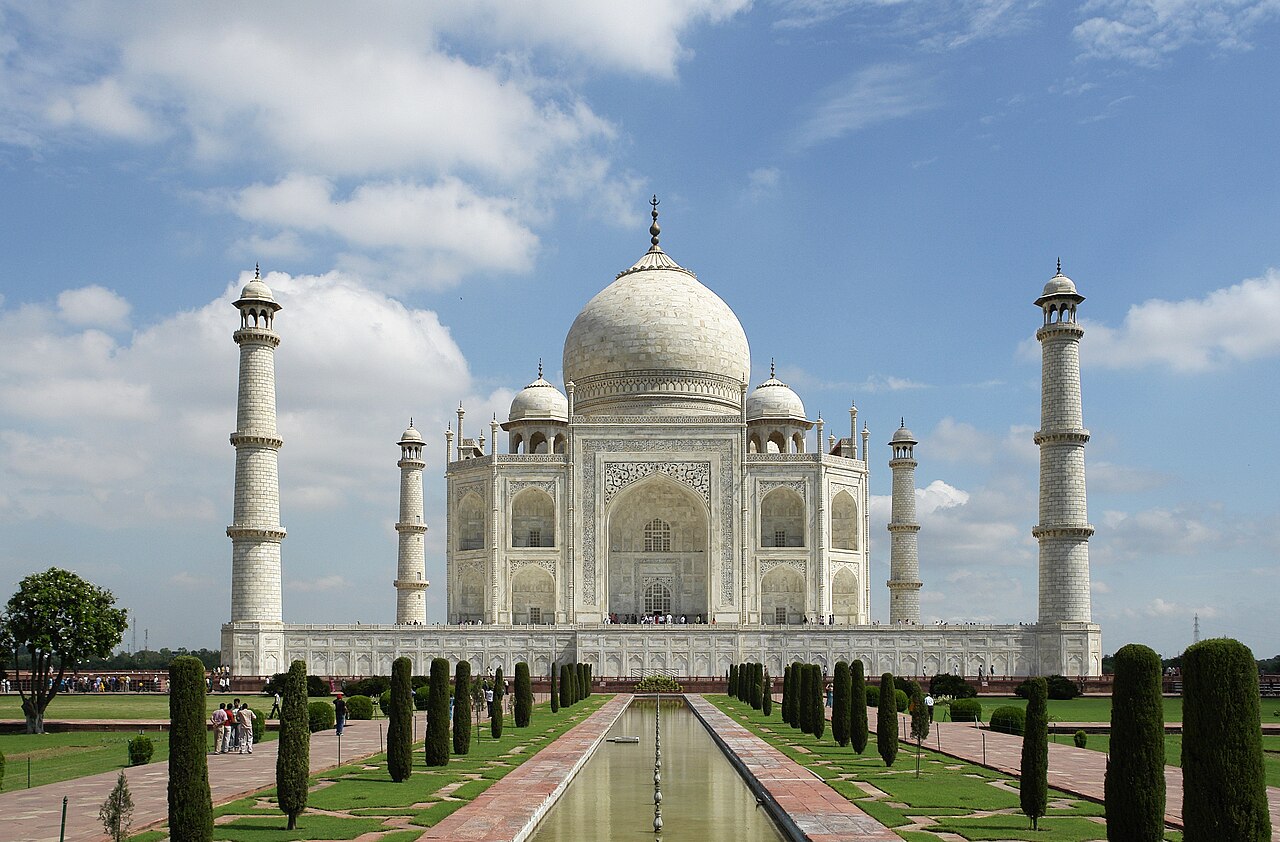
The Taj Mahal is a 17th‑century Mughal mausoleum on the south bank of the Yamuna River in Agra, in the Indian state of Uttar Pradesh. Commissioned by the emperor Shah Jahan in memory of his wife Mumtaz Mahal, it is widely admired for its symmetry, white marble cladding and refined decorative work. The complex includes a main tomb, a formal garden, reflective water channels and flanking buildings including a mosque, and is often cited in surveys of tourist attractions around the world.
Image gallery
10 Images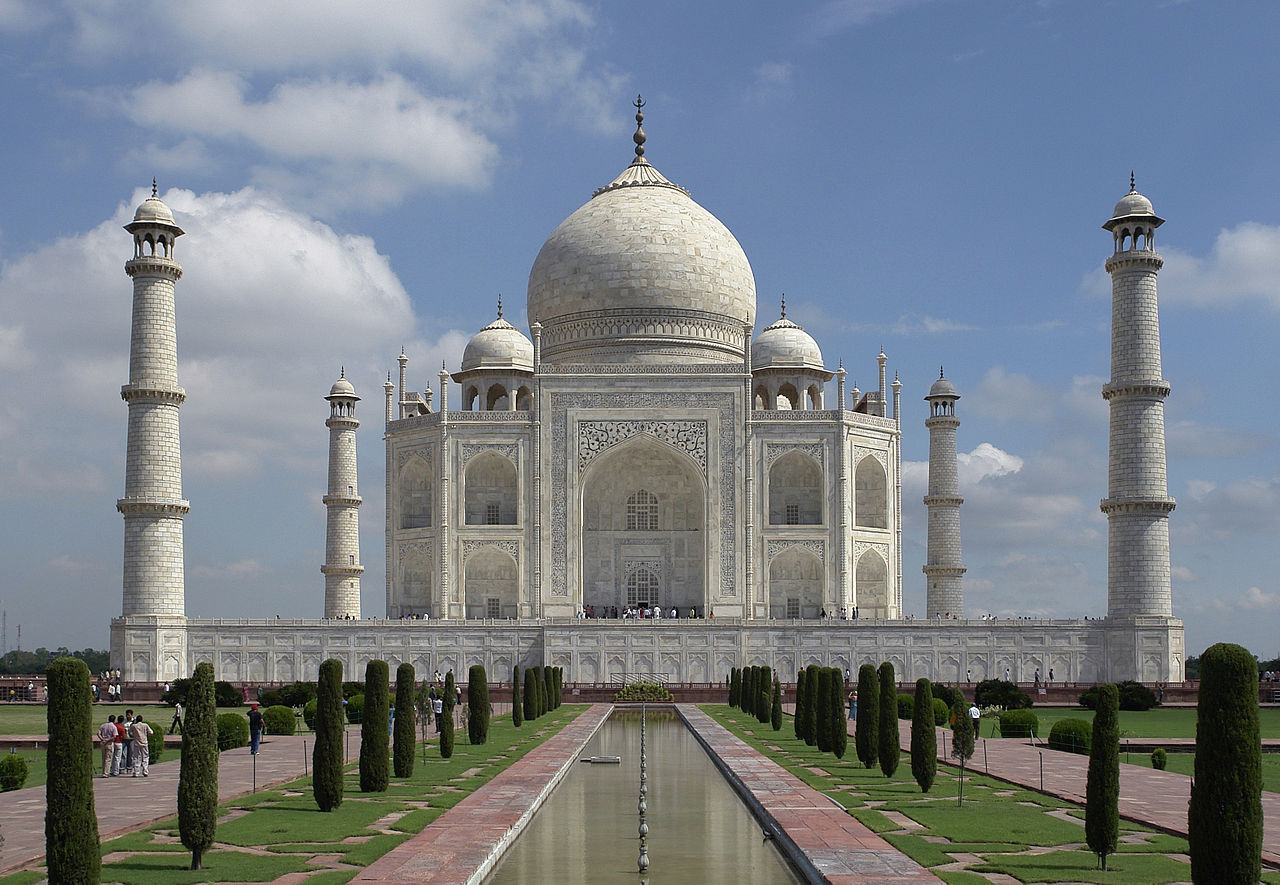




Origins and historical context
The death of Mumtaz Mahal in 1631 prompted Shah Jahan to commission a monumental tomb. Construction began soon after; contemporary chronicles and later scholarship suggest the principal building phase took place during the mid‑17th century and involved many master craftsmen from across the Mughal realm and beyond. Ustad Ahmad Lahauri is traditionally named as a leading architect, though the project drew on a large team of designers and artisans. The Taj Mahal was built within the political and artistic framework of the Mughal dynasty, which supported large architectural programs that blended Persian, Central Asian and South Asian precedents.
Design, layout and principal elements
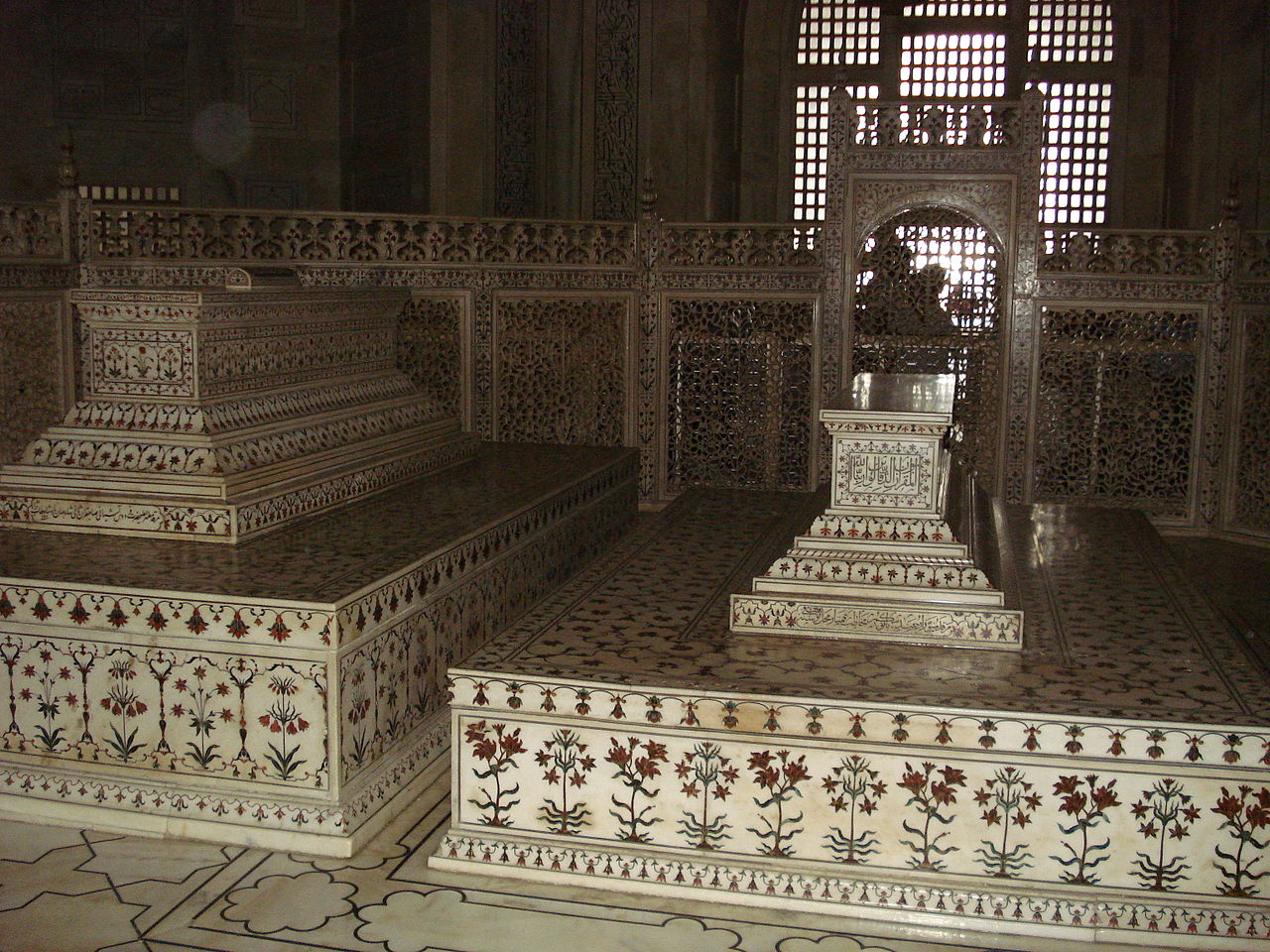
The site is arranged on a strong axial plan. The principal components are the mausoleum itself — a white marble structure crowned by a bulbous dome and framed by four minarets — and the surrounding charbagh, a char‑partitioned garden laid out in the Persian manner. The interior contains pietra dura inlay, carved marble screens and calligraphic panels surrounding cenotaphs; the actual graves are located at a lower level within the tomb chamber. Two red‑sandstone buildings mirror each other at the forecourt, helping to frame views and maintain visual balance.
Materials, techniques and workforce
The building relies heavily on high‑quality white Makrana marble and a wide range of decorative techniques, including stone inlay with semi‑precious materials and skilled carving. Transport of heavy materials used both riverine and overland routes. Popular accounts provide varied figures for workforce size and cost; such numbers are useful to convey scale but are often estimates. Architectural and conservation studies collect documentary, stylistic and material evidence to form a more cautious picture of the organization and logistics of construction — see architectural surveys at related sources.
Meaning and cultural legacy
In popular memory the Taj Mahal is frequently associated with love and loss; in academic contexts it is also studied as an imperial monument that projected the power and aesthetic values of the Mughal court. Its synthesis of traditions has made it a key reference point for the study of Islamic architecture in South Asia while also illustrating local and regional adaptations. Over time the building has become a global symbol, appearing in lists of important heritage sites and in public imagination as one of the world's notable monuments — it is protected in international registers such as UNESCO and has been highlighted on compilations of cultural wonders (world heritage and wonder lists).
Visitation and public engagement
The Taj Mahal receives millions of visitors annually and forms a major part of Agra's cultural economy. Visitor experience is shaped by carefully sequenced approaches, reflective pools and the changing effects of light on marble surfaces. Interpretive materials and guided tours aim to communicate both the artistic qualities of the site and its historical context; local communities, scholars and conservation professionals continue to debate how best to manage access while protecting the monument's fabric.
Conservation challenges and measures
Preserving the Taj Mahal has required ongoing attention to environmental and human pressures. Airborne pollution, changes in riverine dynamics, moisture cycles and the effects of urban development all influence the condition of marble and masonry. Authorities and specialist bodies have introduced monitoring, cleaning programmes, traffic regulations around the core zone and scientific studies to assess material change. Conservation is an interdisciplinary enterprise involving historians, materials scientists, architects and policy makers, and many measures are calibrated to reduce risk while respecting the site's heritage values.
Common questions and factual notes
- Who designed it? Ustad Ahmad Lahauri is often credited as a principal architect, though the work reflects input from many designers and craftsmen.
- When was it built? Construction began after 1631 and the main phases occurred in the mid‑17th century; finishing works and later additions continued subsequently.
- Was it a mosque? The site includes an active mosque within its western range and functions as both a funerary complex and a place that incorporates religious architecture.
- How reliable are popular numbers? Estimates of cost, workforce size and auxiliary claims (such as a proposed black marble counterpart) circulate widely; they are often indicative rather than precise and should be checked against archival and scholarly sources.
- Where to learn more? Visitor guides and conservation reports are available from local authorities and international bodies, and detailed architectural study is summarized in specialist surveys and publications (architectural references, tourist information and institutional reports).
The Taj Mahal continues to be a subject of scholarly research and public interest. Its conservation and interpretation remain active fields, drawing on new scientific methods and historical inquiry to balance preservation with the needs of visitors and the living city around the monument. For further reading and institutional material consult heritage listings and site resources accessible through major cultural and conservation organisations (UNESCO, heritage lists at world wonder compilations) or local information provided by authorities in Agra and Uttar Pradesh.
Scholars and visitors alike continue to return to the Taj Mahal as a case study in how built heritage can convey multiple meanings: artistic innovation, imperial ambition, devotional practice and contemporary challenges of stewardship. Ongoing documentation and conservation work helps ensure that future generations can study and experience the site, while debates about setting, development and interpretation shape how the monument is presented to the world.
Questions and answers
Q: What is the Taj Mahal?
A: The Taj Mahal is an Islamic religious building, mosque and tomb built in the 17th century by king Shah Jahan in memory of his wife, Mumtaz Mahal. It is located on the south bank of Yamuna river in Agra and it is widely thought as one of the most beautiful buildings in the world.
Q: Who was its chief architect?
A: Ustad Ahmad Lahauri was its chief architect.
Q: What year was it listed as one of the 7 Wonders of the World?
A: The Taj Mahal was listed as one of the 7 Wonders of the World in 2007.
Q: Who ruled India when it was built?
A: When it was built, most of India was ruled over by the Mughal empire which ruled over all of India except for the South.
Q: Who commissioned it to be built?
A: It was commissioned to be built by King Shah Jahan in memory of his wife, Mumtaz Mahal.
Q: How many people worked on building it?
A: 22,000 labourers, painters, stonecutters, and embroidery artists worked on building it.
Q: How long did it take to build ?
A: It took 17 years to build
Related articles
Author
AlegsaOnline.com Taj Mahal: history, architecture, significance and preservation Leandro Alegsa
URL: https://en.alegsaonline.com/art/95957
Sources
- commons.wikimedia.org : Taj Mahal
- books.google.com : The Taj Mahal
- articles.economictimes.indiatimes.com : "Archaeological Survey of India Agra working on compiling visual archives on Taj Mahal"
- whc.unesco.org : UNESCO advisory body evaluation
- time.com : "At The Taj Mahal, Grime Amid Grandeur - TIME"
- iol.co.za : "News - Environment: India's famed Taj Mahal is losing its lustre"
- architectureweek.com : "ArchitectureWeek - Culture - Saving the Taj Mahal - 2007.0411"
- articles.timesofindia.indiatimes.com : "Why is the Taj Trapezium Zone and why is it called so?"
- wikidata.org : wikidata.org/wiki/Q9141
- catalogue.bnf.fr : cb12162158x
- data.bnf.fr : (data)
- d-nb.info : 4086583-6
- id.loc.gov : sh85132019
- id.ndl.go.jp : 00954708
- aleph.nkp.cz : xx0082572