
Uttar Pradesh: Geography, People, History, and Culture
Uttar Pradesh (UP) is India's most populous state, located in the north with a rich cultural and historical heritage, major rivers, varied economy and several important religious and historic sites.
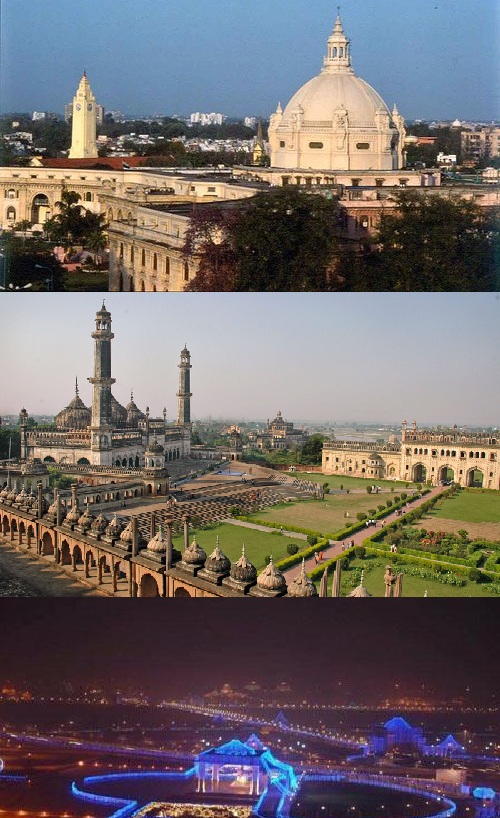
Uttar Pradesh (Hindi: उत्तर प्रदेश, Urdu: اتر پردیش) is a large state in northern India. Commonly abbreviated to UP, its capital is Lucknow. According to the 2011 figures, the state had a population of about 199,581,477, as recorded in the national census. It covers around 93,933 square miles (243,286 km²), making it geographically larger than the United Kingdom but smaller than Guinea. In traditional regional schemes it belongs to the North Indian zone.
Image gallery
10 Images




Geography and population
Uttar Pradesh occupies a broad stretch of the Indo-Gangetic Plain. The Ganges and Yamuna rivers traverse the state and have shaped its fertile soils, supporting dense settlement and intensive agriculture. The climate varies from humid subtropical in the plains to cooler conditions in some northern pockets. UP is home to many languages and dialects, with Hindi widely used for administration and everyday life and Urdu also prominent in literature and some communities.
Administration, economy and society
The state is organised into multiple administrative divisions and many districts, with a mix of large urban centres and extensive rural areas. Agriculture remains a major employer: crops such as wheat, rice and sugarcane are important. Industry, services and government jobs are concentrated in cities and growth corridors; technology and manufacturing hubs have developed near the national capital region and other urban clusters.
History and cultural significance
Uttar Pradesh has been central to the subcontinent’s history. Ancient kingdoms, medieval sultanates and Mughal centres left monuments, urban forms and religious traditions. During the colonial era and the modern independence movement, the region was a focal point of political and cultural activity. Today it contains important pilgrimage sites, historic monuments and cities that are influential in art, music, philosophy and politics.
Notable places and heritage
- Agra — home to the Taj Mahal and Mughal-era architecture.
- Varanasi — one of the world's oldest continuously inhabited cities and a major Hindu pilgrimage centre.
- Lucknow — historical capital known for its cuisine, poetry and nawabi heritage.
- Other important cities include Kanpur, Meerut, Noida and Prayagraj (Allahabad), each with industrial, educational or cultural roles.
Uttar Pradesh’s combination of demographic weight, cultural institutions and historical sites gives it an outsized influence on politics, religion and the arts in India. Its rivers, festivals and monuments attract visitors and pilgrims, while its agricultural productivity and urban markets remain central to regional livelihoods and the national economy.
Questions and answers
Q: What is Uttar Pradesh?
A: Uttar Pradesh (UP) is a state in northern India.
Q: What is the nickname for Uttar Pradesh?
A: People commonly refer to Uttar Pradesh as UP.
Q: What city is the capital of Uttar Pradesh?
A: Lucknow is the capital city of UP.
Q: How many people live in Uttar Pradesh according to the 2011 census?
A: The population of the state was 199,581,477 according to the 2011 census.
Q: Is Uttar Pradesh larger or smaller than other countries/regions?
A: It is bigger than the United Kingdom but smaller than Guinea.
Q: In which region does traditional Indian geography place Uttar Pradesh?
A: Traditional Indian geography places it under the North Indian zone.
Related articles
Author
AlegsaOnline.com Uttar Pradesh: Geography, People, History, and Culture Leandro Alegsa
URL: https://en.alegsaonline.com/art/103751