
Temple of Artemis at Ephesus
Ancient Greek sanctuary in Ephesus dedicated to Artemis (Roman Diana), famed for monumental scale, elaborate sculpture and multiple reconstructions; counted among the Seven Wonders of the ancient world.
Overview
The Temple of Artemis, known in Greek as Ἀρτεμίσιον and in Latin as Artemisium, was the principal sanctuary of the goddess Artemis at the ancient city of Ephesus. Situated on the coastal plain of western Turkey, the sanctuary developed from a local cult site into one of the largest and most ornate temples of the Greek world. In its classical form the building was the product of long-term patronage and several rebuilding phases, with major work completed around the mid-4th century BC (classical chronologies).
Image gallery
10 Images



Design and architecture
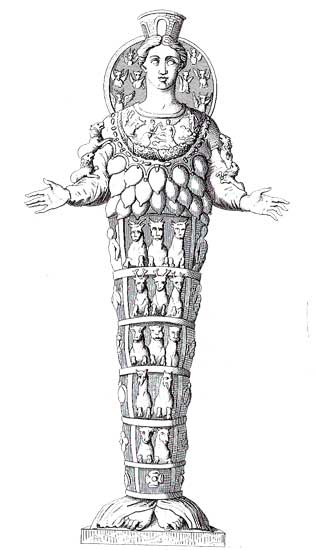
Excavation evidence and ancient descriptions indicate a grand peripteral temple set on a raised platform and surrounded by many columns supporting an elaborately decorated entablature and roof. The structure combined Ionic decorative elements and large-scale sculptures, with richly carved capitals, reliefs and statues that adorned both exterior and interior spaces. The cella housed a distinctive cult image and the sanctuary complex included altars and spaces for votive offerings.
Worship and civic role
The temple served as the religious center for the cult of Artemis in the region and attracted pilgrims, traders and civic activity. As with other Greek sanctuaries, it had religious, economic and social functions: offerings and dedications accumulated over time; the precinct acted as a focus for festivals and processions; and the site contributed to the identity and prosperity of Ephesus.
Destruction and reconstructions
The sanctuary was rebuilt multiple times after damage from accidents, deliberate destruction and natural decay. In the classical period the temple suffered a notorious act of arson in the 4th century BC by an individual seeking notoriety; the event prompted another reconstruction. Over centuries the precinct was repaired and altered under changing political circumstances, including periods when the area lay within the influence of the Achaemenid and later Hellenistic and Roman authorities.
Archaeology and remains
Systematic archaeological work beginning in the 19th century uncovered foundations, column fragments and sculptural remains that document the building's scale and decoration. Many carved blocks and statuary fragments were dispersed to museums or retained in private collections during early excavations; a number of important pieces remain in regional museums while others are held in foreign collections. Today only ruins and architectural fragments mark the site, but the surviving evidence and ancient accounts permit reconstructions of its plan and appearance.
Legacy and cultural significance
- Historical: celebrated in antiquity as one of the Seven Wonders, the Temple of Artemis was a benchmark for monumental Greek temple architecture.
- Artistic: its sculptural program influenced later Ionic and Hellenistic art traditions and served as an exemplar for large-scale stone carving.
- Archaeological: the site's finds continue to inform studies of ancient religion, architecture and urbanism at Ephesus.
For visitors and scholars the Temple of Artemis remains emblematic of the intersection between religious practice and monumental architecture in the ancient Mediterranean. Further reading on chronology and excavations is available in specialized studies and museum catalogues, and introductory summaries are available through regional guides and classical surveys (chronologies, Greek sources, Latin references, cult studies, regional histories).
Scholarly interest continues to refine understanding of the temple's phases, sculptural programs and role within Ephesus. Ongoing conservation and display of fragments allow the public to engage with material traces of a monument long famed across the ancient world (historical contexts, wonder lists).
Questions and answers
Q: Who was the Temple of Artemis dedicated to?
A: The Temple of Artemis was dedicated to the goddess Artemis.
Q: Was the Temple of Artemis also known as the Temple of Diana?
A: Yes, the Temple of Artemis was also known as the Temple of Diana.
Q: When was the Temple of Artemis completed?
A: The Temple of Artemis was completed around 350 BC.
Q: Where was the Temple of Artemis located?
A: The Temple of Artemis was located at Ephesus in present-day Turkey.
Q: Who ruled over the area where the Temple of Artemis was located?
A: The area where the Temple of Artemis was located was under the Achaemenid dynasty of the Persian Empire, but some of its cities were Greek.
Q: Are there any remains of the Temple of Artemis today?
A: Yes, only ruins of the Temple of Artemis remain today.
Q: Was the Temple of Artemis one of the Seven Wonders of the Ancient World?
A: Yes, the Temple of Artemis was one of the Seven Wonders of the Ancient World.
Related articles
Author
AlegsaOnline.com Temple of Artemis at Ephesus Leandro Alegsa
URL: https://en.alegsaonline.com/art/96915