
Agra — Historic Mughal City in Uttar Pradesh, India
Agra is a northern Indian city celebrated for its Mughal-era architecture, including the Taj Mahal, Agra Fort and Fatehpur Sikri, and for its role in history, culture, and tourism in Uttar Pradesh.
Overview
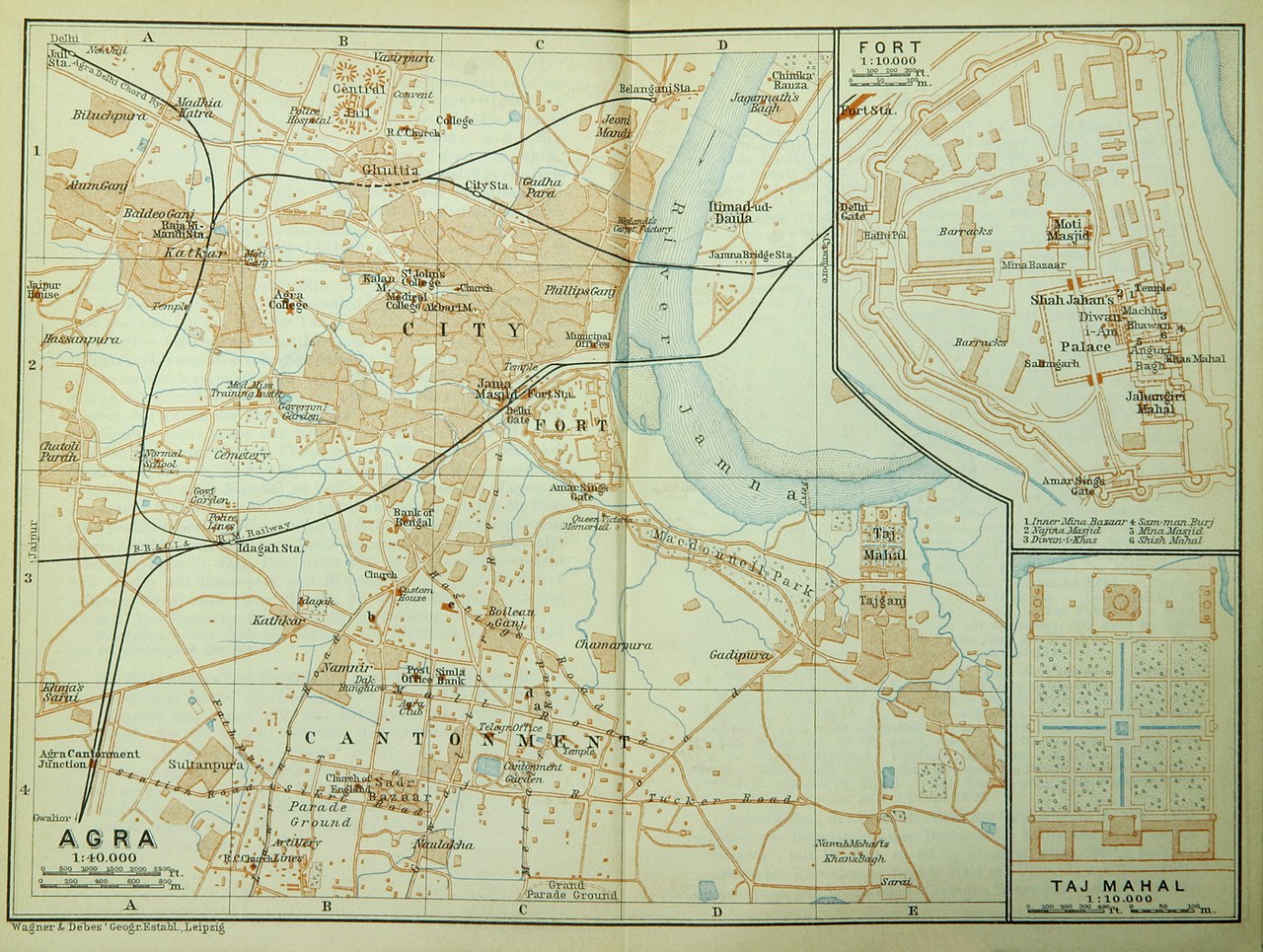
Agra is a city in the northern state of Uttar Pradesh in India. It rose to international prominence as a principal seat of the Mughal emperors and is today one of the country’s best-known heritage destinations. The city’s built landscape and cultural identity are strongly shaped by the Mughal period, which left an exceptional concentration of monuments and gardens.
Image gallery
10 Images




Historical significance
Agra served as an important political and artistic centre during the Mughal rule; it was the imperial capital for generations and a focal point for courtly architecture, urban planning and the arts. The Mughal court attracted craftsmen, poets, and scholars, helping to develop a distinct Indo-Persian culture that influenced language, cuisine and visual arts across the region.
Main monuments
Several buildings in and around Agra are recognized for their outstanding universal value. The best known are listed below; each attracts large numbers of visitors and is frequently cited in studies of Mughal architecture.
- Taj Mahal — a monumental mausoleum celebrated for its white marble and symmetry, often regarded as a masterpiece of Mughal design.
- Fatehpur Sikri — a planned imperial city with palaces and courtyards that illustrate court life and architectural experimentation.
- UNESCO and the designation of World Heritage Sites — these labels acknowledge the global cultural importance of Agra’s principal monuments and help focus conservation efforts.
- Agra Fort — a sprawling red sandstone fortification incorporating audience halls, private quarters and defensive works.
Culture, economy and modern life
Beyond its monuments, Agra remains a living city with diverse neighborhoods, markets and crafts. Traditional industries include stone inlay work, carpet weaving and leather goods, many of which draw on skills refined during the Mughal era. The city also functions as a regional commercial centre, educational hub and administrative locality within the state.
Tourism and conservation
Tourism is a major component of Agra’s profile; visitors come for history, photography and cultural experiences. That popularity creates both opportunities and pressures: revenue supports local livelihoods and conservation, while large visitor numbers require careful site management. Conservation programmes, scholarly research and international collaboration aim to balance access with protection of fragile monuments and the historic urban fabric.
Related articles
Author
AlegsaOnline.com Agra — Historic Mughal City in Uttar Pradesh, India Leandro Alegsa
URL: https://en.alegsaonline.com/art/1436