
Swahili (Kiswahili): The East African Bantu lingua franca
Swahili (Kiswahili) is a Bantu language serving as a lingua franca across East Africa. This article covers its features, origins, history of contact, official status, varieties, and cultural importance.
Overview: Swahili, known natively as Kiswahili, is a Bantu language that functions as a regional lingua franca across much of East Africa. It is widely spoken in coastal and inland communities and is used for everyday communication, education, government, media and commerce in several countries. The language’s primary geographic footprint stretches across the eastern African seaboard and adjacent interior areas, from parts of Somalia in the north through Kenya and Tanzania, and down toward Mozambique, with significant presence in inland states such as Congo and Burundi.
Image gallery
7 Images


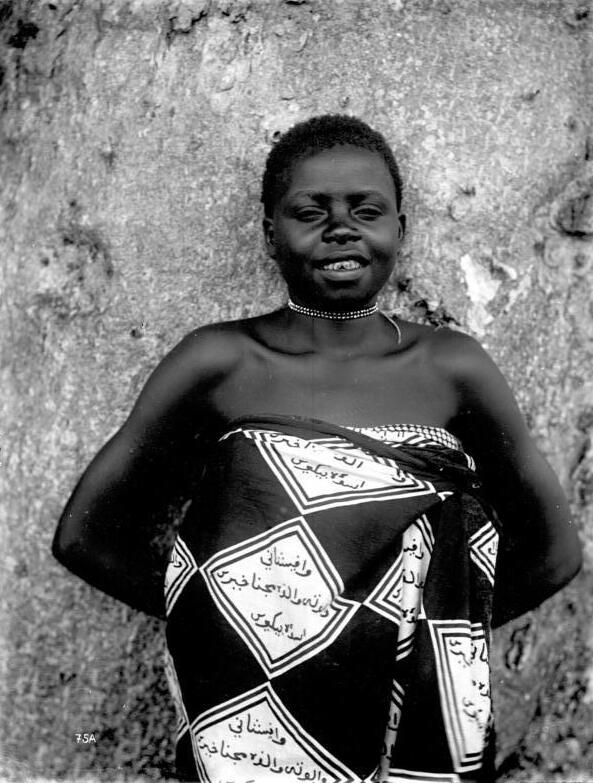

Language family and structure
Swahili belongs to the Bantu branch of the Niger–Congo family and shares many structural traits with other Bantu languages (Bantu). It is characterized by a system of noun classes, verb morphology built from prefixes and suffixes, and relatively regular phonology. Swahili words commonly combine stems with affixes to indicate tense, negation, subject and object. Modern Swahili is written primarily in the Latin alphabet, although historically an Arabic-derived script (Ajami) was also used.
History and external influences
Swahili developed along the East African coast through the interaction of Bantu-speaking communities with traders and settlers from the Indian Ocean world. Over centuries it absorbed vocabulary and cultural influence from Arabic (Arabic), and to lesser extents from Persian, Portuguese, German, and English as contact expanded. Coastal towns and islands such as Zanzibar were central to its growth as a trade language; missionaries and colonial administrations later helped standardize its writing and grammar for wider use.
Standardization, varieties and dialects
There is a range of Swahili varieties: coastal or ‘Kiswahili cha pwani’ (including island forms), inland trade varieties, and regional standards used in national education and media. Efforts in the 19th and 20th centuries produced a more standardized written Swahili used in schools and literature, while local dialects remain vibrant. National language policies in countries such as Tanzania and Kenya elevated Swahili’s institutional role, encouraging its learning as a second language across borders.
Uses, cultural role and modern importance
Swahili serves multiple public functions: as a medium of instruction at primary levels in some nations, as a vehicle for radio and print media, and as an instrument of national identity and regional cooperation. It is prominent in music, literature and film, contributing to a shared cultural space across countries. Its role as a lingua franca makes it important for regional trade, diplomacy and interethnic communication.
Distinctive features and notable facts
- Grammar: extensive noun-class system and agglutinative verb morphology.
- Script: today mainly Latin-based orthography standardized by missionaries and colonial administrations, with earlier use of Arabic script.
- Contact: significant lexical borrowing from Arabic and other languages due to centuries of maritime trade.
- Official status: adopted in education and government in several nations and promoted by regional organizations.
For learners and researchers, many resources exist online and in print for grammar, dictionaries and corpora; consult academic and community materials for dialectal differences and contemporary usage. Further reading and resources can be found through general overviews and country-specific language policy pages: East Africa region, language distribution, Bantu family, and national pages for Kenya, Tanzania, Burundi, Congo, Somalia, Mozambique, Zanzibar and historical contacts like Arabic.
Related articles
Author
AlegsaOnline.com Swahili (Kiswahili): The East African Bantu lingua franca Leandro Alegsa
URL: https://en.alegsaonline.com/art/95402
Sources
- ethnologue.com : Ethnologue list of countries where Swahili is spoken
- ethnologue.org : Swahili language
- goto.glocalnet.net : New Updated Guthrie List Online