
Suprachiasmatic nucleus: mammalian master circadian pacemaker and light-entrained clock
Overview of the suprachiasmatic nucleus, the hypothalamic master circadian clock in mammals: its neuronal organization, peptide and neurotransmitter signaling, light entrainment via retinal input, and systemic timing functions.
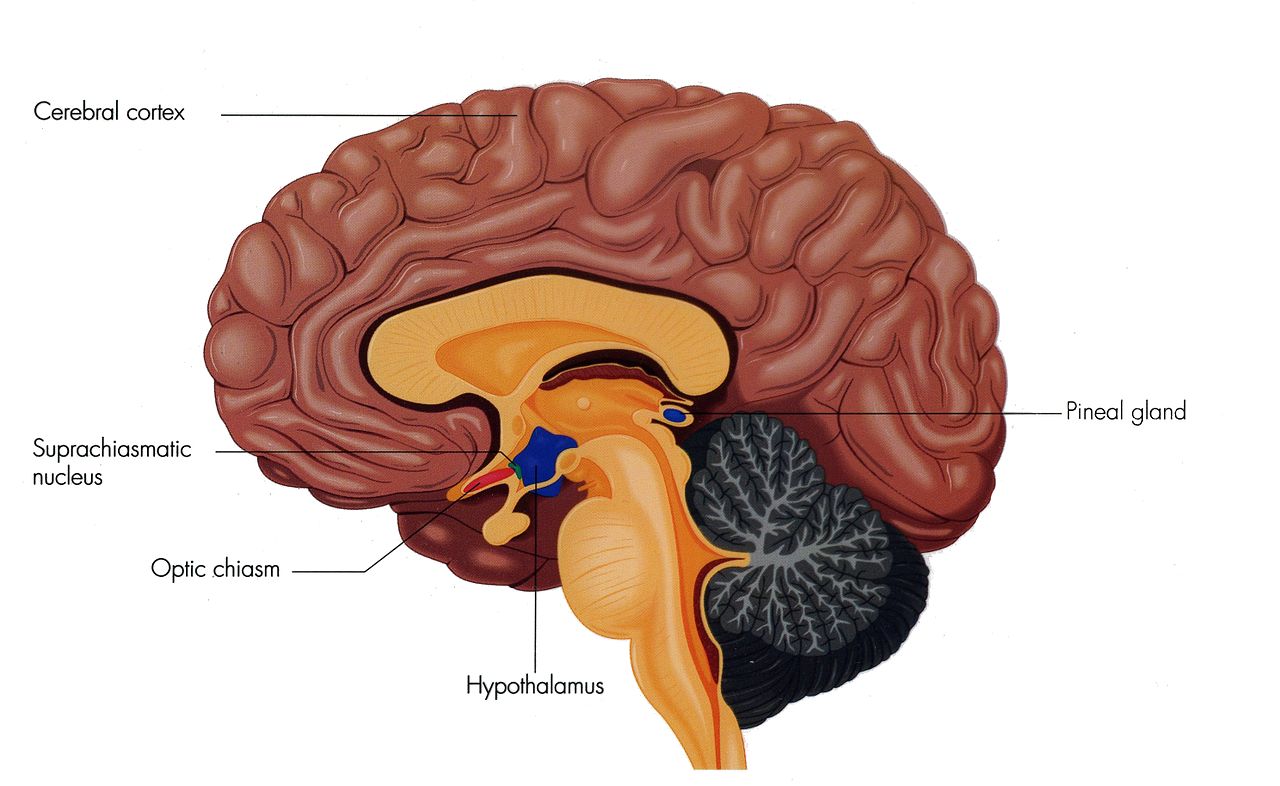
Suprachiasmatic nucleus (SCN) is a compact nucleus located within the hypothalamus. It lies near the midline of the brain, positioned directly above the optic chiasma.
Image gallery
4 Images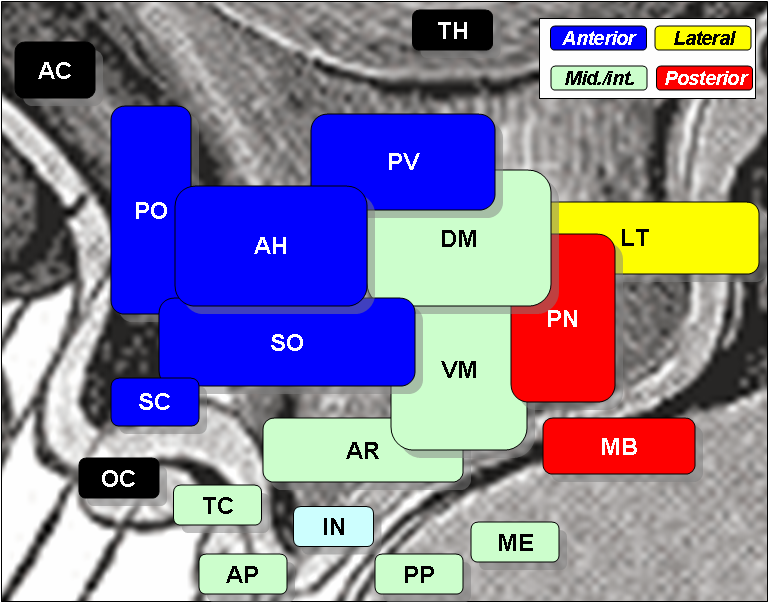

Role in daily timing
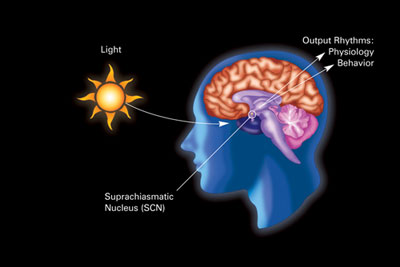
The SCN serves as the principal circadian pacemaker in mammals, coordinating roughly 24-hour patterns of physiology and behaviour. It sets the timing of sleep and wakefulness, cycles of appetite and activity, and other daily rhythms by sending chemical and electrical signals. These outputs include endocrine signals such as hormones, as well as small signalling molecules.
Signals and molecules
Cells within the SCN produce a variety of signalling peptides and transmitters that convey timing information inside and outside the nucleus. Important peptide messengers include peptides such as vasopressin and vasoactive intestinal peptide, and the SCN also uses classical neurotransmitters to shape local network activity. These chemical signals are part of how the SCN synchronises other tissues to the daily cycle.
Light input and entrainment
To keep its internal cycle aligned with the day–night cycle, the SCN receives direct light information from the eye. Specialised retinal ganglion cells in the retina send photic signals from the eye to the SCN, allowing the pacemaker to adjust phase and period in response to environmental light.
Organization and connections
The SCN contains on the order of 20,000 neurons in humans and a greater diversity of cell types in other mammals. Its neurons are organised into subregions that communicate with one another to produce a coherent rhythmic output. The SCN also projects to and receives inputs from many other areas of the brain, coordinating endocrine, autonomic and behavioural rhythms across the organism.
Summary
- Small hypothalamic nucleus that functions as the master circadian clock.
- Uses hormones, peptides (including vasopressin and vasoactive intestinal peptide) and neurotransmitters to transmit timing signals.
- Entrained by light via retinal input from the retina of the eye.
- Interacts with widespread regions of the brain to coordinate physiology and behaviour.
Related articles
Author
AlegsaOnline.com Suprachiasmatic nucleus: mammalian master circadian pacemaker and light-entrained clock Leandro Alegsa
URL: https://en.alegsaonline.com/art/95113