
Survival of the Fittest: Meaning, History, and Common Misunderstandings
An accessible overview of the phrase 'survival of the fittest': its scientific meaning, origins, examples, and the frequent confusions and misuses surrounding it.
Survival of the fittest is a widely known phrase used to describe a core idea in evolutionary biology: individuals or traits that contribute to greater reproductive success tend to become more common in a population. The phrase functions as a concise metaphor for a process in which variation, inheritance and differential success interact. Because it is short and memorable it often appears in popular summaries of evolution, but its everyday wording can obscure important scientific nuances.
Image gallery
1 Image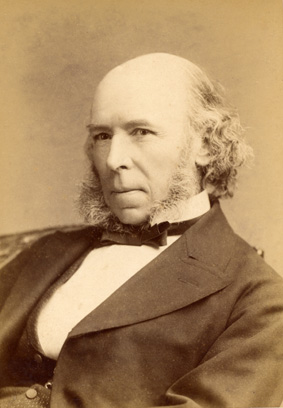
What it means in biology
In technical terms, "fitness" refers to an organism's reproductive success relative to others in the same population, not simply physical strength or dominance. Traits that increase the number of viable offspring — by improving survival, mating success, or the chances that offspring themselves reproduce — are said to be advantageous. Those traits can be structural, behavioral, physiological, or genetic. The phrase itself works as shorthand, and readers should distinguish the metaphor from precise definitions used by researchers. Metaphor helps communication but needs careful interpretation.
Origins and historical context
The wording "survival of the fittest" was coined in the 19th century and is associated with the philosopher Herbert Spencer. It was introduced into scientific discussion after Charles Darwin published his theory; Darwin incorporated the phrase in later editions of On the Origin of Species and compared it with his preferred term, natural selection. Darwin himself also used related expressions such as struggle for existence. The phrase became prominent as a simple label, and it appears in many popular treatments of evolution as a memorable summary. See also the historical note on the phrase as a famous phrase.
Examples and applications
- Antibiotic resistance in bacteria: strains that survive drug exposure reproduce and become common.
- Camouflage and predator avoidance: cryptic coloration can increase survival until reproduction.
- Life-history strategies: some species invest in many offspring while others invest in few but well-provisioned young.
Common misconceptions and important distinctions
Popular uses of the phrase can imply that "strongest" or "best" always win, or that evolution is a value judgment. This is incorrect. Fitness is context-dependent: a trait that is advantageous in one environment can be harmful in another. The slogan has also been misapplied outside biology, for example in social or political arguments often called "social Darwinism," a misuse that conflates scientific description with moral prescription. Historical debates involving Charles Darwin entwined terminology and ideology; readers should consult further sources for the broader history.
In short, "survival of the fittest" captures an element of evolutionary theory but is most useful when paired with a clear definition of fitness and an awareness of environmental context and genetic mechanisms. For accessible introductions and more detailed discussions consult educational materials and primary historical sources. Struggle for existence and natural selection remain complementary terms worth distinguishing in conversation and study. Read more if you wish to explore original writings and modern interpretations.
Questions and answers
Q: What is the phrase "Survival of the fittest"?
A: The phrase "Survival of the fittest" is a famous phrase of Herbert Spencer which describes the idea that, in nature, there is competition to survive and reproduce.
Q: Who was Charles Darwin?
A: Charles Darwin was a scientist who used the phrase "struggle for existence" and "natural selection" as metaphors for key ideas.
Q: Why do scientists often use metaphors?
A: Scientists often use metaphors as shorthand for key ideas.
Q: What may happen if metaphors are not properly understood?
A: If metaphors are not properly understood, they may be used wrongly.
Q: What does the phrase "Survival of the fittest" means in nature?
A: In nature, the phrase "Survival of the fittest" means that there is competition to survive and reproduce.
Q: What is the meaning of the metaphor "struggle for existence"?
A: The metaphor "struggle for existence" means that organisms must compete for resources to survive.
Q: What is natural selection?
A: Natural selection is the process by which organisms better adapted to their environment tend to survive and produce more offspring.
Related articles
Author
AlegsaOnline.com Survival of the Fittest: Meaning, History, and Common Misunderstandings Leandro Alegsa
URL: https://en.alegsaonline.com/art/95222
Sources
- bartleby.com : "IV. Natural Selection; or the Survival of the Fittest"
- bartleby.com : The Origin of Species
- sciencemag.org : "Perceptions of science: natural enemies--metaphor or misconception?"
- works.bepress.com : Better competition advocacy
- books.google.com : The Man versus the State: a collection of essays
- books.google.com : snippet
- uni-kassel.de : A comparative analysis of the Darwin-Wallace Papers and the development of the concept of natural selection
- darwin-online.org.uk : "On the Origin of Species"
- darwin-online.org.uk : On the Origin of Species by means of natural selection, or the preservation of favoured races in the struggle for life
- stephenjaygould.org : Darwin's untimely burial