
Swallowing (Deglutition): Process, Structures, and Clinical Importance
Swallowing is the coordinated sequence that moves food and liquid from the mouth through the pharynx and esophagus into the stomach. Covers mechanics, phases, development, and clinical concerns.
Swallowing, or deglutition, is the biological process that moves a bolus—whether food, liquid or saliva—into the digestive tract. It is essential for nutrition, hydration and airway protection in every person or animal. Although commonly described simply as "sending something down the throat," swallowing is a precisely timed interaction of muscles, nerves and anatomical structures.
Image gallery
3 Images
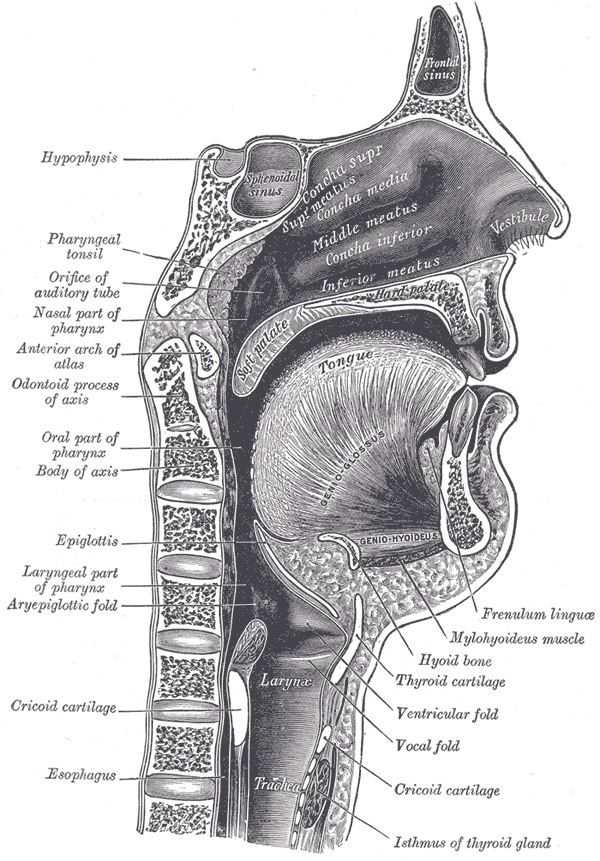

Key structures involved
The process begins in the mouth, passes through the throat and the pharynx, continues down the esophagus and ends when contents reach the stomach. These organs and associated muscles work together to form, propel and protect the swallowed material. The epiglottis and upper esophageal sphincter are two small but vital components that prevent material from entering the airway.
Phases of swallowing
- Oral preparatory phase: chewing and mixing with saliva to form a bolus.
- Oral propulsive phase: the tongue pushes the bolus toward the pharynx.
- Pharyngeal phase: a rapid reflex closes the airway and moves the bolus into the esophagus.
- Esophageal phase: coordinated muscular contractions (peristalsis) carry the bolus to the stomach.
Control of swallowing blends voluntary actions (in the mouth) and involuntary reflexes (in the pharynx and esophagus). Cranial nerves and central brainstem circuits coordinate timing to allow breathing to pause briefly while swallowing, reducing the risk of aspiration.
From an evolutionary and developmental perspective, swallowing is ancient and conserved among vertebrates; infants display strong swallowing reflexes that mature with feeding skills. Clinically, difficulty swallowing—dysphagia—can arise from neurological disease, structural blockage, or age-related weakness and requires assessment because it increases the risk of choking and pneumonia.
Notable distinctions include differences in swallowing mechanics between species (for example, aquatic feeders versus mammals that chew), and the interaction of swallowing with speech and respiration in humans. For further anatomical diagrams and clinical guidelines, see resources on anatomy and ENT practice (food handling, oral anatomy, patient care, throat function, organ systems, pharynx mechanics, stomach entry).
Related articles
Author
AlegsaOnline.com Swallowing (Deglutition): Process, Structures, and Clinical Importance Leandro Alegsa
URL: https://en.alegsaonline.com/art/95411