
Battle of Messines (7 June 1917)
A concise account of the Battle of Messines (7 June 1917): planning, underground mining, tactics, outcome and its role on the Western Front prior to Passchendaele.
Overview
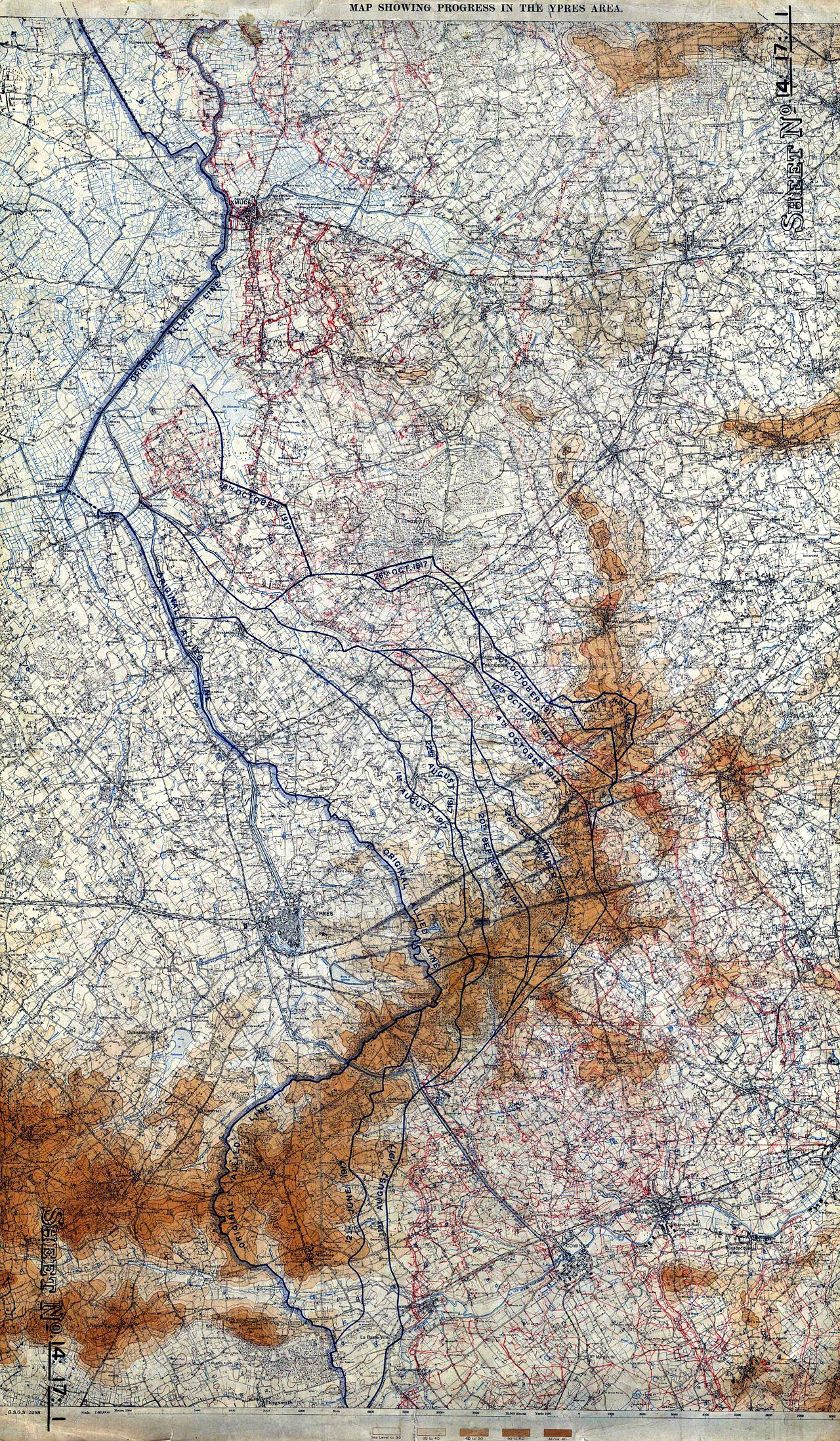
The Battle of Messines was a planned British assault on the German positions along the ridge running north from the village of Mesen (Messines) in West Flanders, Belgium. Launched on 7 June 1917 by the British Second Army under General Herbert Plumer, it formed part of operations on the Western Front intended to secure dominating ground and to set favourable conditions for the subsequent larger offensive that began at Ypres in late July, commonly associated with Passchendaele. The capture of Messines Ridge was viewed as essential for artillery observation and as a protective screen for operations around Ypres.
Image gallery
10 Images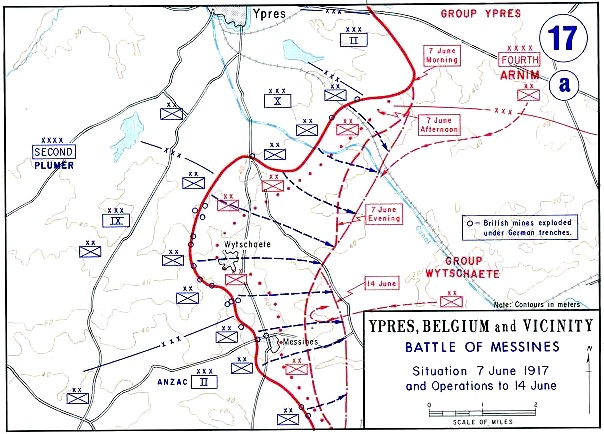




Preparation and tunnelling
What distinguished Messines from many earlier attacks was the deliberate, long-term preparation that preceded the infantry assault. Specialist tunnelling units of the Royal Engineers placed a number of large explosive charges under German strongpoints. In the opening moments of the assault the detonation of dozens of mines — often noted in sources as a single, coordinated series of underground charges — destroyed fortified positions and caused great shock among the defenders. This subterranean phase was combined with detailed reconnaissance, improved artillery planning and rehearsals so infantry advances could exploit the disruption.
Battle and tactics
The attack used a methodical, limited-objective approach with tightly controlled artillery barrages, creeping barrages, and well-timed infantry movements. Immediately before the infantry went forward, the mines were fired, shaking the battlefield and creating cratered terrain. The initial breakthrough was achieved quickly compared with many contemporaneous assaults, enabling advancing units to secure the ridge and consolidate defensive positions against counter-attacks. Air reconnaissance and artillery observation were important in keeping momentum and in repelling follow-up German efforts to regain lost ground.
Outcome and significance
The operation captured its principal objectives and inflicted heavy disruption on German defenses. Its success owed much to careful planning, engineering skill, and combined-arms coordination. Messines reduced the threat to Allied lines around Ypres and provided a more favourable tactical situation for the later offensive phase. It is also remembered for the dramatic use of underground explosives — a feature that had tactical and psychological impact on both sides during the war.
Key features and notable facts
- Command and forces: led by General Plumer and elements of the British Second Army, with numerous infantry and engineer formations.
- Mining: a major component of the plan; the coordinated detonation of multiple large charges was a defining moment of the attack — see mines.
- Location: part of operations on the Western Front in the coastal plain of West Flanders, near the salient around Ypres.
- Sequence: the action on 7 June 1917 preceded and influenced the larger battles fought in the Ypres sector later that summer, including plans associated with Passchendaele.
For readers seeking more detailed orders of battle, unit histories and accounts of engineering work that made the detonations possible, specialized military histories and collections of primary documents are recommended. The Battle of Messines remains widely studied as an example of meticulous preparation, the effective use of engineers in positional warfare, and the integration of artillery, infantry and air support in early twentieth-century combined operations. Additional contemporary and retrospective sources provide maps, personal testimonies and analyses of the tactical lessons learned at Messines; for an entry point to those materials see broader campaigns on the battle records and regional studies of the Belgian battlefields.
Related articles
Author
AlegsaOnline.com Battle of Messines (7 June 1917) Leandro Alegsa
URL: https://en.alegsaonline.com/art/9511
Sources
- firstworldwar.com : First World War.com - Battles - The Battle of Messines, 1917 · webcitation.org