
Battle of Nalapani (1814): first clash of the Anglo‑Nepalese War
A detailed overview of the Battle of Nalapani (31 Oct–30 Nov 1814), the opening siege of the Anglo‑Nepalese War, its combatants, course, and legacy, including the rise of the Gurkha reputation.
The Battle of Nalapani was the opening major engagement of the Anglo‑Nepalese War (1814–1816). It centred on a small fortified position near Dehradun and pitted forces of the British East India Company against troops of the Kingdom of Nepal, then ruled by the House of Gorkha and led locally by Captain Balbhadra Kunwar. The siege lasted from 31 October to 30 November 1814 and became notable both for the stubborn defence mounted by the Nepalese garrison and for the heavy cost paid by the attackers.
Image gallery
4 Images

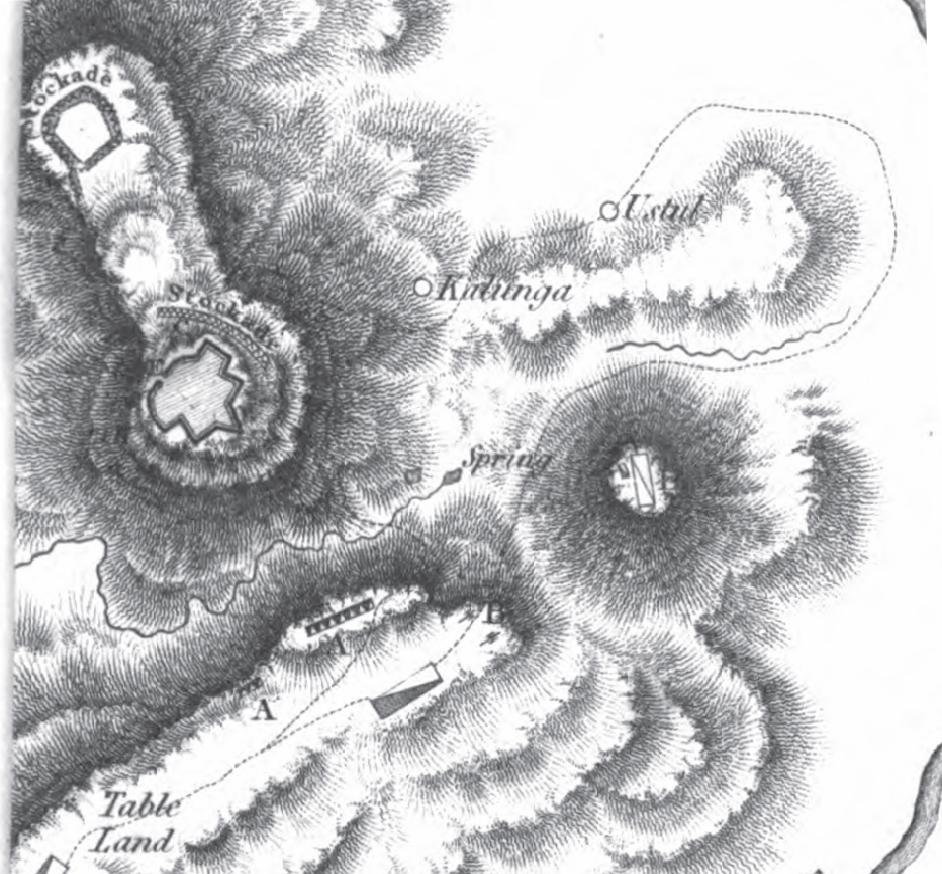

Context and combatants
Rising tensions along the Himalayan foothills and conflicting frontier claims produced the wider Anglo‑Nepalese War. The British sought to curb Gorkha expansion and secure trade and communication routes, while the Nepalese sought to defend territory and prestige. Nalapani was a relatively small mud and stone fortification guarding approaches to the Dehradun valley, but it occupied an important tactical position.
- Defenders: Commanded by Captain Balbhadra Kunwar, roughly several hundred Nepalese soldiers occupied the fort and surrounding works.
- Attackers: A British force under Major‑General Rollo Gillespie, including sepoys and European units, mounted the siege. Contemporary accounts record that the British had a large numerical advantage.
The siege and fighting
The British opened operations in late October 1814. On the first day of the siege, a brisk assault and an attempt to storm the fort were repulsed; during the fighting Major‑General Gillespie was killed while rallying his men, an event that shocked the attacking force. Two costly frontal assaults followed and also failed to dislodge the defenders, who compensated for inferior numbers with strong leadership, disciplined musketry, and effective use of the fort's defensive layout.
When direct attacks proved too costly, the besiegers sought to compel surrender by isolating the fort and cutting off its water and supplies. After several days without access to fresh water the garrison became critically short. On the final day of the siege, rather than capitulate, Captain Balbhadra led the remaining defenders in a desperate sortie. The small group fought its way out of the enclosure and retired into the surrounding hills, preserving lives and honour even as the fort fell to the British.
Aftermath and significance
Although the British captured Nalapani, the outcome is often described as a pyrrhic victory: the attackers expended disproportionate casualties, time and resources to take a modest stronghold. More important than the immediate tactical gain was the reputation the Nepalese defenders earned. The determined resistance at Nalapani and in subsequent encounters (notably at Jaithak and elsewhere) impressed British officers and soldiers, and contributed to a recognition of Gurkha fighting qualities.
- Strategic: The siege set the tone for a hard‑fought campaign across difficult terrain and highlighted the limits of frontal assaults against well‑led defenders.
- Cultural and military legacy: Anecdotes of bravery and endurance made the Gurkha name familiar in British military circles. After the war, the British recruited Gurkhas into their army, initiating a long tradition of service.
Notable facts and distinctions
The Battle of Nalapani is remembered as much for the courage and leadership displayed by its defenders as for the tactical lessons it taught the attackers. The death of Major‑General Gillespie on the first day became a prominent episode in contemporary narratives. Historians and military writers often cite Nalapani when discussing the development of Gurkha reputation and the conduct of sieges in the Himalayan foothills.
For further reading on the campaign and personalities involved, consult works that cover the broader British East India Company operations, histories of Nepal, and regional studies of Dehradun. The terms used to describe the outcome are framed in military judgement — some accounts label it a pyrrhic victory for the British — while its long‑term consequence was the recognition of the Gurkhas as formidable soldiers.
Questions and answers
Q: What was the Battle of Nalapani?
A: The Battle of Nalapani was the first battle of the Anglo-Nepalese War of 1814–1816. It took place around the Nalapani fort, near Dehradun, and involved forces from the British East India Company fighting against Nepal, then ruled by the House of Gorkha.
Q: Who commanded the British troops?
A: Major-General Rollo Gillespie commanded the attacking British troops. He had previously fought in the Battle of Java.
Q: How many people were in Balbhadra Kunwar's garrison?
A: Balbhadra Kunwar's garrison consisted of 600 people.
Q: How many British troops were there?
A: There were more than 5,000 British troops besieging Nalapani fort.
Q: What happened on the last day of siege?
A: On the last day of siege, after three days without water supply, Balbhadra refused to surrender and led 70 surviving members of his garrison in a charge against the besieging force. They managed to fight their way out and escape into nearby hills.
Q: Why did this battle become so famous?
A: This battle became famous because it established Gurkhas' reputation as warriors and as a result they were later recruited by the British to serve in their army.
Q: Was it a successful victory for Britain?
A: No, considering all time, effort and resources spent to capture such small fort it was a pyrrhic victory for Britain.
Related articles
Author
AlegsaOnline.com Battle of Nalapani (1814): first clash of the Anglo‑Nepalese War Leandro Alegsa
URL: https://en.alegsaonline.com/art/9520