
West Flanders: geography, history, economy and coastal culture
West Flanders is the westernmost Belgian province in Flanders, known for its North Sea coast, medieval Bruges, coastal tram, WWI memorials, mixed agriculture and a distinct West Flemish identity.
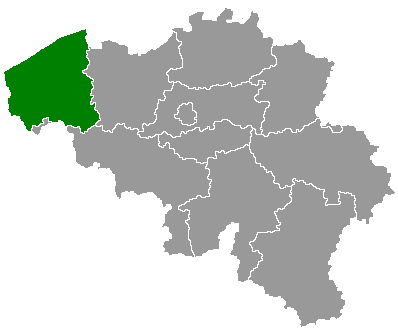
Overview: West Flanders occupies the western edge of the Flemish Region and is the westernmost of Belgium's provinces. Its capital is Bruges, a well‑preserved medieval city and major cultural centre. The province combines sandy beaches and dune systems along the North Sea with lowland polders, river valleys and compact urban areas. Local names and language traditions are reflected in Dutch, French, German and regional dialects: see West-Vlaanderen, Flandre-Occidentale and Westflandern. Administratively it is one of the provinces forming the Flemish Region and one of Belgium's provinces overall (Belgian provinces).
Image gallery
10 Images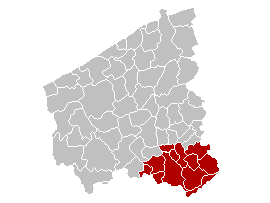





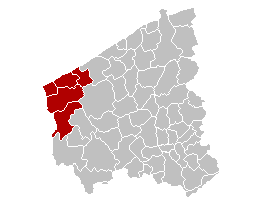
Geography and climate
Stretching from the North Sea coast inland, West Flanders contains the whole of Belgium's shoreline and a sequence of coastal towns, dunes and reclaimed polders. The coastal plain gives way to slightly higher ground further inland with rivers and agricultural land. The maritime climate is temperate, moderated by the sea, which influences local agriculture and tourism. The coastline itself is an important natural and economic zone; for general coastal context see the North Sea coast.
Administrative divisions and settlements
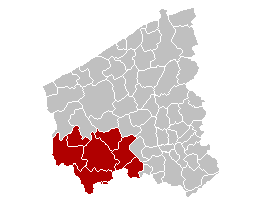
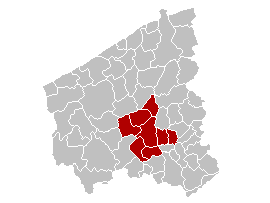
The province is organised into several arrondissements and municipalities, with notable urban centres including Bruges, Ostend and Kortrijk. Bruges (Dutch: Brugge, French: Bruges, German: Brügge) is the historic capital and attracts visitors for its canals and preserved medieval centre. Coastal towns such as De Panne and Knokke-Heist act as resort and transport hubs; local coastal services include the long‑running coastal tram line often referred to as the coastal tram, which links communities from De Panne to Knokke-Heist and beyond.
History and heritage
West Flanders has a layered past: from medieval trading and cloth industries centred on Bruges to modern developments in agriculture and light industry. The province also preserves important twentieth‑century heritage, notably battlefields and memorials associated with the First World War; these sites attract visitors and commemorations. Bruges' historic centre is recognised for its architectural and urban significance and forms an important cultural asset for the region.
Economy, transport and land use
The local economy blends tourism, maritime activity, agriculture and manufacturing. Coastal tourism—beaches, promenades and resorts—generates a strong seasonal economy, while inland zones support mixed farming, horticulture and food processing. Ports, particularly around Ostend, support shipping and logistics, and road and rail links tie the province to the broader Benelux network. The continuous coastal tram provides a unique and frequent public transport route serving many seaside communities.
Culture, language and contemporary issues
West Flanders is known for a distinct regional identity and the West Flemish dialect, which differs noticeably from standard Dutch in pronunciation and vocabulary. Cultural life includes festivals, maritime and agricultural traditions, and museum collections that document local history. Contemporary challenges include managing tourism pressures on coastal ecosystems, responding to climate and sea‑level concerns, and balancing economic development with conservation. For provincial resources and visitor information consult local authorities and tourism pages such as regional tourism and official provincial information.
- Language and names: French, German and regional Dutch forms are in common use.
- Major centres and transport: Bruges, Oostende, and the coastal tram.
- Coastal route endpoints: De Panne (near the French border) and Knokke-Heist (on the Dutch frontier).
Questions and answers
Q: What is the capital of West Flanders?
A: The capital of West Flanders is Bruges (Dutch: Brugge, French: Bruges, German: Brügge).
Q: What region is West Flanders part of?
A: West Flanders is one of the five provinces of the Flemish Region, also named Flanders, and also is one of the ten provinces of Belgium.
Q: Where does the Belgian North Sea coast lie?
A: The whole Belgian North Sea coast lies in West Flanders.
Q: Is tourism important to this region?
A: Yes, tourism is an important part of this region as it lies on the Belgian North Sea coast.
Q: Is there a public transportation option along the coast?
A: Yes, there is a tram line that runs from De Panne on the French border to Knokke-Heist on the Dutch frontier along the entire length of the coastline.
Q: What languages are spoken in West Flanders?
A:The languages spoken in West Flanders are Dutch, French, German and West Flemish.
Related articles
Author
AlegsaOnline.com West Flanders: geography, history, economy and coastal culture Leandro Alegsa
URL: https://en.alegsaonline.com/art/107370
Sources
- statbel.fgov.be : Population per municipality as of 1 January 2016
- circa.europa.eu : "WEST-VLAANDEREN"
- statbel.fgov.be : Institut National de Statistique - Direction générale Statistique et Information économique