
Sukhoi Su-24 (Fencer) — Soviet/Russian supersonic attack aircraft
The Sukhoi Su-24 is a twin-engine, supersonic, variable-sweep-wing Soviet attack aircraft introduced in the mid-1970s and used for low-level strike, reconnaissance and electronic warfare.
Overview
The Sukhoi Su-24, given the NATO reporting name "Fencer," is a twin‑engine supersonic attack aircraft developed in the Soviet Union for all‑weather, low‑level strike missions. Designed to carry a wide range of ordnance and to operate at reduced altitude with precision navigation and targeting aids, the type has formed a backbone of strike aviation for several air forces since its introduction in the 1970s. Its long service life reflects continual upgrades and multiple specialized variants.
Image gallery
10 Images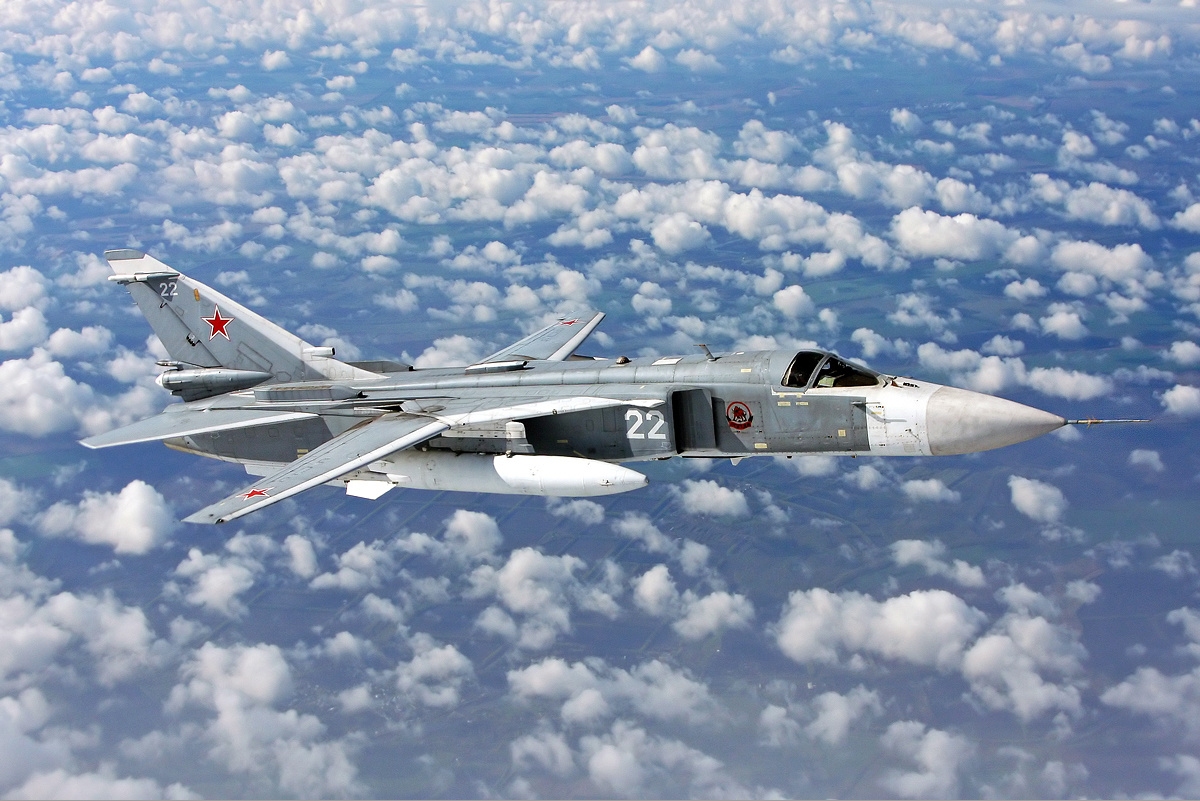


Design and characteristics
The Su-24 is notable for its variable‑sweep wings and strong payload capacity. Key features include:
- Airframe: a rugged structure with a two‑seat cockpit arranged side‑by‑side, improving crew coordination for complex attack missions.
- Propulsion: twin turbojet engines providing supersonic dash capability and good acceleration for the attack role.
- Avionics: a terrain‑following radar and navigation/targeting systems that enable low‑level ingress and precision delivery of weapons.
- Weapons: internal and external hardpoints for bombs, guided missiles and pods, plus electronic countermeasure options.
The variable‑geometry wing arrangement (variable-sweep wing) balances the need for low‑speed handling during takeoff/landing and high‑speed performance in flight.
Development and introduction
Designed by the Sukhoi bureau to replace earlier strike types, the Su-24 entered service with Soviet forces in the mid‑1970s, with production and modernization continuing for many years thereafter. Its development was part of a broader Cold War emphasis on strike aircraft capable of penetrating dense air defenses and delivering tactical nuclear or conventional weapons from low altitude. The type originated in the Soviet military aviation program and was fielded across Soviet strike units (Soviet Union).
Operational history
From its early deployments the Su-24 has seen combat use and has participated in numerous conflicts and operations. It has been used for conventional bombing, close air support, reconnaissance and electronic warfare. The type remains active in the Russian Air Force and has been upgraded with newer avionics and weapons suites to extend its service life (Russian Air Force). It has also been used by export customers and in regional conflicts where those operators have been engaged.
Variants and operators
Numerous variants exist, including improved strike models, reconnaissance versions and export standards that reflect differing avionics and armament fits. Representative variants include:
- Su-24 (initial production strike versions)
- Su-24M (modernized attack version with upgraded navigation and weapons integration)
- Su-24MR (tactical reconnaissance conversion)
- Export and locally upgraded versions sold to foreign air forces
Operators past and present have included Russia, Ukraine, Iran, Algeria, Kazakhstan, Syria and Azerbaijan, among others. Individual air forces have used the Su-24 in roles ranging from conventional attack to specialized reconnaissance and electronic support. Ongoing upgrades and retirements mean the fleet composition varies by country and over time.
For further technical detail and historical timelines see dedicated aviation references and manufacturer summaries that track avionics upgrades, variant designations and operational deployments. General sources can provide specifications, combat records and modernization programs for the Su-24 family.
Related articles
Author
AlegsaOnline.com Sukhoi Su-24 (Fencer) — Soviet/Russian supersonic attack aircraft Leandro Alegsa
URL: https://en.alegsaonline.com/art/94684