
Sukhoi Su-27 (Flanker) — Soviet/Russian air-superiority fighter
Twin-engine Soviet-era air-superiority fighter by Sukhoi. Known for range, agility and powerful armament, the Su-27 spawned a large family of variants and remains operational after modernization.
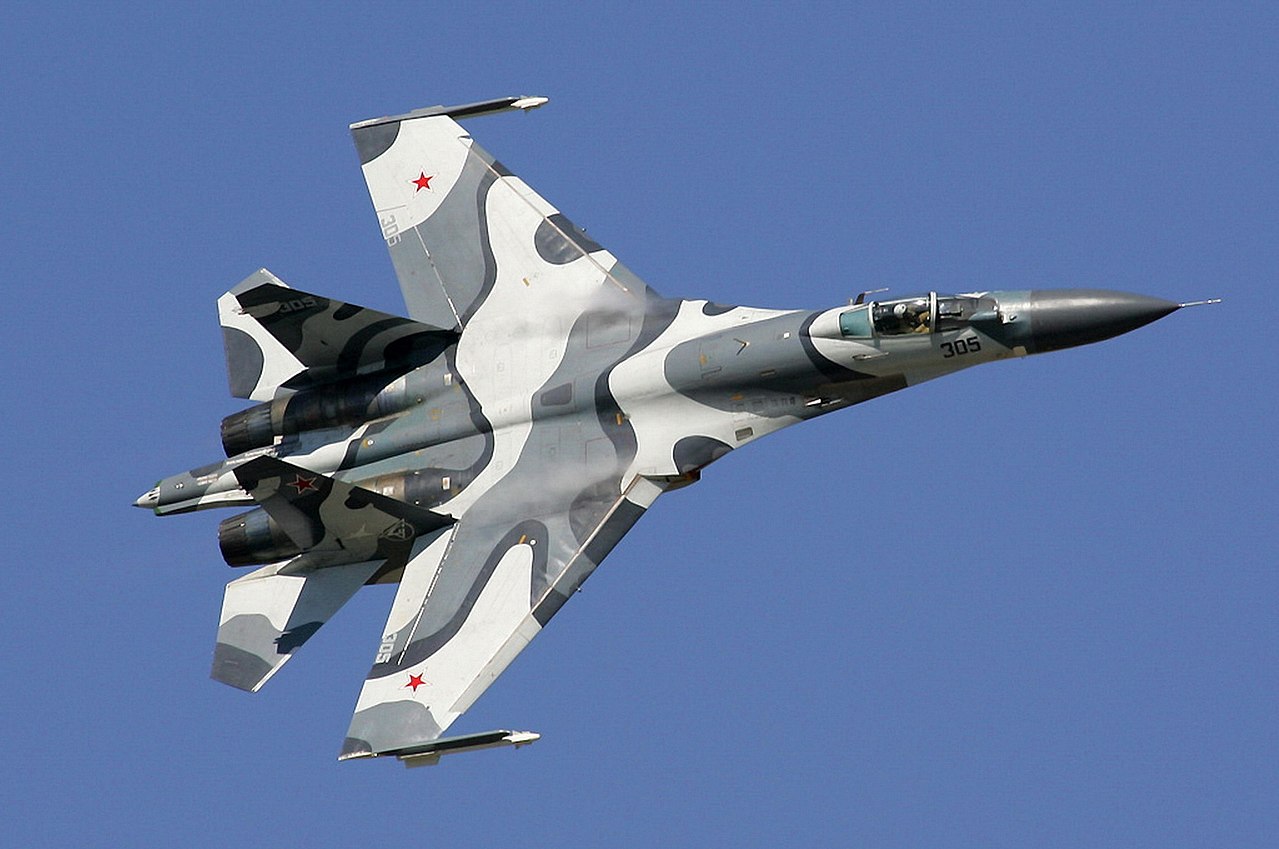
The Sukhoi Su-27 is a long-range, twin-engine air-superiority aircraft developed in the 1970s to contest Western fighters. Built by Sukhoi for the Soviet Union, the prototype first flew in 1977 and production versions entered service in the late 1980s and early 1990s. Designed to achieve and maintain control of the skies, the Su-27 combined high speed, extended range and significant weapons load to perform interception and air-combat roles.
Image gallery
10 Images





Design and key characteristics
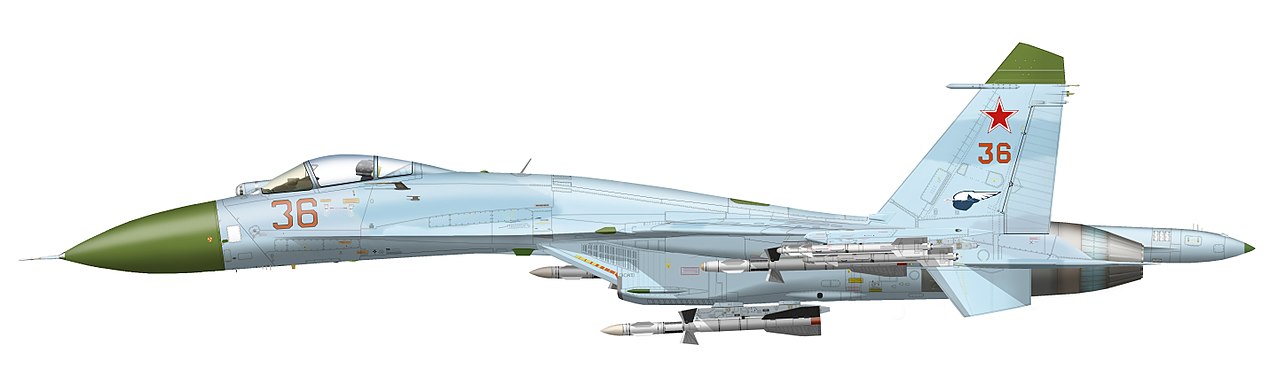
The Su-27 has a conventional twin-tail, blended wing–body layout and is powered by two turbofan engines to give a high thrust-to-weight ratio and long endurance. Its sensor suite typically includes a pulse-Doppler search radar and an infrared search-and-track (IRST) system linked to a helmet-mounted sight, improving target acquisition at close ranges. Onboard avionics and displays have been progressively upgraded in later versions to more modern "glass cockpit" standards.
- Engines: twin turbofans providing strong acceleration and range.
- Armament: a 30 mm internal cannon (GSh-301) plus air-to-air missiles such as the medium-range R-27 and short-range R-73 and a variety of unguided and guided air-to-ground munitions (missiles and stores).
- Sensors: multi-mode radar and IRST with pilot-targeting aids.
Variants and development
The original prototypes were designated T10 and T10S; production and export models are identified by letters such as S (service), P (interceptor) and UB (two-seat trainer). Export batches received designations like SK, SKM and UBM as avionics and weapons were modernized. The Su-27 airframe also served as the basis for several two-seat and specialized derivatives: the Su-30 (two-seat multirole), the Su-33 (carrier-capable naval variant) and later higher-performance developments such as the Su-35. Upgrades in the 2000s focused on improved avionics, expanded weapon compatibility and cockpit modernization.
Operational history and roles
Originally intended to operate alongside lighter fighters such as the MiG-29, the Su-27 served as the heavier long-range element in Soviet and later Russian force structure. It was intended to counter Western designs like the F-15 and F-16. In combat, Su-27s have seen action with several air forces; notably, during the Eritrean–Ethiopian conflict Ethiopian Su-27s were credited with air-to-air victories against Eritrean MiG-29s. The type has been used for fleet air defense, high‑altitude interception, escort and local air superiority missions, and many operators later pursued modernization programs to extend service life and upgrade weapon systems.
Legacy and notable points
The Su-27 is widely regarded as the backbone of a large family of Russian fighters—often collectively called "Flankers"—that remain relevant through upgrades. Its combination of range, payload and agility made it a defining Soviet response to Western high-performance fighters. The design's adaptability produced carrier and multirole variants and influenced subsequent Russian fighters. Today the aircraft continues in service with Russia and several export customers, many of which have modernized avionics, weapons and displays to keep the type competitive.
For further manufacturer and technical references see production notes and historical overviews by aviation sources; specific national service records and engagement accounts can be found in country-level summaries such as those for Ethiopia and Eritrea. Additional design and performance details are available from specialist pages and technical monographs provided by industry and historical archives (Soviet era reviews, weapons inventories, armament lists).
Related articles
Author
AlegsaOnline.com Sukhoi Su-27 (Flanker) — Soviet/Russian air-superiority fighter Leandro Alegsa
URL: https://en.alegsaonline.com/art/94685
Sources
- commons.wikimedia.org : Sukhoi Su-27
- sukhoi.org : sukhoi.org
- planeace.com : planeace.com
- militaryfactory.com : "Sukhoi Su-27 (Flanker) Air Superiority / Ground Attack / Multirole Fighter - Soviet Union"
- acig.org : "Acig.org"
- cengage.com : "Cengage Learning"
- armstrade.org : "ЦАМТО / Новости / Авиапарк Су-27 ВВС РФ модернизирован более чем на 50%, до конца года ожидается поступление первых шести серийных Су-35"