
Streptococcal pharyngitis (strep throat)
Streptococcal pharyngitis, or strep throat, is a bacterial infection of the throat and tonsils caused by Group A Streptococcus; it causes fever, sore throat, swollen glands and is treated to prevent complications.
Streptococcal pharyngitis, commonly called strep throat, is an acute infection of the throat and nearby structures produced by the bacterium Group A Streptococcus. The disease primarily involves the pharynx and the tonsils, the paired glands at the back of the mouth, and can sometimes extend to the larynx. It is most frequent in children and adolescents but can affect all age groups.
Image gallery
4 Images

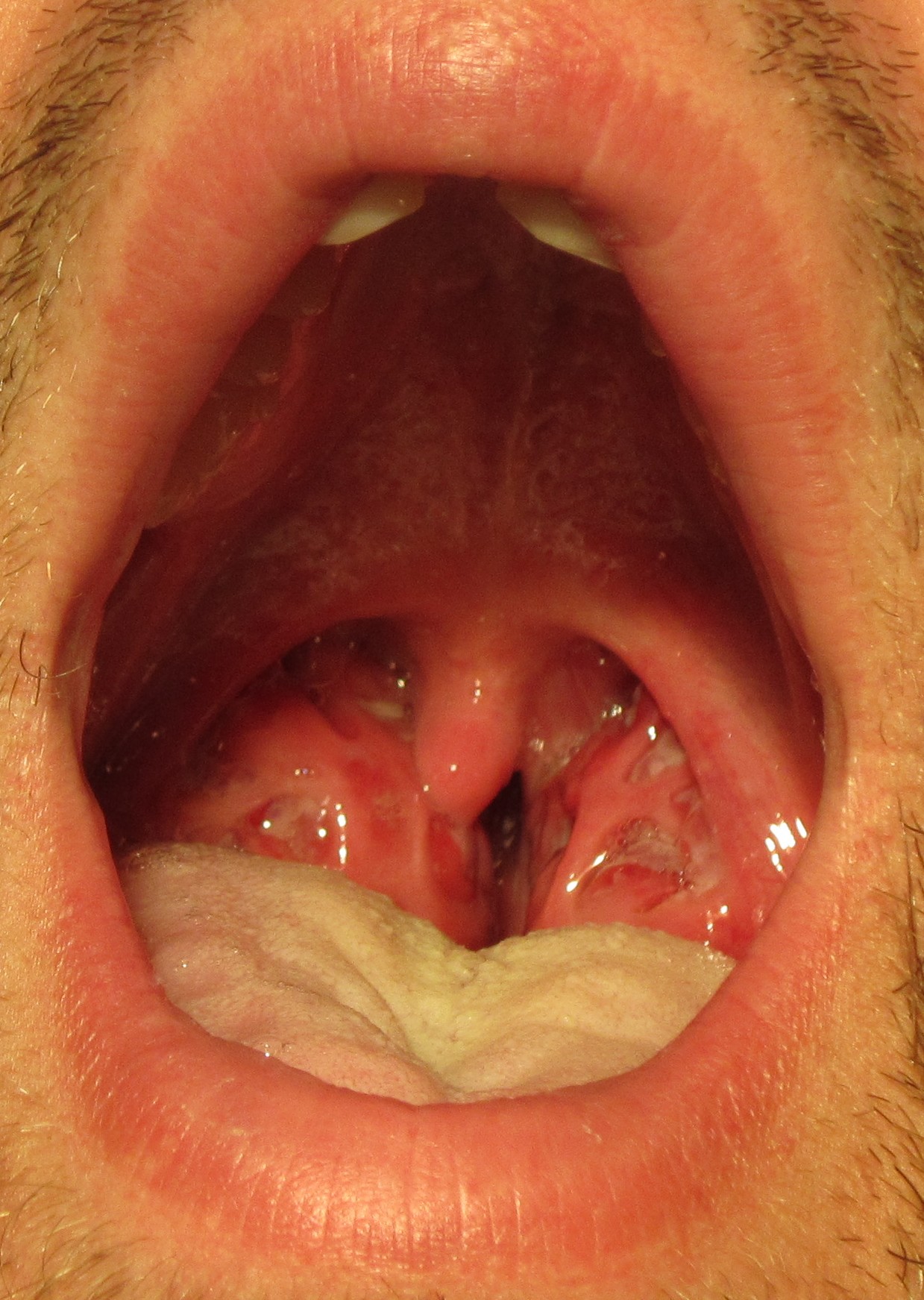

Signs and symptoms
Typical symptoms include sudden onset sore throat, pain when swallowing, and fever. Many patients have tender, enlarged lymph nodes in the neck, and the tonsils may appear red and swollen with white exudates. Other common complaints are headache, abdominal pain (especially in children), and a general sense of malaise. Classic features are summarized below.
- Fever — often moderate to high (fever).
- Sore throat — severe throat pain (sore throat).
- Swollen neck glands — enlarged lymph nodes.
- Tonsillar changes — redness, swelling, or pus on the tonsils.
- Occasional voice changes if the larynx is involved.
Transmission and epidemiology
Strep throat spreads by respiratory droplets during close contact with an infected person or via contaminated surfaces. It occurs year-round but is more common in late winter and early spring in temperate climates. While many sore throats are viral, Group A Streptococcus is a frequent bacterial cause in children and a notable reason to seek medical evaluation when symptoms are suggestive.
Diagnosis
Clinical assessment uses the pattern of symptoms and physical findings, but definitive diagnosis generally relies on laboratory testing. A rapid antigen detection test can provide quick results in outpatient settings; a throat culture remains the gold standard for accuracy and may be performed when rapid tests are negative but suspicion remains. A throat culture involves swabbing the back of the throat and growing the organism in a lab (throat culture).
Treatment and prevention
Antibiotics are the main treatment when Group A Streptococcus is confirmed or strongly suspected. Common regimens (typically penicillin or amoxicillin) shorten the infectious period, may modestly reduce symptom duration if started early, and are important to prevent rare but serious complications. Supportive care—rest, fluids, antipyretics and analgesics—helps relieve discomfort. Vaccination against Group A Streptococcus is not currently available, so prevention focuses on good hygiene, covering coughs and staying home while contagious.
Complications and importance
If untreated, streptococcal infections can occasionally lead to complications such as a local abscess (peritonsillar abscess) or systemic immune-mediated conditions. Historically and clinically important is rheumatic fever, an inflammatory condition that can follow untreated infection and affect the heart, joints and nervous system. Appropriate diagnosis and timely antibiotic treatment have greatly reduced the incidence of such complications.
Because antibiotics are medicines that target bacteria, they should be used according to medical guidance to avoid resistance and unnecessary side effects. For an accurate assessment or persistent symptoms, clinicians recommend testing and targeted therapy rather than self-treatment. For further reading on anatomy and clinical care, see resources about the oral cavity and relevant clinical guidelines (tonsils, throat). Additional authoritative overviews and diagnostic resources are available through medical references and public health guidance (bacteria, Group A Streptococcus, throat culture).
Questions and answers
Q: What causes strep throat?
A: Strep throat is caused by the bacteria called “Group A Streptococcus”.
Q: What parts of the throat does strep throat affect?
A: Strep throat affects the throat and the tonsils. The tonsils are the two glands in the throat at the back of the mouth. Strep throat can also affect the voice box (larynx).
Q: What are common symptoms of strep throat?
A: Common symptoms of strep throat include fever, throat pain (also called a sore throat), and swollen glands (called lymph nodes) in the neck.
Q: What percentage of sore throats among children are caused by strep throat?
A: Strep throat causes 37% of sore throats among children.
Q: How does strep throat spread?
A: Strep throat spreads through close contact with a sick person.
Q: What test is needed to confirm that a person has strep throat?
A: To be sure that a person has strep throat, a test called a throat culture is needed.
Q: How do antibiotics help a person with strep throat?
A: Antibiotics can help a person with strep throat by killing the bacteria that cause the illness. They are used mostly to prevent complication such as rheumatic fever rather than to shorten the length of sickness.
Related articles
Author
AlegsaOnline.com Streptococcal pharyngitis (strep throat) Leandro Alegsa
URL: https://en.alegsaonline.com/art/94264
Sources
- mercksource.com : streptococcal pharyngitis
- doi.org : 10.1542/peds.2009-2648
- pubmed.ncbi.nlm.nih.gov : 20696723
- aafp.org : "Diagnosis and treatment of streptococcal pharyngitis"
- pubmed.ncbi.nlm.nih.gov : 19275067
- pubmed.ncbi.nlm.nih.gov : 17137534
- aafp.org : "Management of Group A beta-hemolytic streptococcal pharyngitis"
- pubmed.ncbi.nlm.nih.gov : 11327431
- doi.org : 10.1097/MOP.0b013e32833502e7
- pubmed.ncbi.nlm.nih.gov : 19996970
- doi.org : 10.1080/02813430410006729
- pubmed.ncbi.nlm.nih.gov : 15765640
- doi.org : 10.1086/340949
- pubmed.ncbi.nlm.nih.gov : 12087516
- aafp.org : "Epstein-Barr virus infectious mononucleosis"