
Straitjacket: History, Design, Uses, and Ethical Considerations
A straitjacket is a garment designed to restrict arm movement, historically used in psychiatric care. Article covers design, history, modern uses, safety concerns, alternatives, and cultural references.
Overview
A straitjacket is a specially constructed garment intended to limit the movement of a person's arms and hands. Historically associated with psychiatric hospitals and asylums, it was used to prevent self-harm, attacks on others, or removal of medical devices. Contemporary discussion of straitjackets encompasses clinical practice, legal and ethical limits, and cultural portrayals.
Image gallery
4 Images


Design and how it works
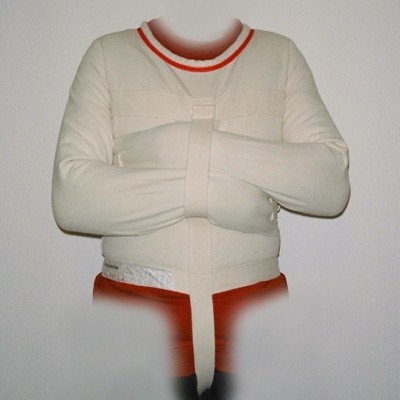
Typical straitjackets are made from heavy fabric such as canvas or reinforced cotton; some older examples use leather. The key features include extended sleeves that can be crossed across the chest or wrapped around the waist, strong straps and buckles that secure the sleeves and the body, and a rear closure to prevent access to the fastenings. Modern instructional material emphasizes correct sizing, padded edges and regular monitoring to avoid circulation or breathing problems. For details of restraint devices and related fittings see technical references.
History and development
Restraints for people with mental illness have existed in various forms for centuries. The particular form known as the straitjacket became prominent in the 18th and 19th centuries as custodial institutions developed. It was introduced as part of efforts to manage agitated patients without continuous physical force. Over time, both the construction and the rules governing use evolved alongside changing medical attitudes and legal standards.
Uses, regulation and alternatives
Use of straitjackets in modern psychiatric care has declined markedly. Many jurisdictions now limit or prohibit their use except in exceptional situations, preferring less restrictive options such as verbal de-escalation, one-to-one observation, seclusion, or carefully administered medication. Hospitals and wards that permit physical restraints typically follow written protocols, staff training and documentation requirements. For policy examples see institutional guidelines.
Notable facts and cultural presence
Outside clinical settings, the straitjacket has a visible place in popular culture. Escape artists famously used it as a dramatic prop, and it appears frequently in literature and film as a symbol of confinement. These cultural images do not reflect the careful safeguards required in medical practice. For further historical context and cultural references consult archival sources.
- Characteristics: heavy fabric, long sleeves, multiple straps.
- Risks: pressure injuries, impaired circulation, psychological distress if misused.
- Current emphasis: least-restrictive care and regular review when restraints are applied.
Related articles
Author
AlegsaOnline.com Straitjacket: History, Design, Uses, and Ethical Considerations Leandro Alegsa
URL: https://en.alegsaonline.com/art/94164