
Clothing: purpose, materials, cultural meaning and history
Overview of clothing: its functions, common materials and garments, historical development, cultural roles, production methods and modern sustainability concerns.
Clothing consists of garments and accessories worn to cover, protect, or decorate the human body. Beyond basic protection from weather and environmental hazards, clothing serves social and symbolic roles: it signals identity, status, profession, religion and personal taste. Humans are the only animals that routinely wear clothing, and garments vary widely across climates, technologies and cultural traditions. For an introduction, see basic overview.
Image gallery
10 Images


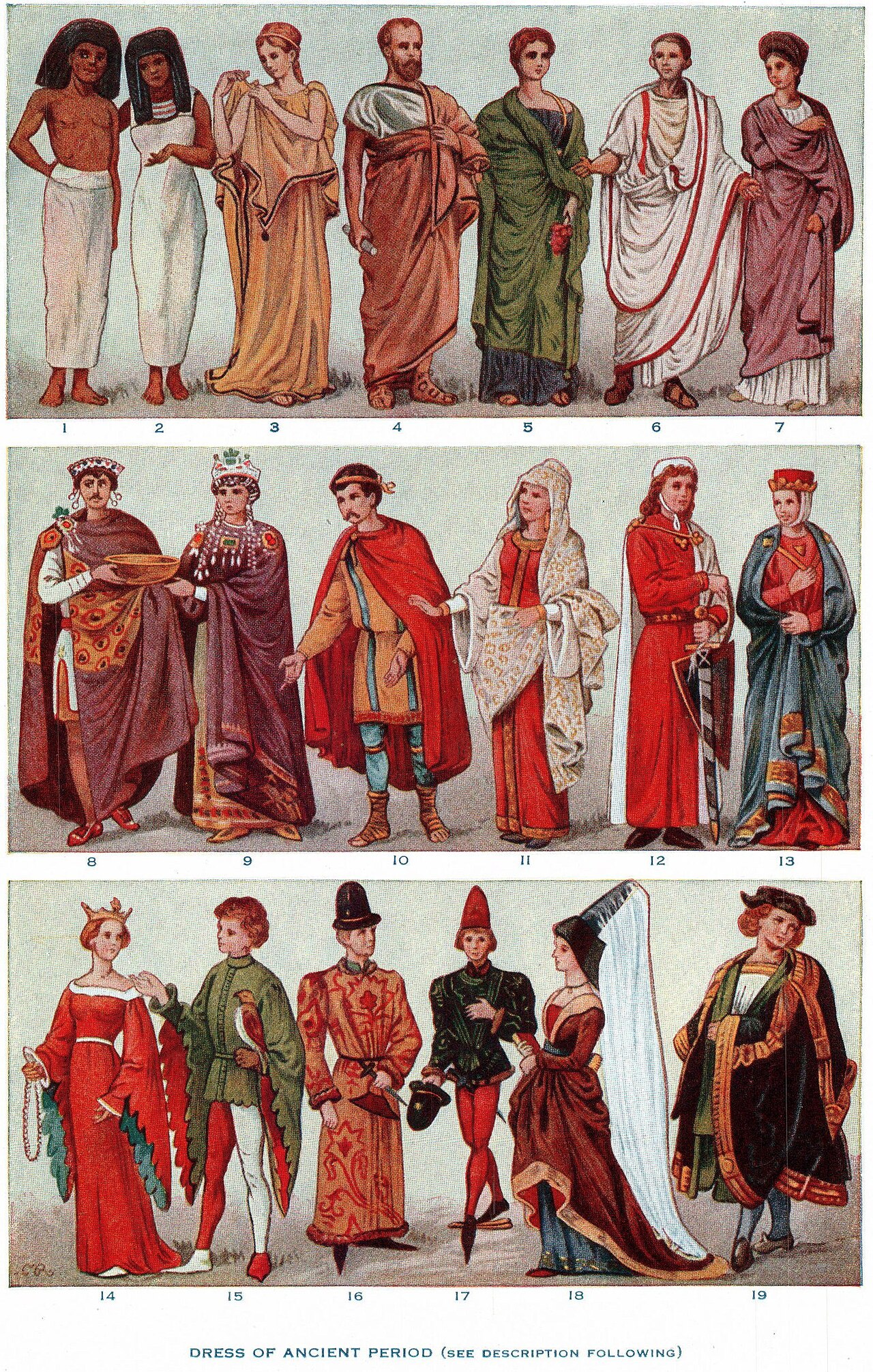


Types and typical garments
Clothing items are often described by the body part they cover and by their function. Common categories include outerwear, undergarments, footwear and headgear. Typical examples include shirts and blouses for the torso, trousers and skirts for the lower body, gloves for the hands and a variety of hats and veils for the head. Specialized garments such as masks or protective suits serve occupational or ceremonial purposes.
- Torso: shirts, jackets, sweaters — see torso garments.
- Arms: sleeves, coats and arm coverings — see arm coverings.
- Legs: pants, skirts and leggings — see legwear.
- Hands: gloves and mittens — see handwear.
- Feet: shoes, boots and sandals — see footwear.
- Head: hats, caps, helmets and masks — see headgear and masks.
History and development
The history of clothing parallels developments in technology, trade and social organization. Early garments were commonly animal skins and simple wraps used for protection. The invention and improvement of textile techniques — spinning, weaving and sewing — allowed lighter, more fitted and decorative clothing. The domestication of fiber-bearing plants and animals provided materials such as cotton, wool and silk, while trade spread fabrics and styles between regions. Industrialization transformed production from handcraft to factory-based mass manufacture, greatly increasing availability and lowering costs.
Across cultures, clothing has adapted to climate and resources. In hot regions minimal garments or loose, breathable fabrics predominate; in cold climates layered and insulating garments are common. Religious and ceremonial dress often preserves older styles and textiles that remain meaningful beyond everyday utility.
Functions, meanings and distinctions
Clothing performs practical functions — thermal regulation, protection from sun, rain, wind and hazards — and social functions: modesty, group belonging, rank and profession. Uniforms and workwear are designed for safety and identification; formal and ceremonial dress convey tradition and respect. Fashion and personal style enable self-expression and social signaling. Dress codes and cultural norms influence what is acceptable or required in different settings.
Materials, production and sustainability
Materials used include natural fibers (cotton, linen, wool, silk), animal hides and a range of synthetic fibers (polyester, nylon). Garment construction ranges from bespoke tailoring and artisanal weaving to ready-to-wear mass production. Modern systems can create environmental and social challenges: resource consumption, chemical use, waste and labor issues. These concerns have driven interest in sustainable materials, recycling, slow fashion and improved manufacturing practices.
Technical and performance clothing — such as insulated outerwear, fire-retardant garments, sportswear and garments with integrated electronics — show how function and innovation continue to shape what people wear. While the purposes of clothing remain practical, symbolic and aesthetic, its forms continue to evolve with technology, culture and the environment.
Further reading and resources
- Human use of clothing
- Comparative notes on animals and clothing
- Historical nakedness and dress
- Clothing and climate adaptation
- Insulating materials and coats
- Cold-weather clothing
- Arctic clothing practices
- Fashion and ornamentation
- Cultural variations in dress
- Torso clothing examples
- Shirts and sleeves
- Pants and legwear
- Skirts and lower-body garments
- Gloves and hand protection
- Footwear types
- Head coverings
- Traditional headgear
- Masks and face coverings
Questions and answers
Q: What are clothing items used for?
A: Clothing items are used to cover the human body.
Q: Are humans the only animals that wear clothing?
A: Yes, humans are the only animals that wear clothing.
Q: How did humans keep warm before they learned to make clothes?
A: Before learning to make clothes, humans were naked and had to rely on their natural body hair for warmth.
Q: In what climates do people need protection from the sun and dust?
A: People in hot, dry climates lacking shade need protection from the sun and dust.
Q: What type of clothing is worn in very cold temperatures?
A: Thick wool coats and boots are typically worn in very cold temperatures such as those found in the arctic.
Q: Why do people wear different types of clothing?
A: People from different cultures wear different types of clothing due to differences in beliefs and customs about what should be worn, as well as for fashion or self-expression purposes.
Q: What materials are usually used to make clothing?
A: Clothing is usually made of fabric sewn together but may also be animal skins.
Tags
Related articles
Author
AlegsaOnline.com Clothing: purpose, materials, cultural meaning and history Leandro Alegsa
URL: https://en.alegsaonline.com/art/21100
Sources
- commons.wikimedia.org : Clothing
- eva.mpg.de : "Molecular evolution of Pediculus humanus and the origin of clothing"
- doi.org : 10.1016/S0960-9822(03)00507-4
- pubmed.ncbi.nlm.nih.gov : 12932325
- current-biology.com : "Erratum: Molecular evolution of Pediculus humanus and the origin of clothing"
- mbe.oxfordjournals.org : "...Lice Indicates Early Clothing Use ..."
- redorbit.com : "Naked ape: Humans lost body hair long before finding clothes"