
Battenberg cake
Battenberg cake is a light, chequered sponge cake wrapped in marzipan; known for its two-colour grid, use of jam to join pieces, and Victorian-era association with the Battenberg family.
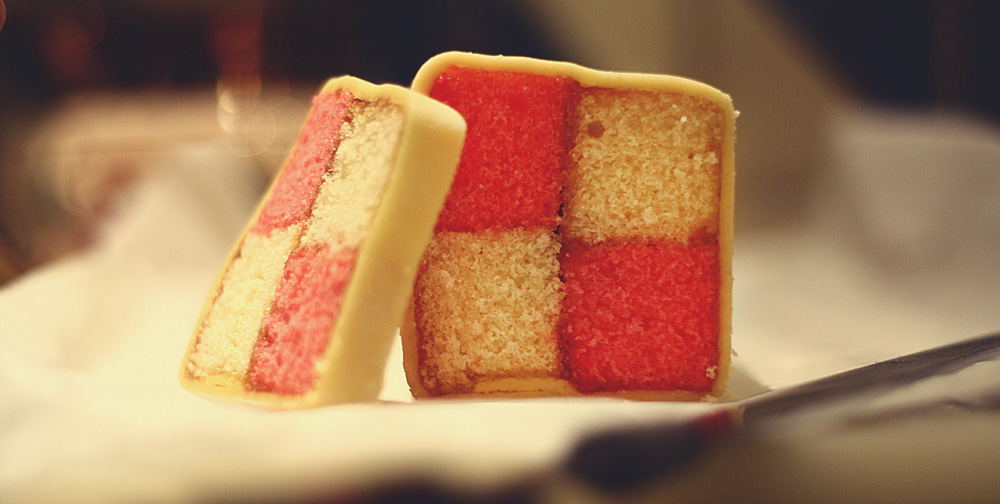
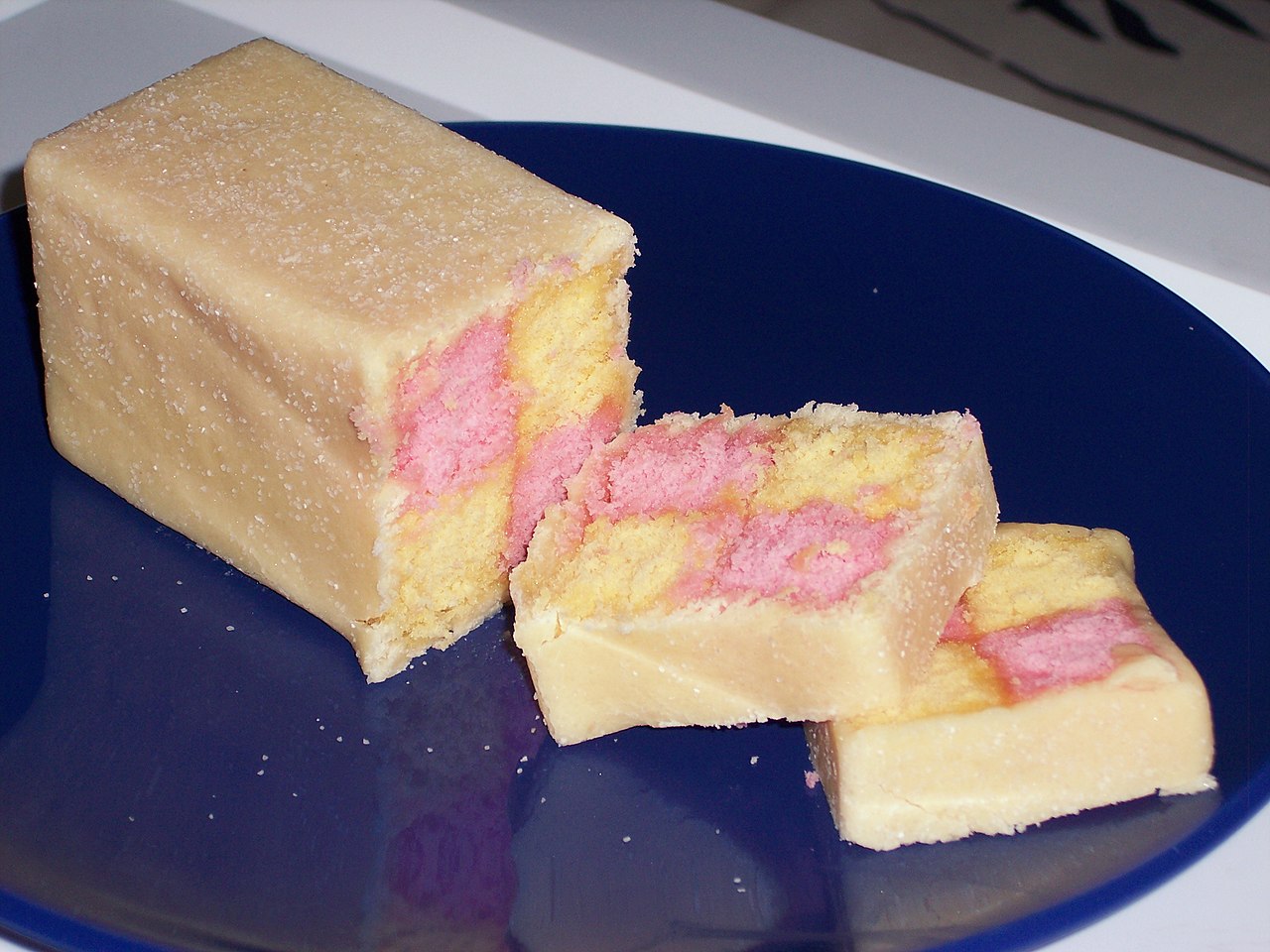
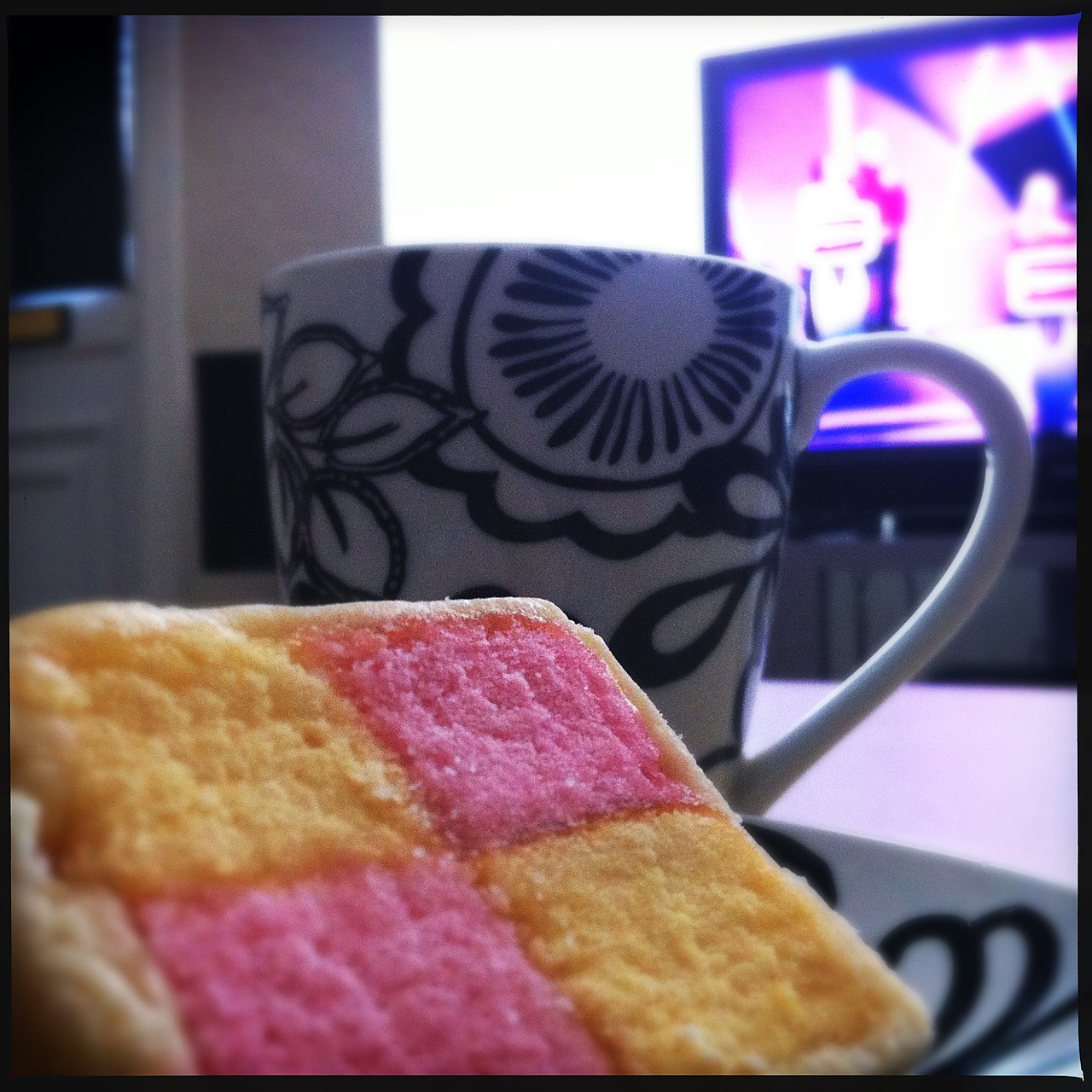
The Battenberg cake is a distinctive light sponge confection recognised by its two-by-two coloured checkered pattern and a thin marzipan wrapping. When sliced, the interior reveals alternating pink and yellow squares that form a neat checkerboard. It is usually assembled from two flavours or colourings of sponge joined together with a thin layer of jam and finished by covering the outside in rolled marzipan.
Image gallery
5 Images

Appearance and structure
Typical Battenberg slices show four rectangular blocks of sponge arranged in two rows and two columns. Builders make these by baking two long sponges — one left natural, the other tinted with food colouring or a mild flavouring — cutting each into two long strips, and gluing them in alternating order. The seams are smoothed with jam, which also helps the marzipan adhere. The finished cake has a neat, geometric look and a tender, fine crumb.
Ingredients and basic preparation
The classic recipe relies on a light genoise or creamed sponge, almond-flavoured marzipan, and a thin layer of jam. For an introduction to the core element, see a general sponge cake description. To dress and seal the cake, bakers typically use marzipan rolled thin; a apricot jam or other clear fruit preserve is spread sparingly between sponge strips and beneath the marzipan to help adhesion and add moisture.
- Make two equal batters; colour or flavour one.
- Bake in long loaf tins and cool completely.
- Trim into even strips and join into the checker pattern with jam.
- Wrap in a sheet of rolled marzipan and trim the edges.
History and name
The cake became widely known in Britain in the late 19th century and is often linked to the marriage of a granddaughter of Queen Victoria to a member of the Battenberg family. This connection is commonly cited to explain the name and the four internal blocks — said to represent members of the Battenberg household — but firm documentary proof for the exact origin is limited. The confection's neat, portable shape and attractive interior made it popular for tea parties and social events during the Victorian and Edwardian periods.
Variations and uses
Modern bakers adapt the classic formula in several ways. Common variations swap flavourings (lemon, coconut, or almond), replace the jam with curd or flavored preserves, or use different colour schemes. Smaller or larger grid patterns have been created, but the traditional two-by-two layout remains the most recognisable. The cake is served at tea, as a celebration loaf, or in patisserie shops where its visual appeal is a selling point.
- Lemon or almond-flavoured sponge instead of plain.
- Raspberry or lemon curd in place of apricot jam.
- Coloured or naturally tinted batters for varied palettes.
Notable facts and related points
Because the cake relies on precise sizing and neat joins, professional bakers often use templates or cutters to maintain uniformity. It remains a classic example of domestic Victorian-era baking that has retained popularity into the present day. For more on its cultural context and historical references, see material on the Battenberg family and period cookery. The Battenberg's combination of simple flavours and striking presentation helps explain its enduring appeal.
Related articles
Author
AlegsaOnline.com Battenberg cake Leandro Alegsa
URL: https://en.alegsaonline.com/art/9400
Sources
- bbc.co.uk : "Battenburg Cake recipe"
- wisegeek.com : "What is Battenberg Cake?"