
Jam (fruit preserve): definition, production, uses and standards
Jam is a cooked fruit preserve made from fruit, sugar and often pectin. This article explains composition, texture, history, culinary uses, legal definitions and distinctions from marmalade, jelly and fruit butter.
Overview
Jam is a sweet spread made by cooking fruit with sugar until the mixture thickens into a gel. Typical ingredients are the fruit itself, sugar and, where needed, added pectin or acid to help set the gel. As a widely used condiment, jam is commonly stored in airtight jars and eaten on bread, in pastries, as a filling, or as an ingredient in sauces and glazes.
Image gallery
10 Images





Composition and texture
Jam usually contains a high proportion of fruit relative to other preserves. Fruit pieces or crushed fruit provide texture, while sugar promotes preservation and helps form the gel. Natural pectin—found in apples, citrus peels and some other fruits—binds with sugar and acid to create a stable structure; commercial pectin is often added to ensure consistent results. The result is a viscoelastic gel that is neither purely liquid nor entirely solid: it flows slowly, but can hold fruit fragments and shape when scooped. When exposed to air after opening, jam may thin and become more susceptible to microbial spoilage.
History and production
Preserving fruit with sugar or honey has a long history in many cultures. As sugar became more widely available in Europe and elsewhere, the practice of making sweet fruit preserves expanded and diversified into many regional specialties. Traditional home production involves boiling fruit and sugar, skimming foam, and hot-filling sterilized jars to create a vacuum seal. Commercial production uses controlled heating, standardized recipes, and quality testing to ensure consistent texture and shelf stability.
Uses, varieties and culinary examples
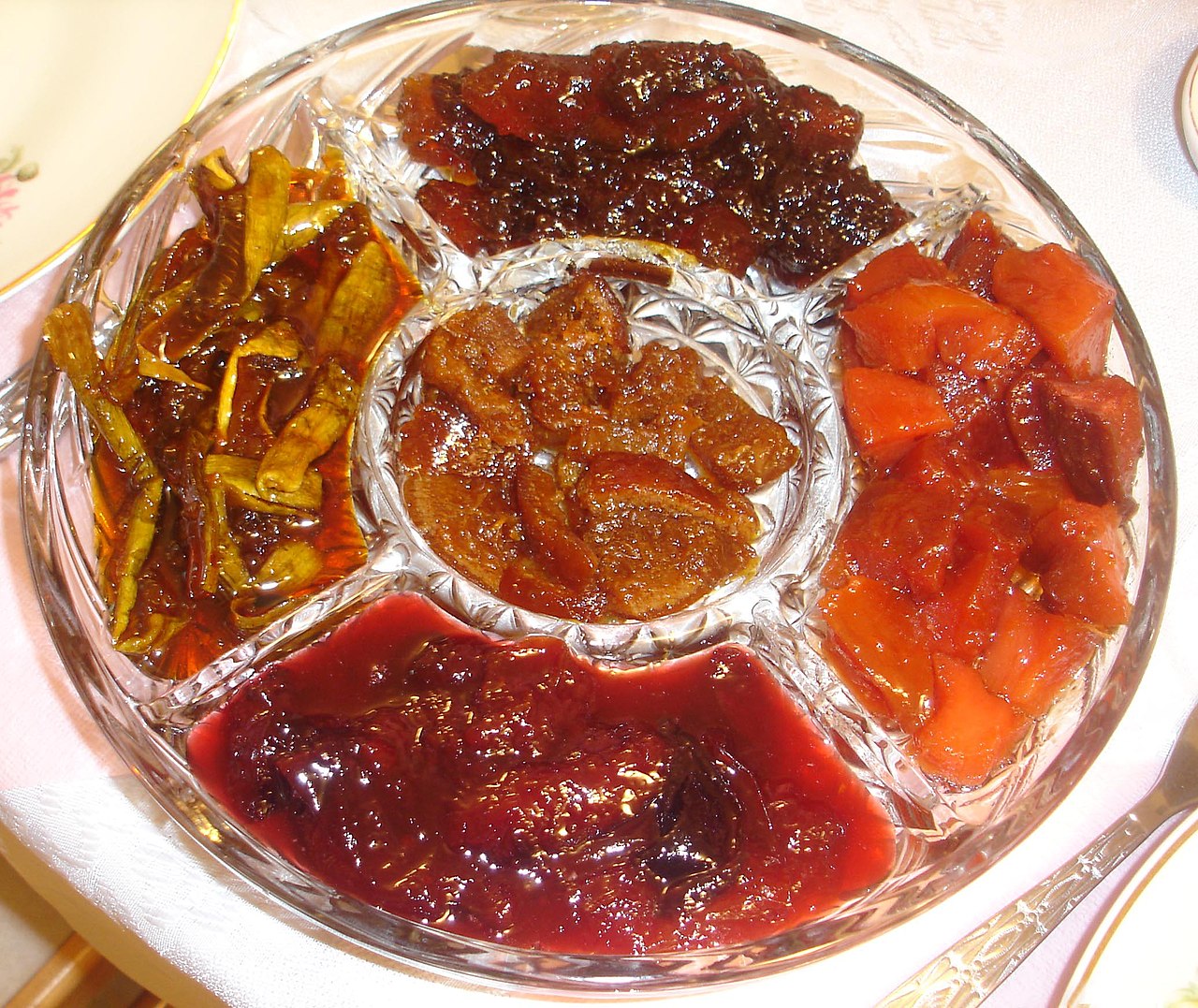
Jam exists in many flavors, from common varieties like strawberry and apricot to unusual types such as tomato or onion preserves. It serves multiple culinary roles:
- Spreads on bread, toast and scones.
- Fillings for cakes, cookies and pastries.
- Glazes and sauces for meats and desserts.
- Ingredients in savory pairings—e.g., fruit-based chutneys and compotes.
Specific names denote differences in preparation: marmalade is traditionally made from citrus, especially oranges, and contains notable bits of peel; artists have even used jam as a pigment or medium in unconventional works (for example, some artists experimented with blackberry jam).
Legal definitions and standards
Many jurisdictions regulate what may be sold as "jam" and set minimum fruit content or soluble solids. For example, European rules recognize a broad definition of "fruit" to include certain botanical fruits and vegetables used as preserves (tomato, rhubarb, and others) and require minimum fruit contents in commercial products. In Canada, regulations specify minimum proportions for the named fruit and water-soluble solids and permit only certain additives such as pectin, acids and approved preservatives; they also list constraints on which ingredients may be used in some jam products. These standards help protect consumers and ensure that product names match expectations.
Distinctions and notable facts
Jam is distinct from similar preparations: tomato preserves may be called jam when prepared like fruit jams; melons and watermelons can be made into jam although their high water content makes gelling more difficult; rhubarb, while botanically a vegetable, is commonly made into jam using its stalks. Carrots, sweet potatoes, cucumbers and pumpkins are sometimes preserved in jam-like preparations. The texture difference between jam and marmalade, jelly (made from strained juice rather than whole fruit), and fruit butter (slow-cooked, smooth and spreadable) is important for cooks and regulators alike.
Because of its gel structure, jam behaves differently from liquids: it can hold suspended fruit pieces yet becomes more fluid as it warms or degrades. Proper processing, acidic balance and sanitation are key to safe storage and long shelf life.
Questions and answers
Q: What is jam?
A: Jam is a condiment made from pressed fruit, sugar, and sometimes pectin. It is usually cooked and then put into an airtight jar.
Q: How much sugar does jam contain?
A: Most jams contain as much sugar as they contain fruit.
Q: What are the minimum standards for the amount of "fruit" in jam according to the European Union's Jam Directive?
A: According to the European Union's Jam Directive (Council Directive 79/693/EEC, 24 July 1979), there are minimum standards for the amount of "fruit" in jam. This includes fruits that are not usually treated as fruits, such as tomatoes; fruits that are not normally made into jams, such as melons and watermelons; and vegetables that are sometimes made into jams, such as rhubarb (the edible part of the stalks), carrots, sweet potatoes, cucumbers, and pumpkins.
Q: What do Canadian food and drug regulations say about jam?
A: According to Canadian food and drug regulation (CRC), jam must at least have 45% of the named fruit and 66% of water-soluble solids. In addition it may contain added pectin, pectinous preparation or acid ingredient with reasonable amounts of a Class II preservative, pH adjusting agent or antifoaming agent but no apple or rhubarb.
Q: How is marmalade different from other types of jam?
A: Marmalade is a type of jam made from oranges which tends to have pulp and peels whereas other types of jams are usually just made from pressed fruit without any pulp or peels included.
Q: How is jelly different than other types of jams?
A: Jelly differs from other types of jams because it is mostly made from juice instead of pressed fruit like most other kinds of jams.
Q: What was Joan Miró known for using blackberry jam for?
A: Joan Miró used blackberry jam as an art medium
Related articles
Author
AlegsaOnline.com Jam (fruit preserve): definition, production, uses and standards Leandro Alegsa
URL: https://en.alegsaonline.com/art/49151
Sources
- laws.justice.gc.ca : "Consolidated federal laws of canada, Food and Drug Regulations"