
Spring (water)
A spring is where groundwater emerges at the Earth's surface. This article explains how springs form, their types, roles in ecosystems and human use, and basic water-quality and management issues.
Overview
A spring is a natural discharge point where groundwater flows out onto the Earth's surface. Springs can be found on hillsides, valley floors, or at the bottoms of lakes and wetlands where subsurface water pressure and local geology allow water to emerge from the ground bedrock or sediment. Some springs flow continuously year-round (perennial), while others appear only after rain or seasonal thaw.
Image gallery
10 Images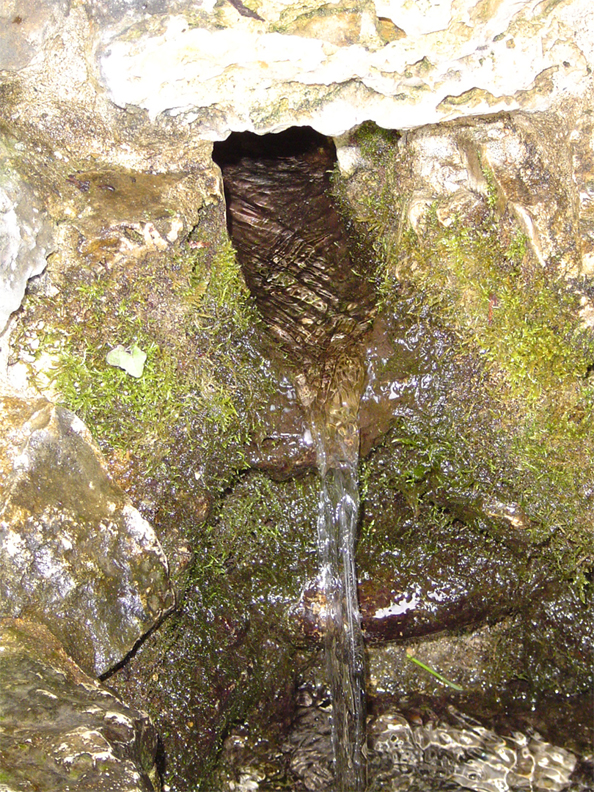


How springs form and common types
Springs form when water in an aquifer reaches a point of lower pressure or exits through permeable strata. Recharge from precipitation such as rain or melting snow (snowmelt) replenishes groundwater that feeds springs. The local arrangement of rock layers, faults and porous soils determines where and how water emerges.
- Seep or seepage spring: slow, diffuse emergence across a slope.
- Gravity spring: groundwater flows out where the water table intersects the land surface.
- Artesian spring: pressurized water rises through a confined aquifer without pumping.
- Thermal or hot spring: water heated at depth emerges warm, often with dissolved minerals.
Role in landscapes and ecosystems
Water from springs often starts streams and rivers; many river headwaters originate where springs issue from the ground and flow downhill. Springs create stable wet habitats that support specialized plants and animals. Because spring flow can be more constant than surface runoff, these sites are ecologically important refuges during dry seasons.
Human use, cultural importance, and spa towns
People have used springs for drinking water, irrigation, milling and bathing for millennia. Some springs have high mineral content or warm temperatures and were believed to have healing properties; settlements that developed around these sites are commonly called spa towns. Today springs remain valued for public water supplies, recreation, and tourism.
Water quality, hazards and management
Spring water quality varies with the geology it passes through. Minerals can enrich water, but springs are also vulnerable to contamination from surface pollutants, septic systems, and agricultural runoff. Protecting recharge areas, monitoring flow and chemistry, and managing land use are standard practices to preserve spring sources and the ecosystems and communities that depend on them.
Notable distinctions
Springs differ from wells in that wells are excavations made by people to reach groundwater, whereas springs are natural outlets. Similarly, not all springs are suitable for drinking without treatment; mineralized or biologically contaminated springs require assessment before use. Their permanence, temperature and chemistry provide useful clues about the geology and hydrology of the surrounding landscape.
Related articles
Author
AlegsaOnline.com Spring (water) Leandro Alegsa
URL: https://en.alegsaonline.com/art/92859