
Meteorological history of Hurricane Wilma (October 2005)
Detailed account of Hurricane Wilma’s development, explosive intensification to a record low pressure, landfalls in Mexico and Florida, and subsequent weakening and extratropical transition.
Hurricane Wilma was one of the most remarkable tropical cyclones in Atlantic history. It formed in mid-October 2005 during an exceptionally active hurricane season and is best known for an extraordinary episode of rapid intensification that produced the lowest central pressure ever recorded in an Atlantic hurricane: 882 mbar. Wilma's lifecycle illustrates how favorable oceanic heat and atmospheric conditions can drive explosive deepening and how intense tropical cyclones evolve and interact with land and mid-latitude systems.
Image gallery
9 Images


Formation and early development
The disturbance that became Wilma originated over the central Caribbean Sea in the second week of October 2005. A broad area of low pressure and disorganized convection gradually consolidated to the southeast of Jamaica. By late on October 15 the National Hurricane Center classified the system as Tropical Depression Twenty-Four. Movement was initially slow and southwestward. Over the next two days, environmental conditions — warm sea surface temperatures, ample moisture and relatively low wind shear — allowed the depression to strengthen into Tropical Storm Wilma on October 17.
Explosive intensification and peak intensity
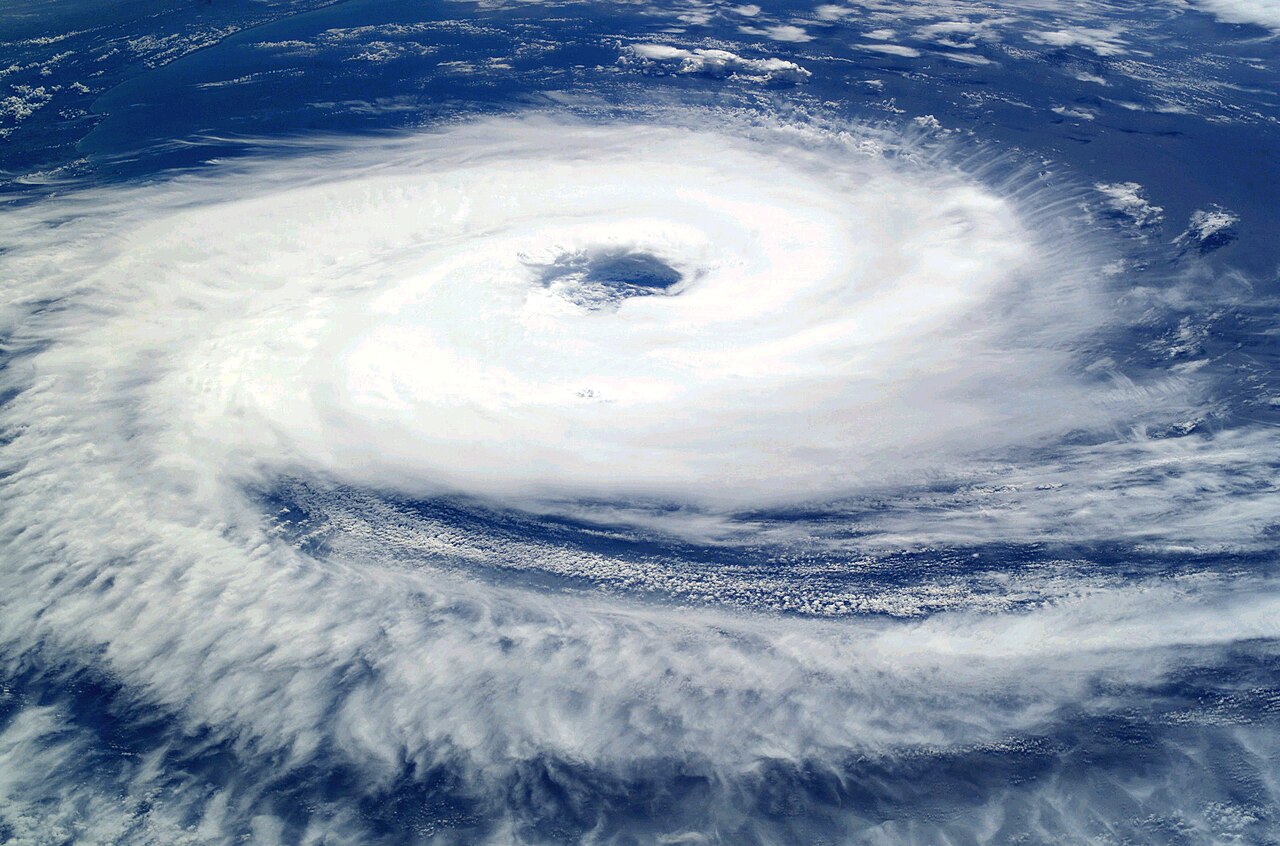
Once organized, Wilma underwent a dramatic intensification beginning on October 18. In roughly 30 hours the hurricane's central pressure plunged from about 982 mbar to 882 mbar while maximum sustained winds increased to near 185 mph (300 km/h). During this stage Wilma developed an unusually small, well-defined "pinhole" eye roughly 3 miles (5 km) across — among the smallest observed in the Atlantic basin. This combination of very low pressure, extreme winds and compact inner core structure marked Wilma as the most intense Atlantic hurricane in terms of central pressure.
Eyewall cycles, landfalls and weakening
The intense inner core did not remain stable. Wilma underwent an eyewall replacement cycle, during which the tiny eye collapsed and was replaced by a larger eyewall. This cycle weakened the storm to Category 4 intensity before landfall. On October 21 the hurricane struck Cozumel and the northeastern Yucatán Peninsula of Mexico with sustained winds near 150 mph (240 km/h). Interaction with the mountainous land surface disrupted the circulation and the cyclone weakened while crossing the Yucatán.
Re-emergence, Florida landfall and transition
After moving into the southern Gulf of Mexico Wilma accelerated northeastward. Despite increasing wind shear the storm re-strengthened and made landfall in southwestern Florida at Cape Romano as a major hurricane. It sped across the peninsula, weakened over land, and emerged into the western Atlantic near Jupiter, Florida. Over open water the cyclone briefly regained some intensity before being overtaken by cooler air and stronger shear. On October 26 Wilma completed extratropical transition; the remnants were absorbed by a larger extratropical system near Atlantic Canada the following day.
Notable characteristics and impacts
- Record intensity: Wilma's 882 mbar central pressure set an Atlantic basin record for lowest pressure.
- Rapid intensification: the storm's pressure drop and wind increase in a short span exemplify explosive deepening.
- Compact core: the extremely small eye contributed to steep wind gradients and localized extreme winds.
- Multiple landfalls: Wilma struck the Mexican Yucatán and later southwestern Florida, producing severe wind damage, storm surge and flooding in several regions.
- Lifecycle lessons: Wilma is frequently cited in studies of eyewall replacement cycles, rapid intensification, and forecasting challenges for very intense, compact hurricanes.
Wilma's evolution from a disorganized Caribbean disturbance to a historic hurricane within days highlights the variability and potential ferocity of tropical cyclones. The storm's rapid deepening and small inner core posed forecasting difficulties and left enduring lessons for operational meteorology, emergency planning and scientific research into the processes that drive extreme tropical cyclone intensification.
Further resources
- NHC advisory archive
- Wilma overview
- Atlantic hurricane records
- October 2005 timeline
- 2005 hurricane season summary
- Caribbean meteorology
- Jamaica regional weather
- October 15 advisories
- National Hurricane Center
- Forecast discussions
- Tropical Storm Wilma information
- October 17 development notes
- October 18 intensification
- Explosive deepening studies
- Central pressure data
- Pressure conversions
- Inch‑Hg references
- Pinhole eye descriptions
- Small eye records
- October 21 events
- Landfall reports
- Cozumel observations
- Mexican mainland impacts
- Yucatán crossing
- Gulf of Mexico phase
- Wind shear influence
- Cape Romano landfall
- Florida impact summaries
- Atlantic re‑emergence
- Jupiter, Florida passage
- October 26 transition notes
- Extratropical transition processes
- Remnant absorption near Canada
Questions and answers
Q: What was the name of the strongest tropical cyclone in the Western Hemisphere?
A: The strongest tropical cyclone in the Western Hemisphere was named Hurricane Wilma.
Q: When did Hurricane Wilma form?
A: Hurricane Wilma formed during the second week of October 2005.
Q: How quickly did it strengthen?
A: In a 30-hour period, Hurricane Wilma underwent explosive deepening and its central atmospheric pressure dropped from 982 mbar (29.00 inHg) to 882 mbar (26.05 inHg), while its winds increased to 185 mph (300 km/h).
Q: What was the size of its eye when it was at its strongest?
A: At its strongest, the pinhole eye of Wilma was about 3 miles (5 km) in diameter, which is the smallest known eye for an Atlantic hurricane.
Q: Where did Wilma make landfall?
A: On October 21, Hurricane Wilma made landfall on Cozumel and on the Mexican mainland with winds of about 150 mph (240 km/h).
Q: Where did it enter into after crossing Florida?
A: After crossing Florida, Hurricane Wilma entered into the southern Gulf of Mexico before speeding up northeastward.
Q: When did it turn into an extratropical cyclone? A: On October 26, Hurricane Wilma turned into an extratropical cyclone and then on October 27th, its remnants were absorbed by another extratropical storm over Atlantic Canada.
Related articles
Author
AlegsaOnline.com Meteorological history of Hurricane Wilma (October 2005) Leandro Alegsa
URL: https://en.alegsaonline.com/art/94102
Sources
- nhc.noaa.gov : "Hurricane Wilma Tropical Cyclone Report"
- nhc.noaa.gov : "Tropical Depression Twenty-Four Discussion One"
- nhc.noaa.gov : "Tropical Depression Twenty-Four Discussion Two"
- nhc.noaa.gov : "Tropical Depression Twenty-Four Discussion Three"
- nhc.noaa.gov : "Tropical Depression Twenty-Four Discussion Five"
- nhc.noaa.gov : "Tropical Depression Twenty-Four Discussion Six"
- nhc.noaa.gov : "Tropical Storm Wilma Discussion Seven"
- nhc.noaa.gov : "Tropical Storm Wilma Discussion Eight"
- nhc.noaa.gov : "Tropical Storm Wilma Discussion Nine"
- nhc.noaa.gov : "Tropical Storm Wilma Discussion Ten"
- nhc.noaa.gov : "Hurricane Wilma Discussion Fourteen"
- nhc.noaa.gov : "Hurricane Wilma Discussion Seventeen"
- nhc.noaa.gov : "Hurricane Wilma Public Advisory Seventeen"
- nhc.noaa.gov : "Hurricane Wilma Discussion Eighteen"
- aoml.noaa.gov : "Atlantic hurricane best track ("HURDAT")"