
Sphagnum (peat moss): biology, ecology, and human uses
Sphagnum is a group of mosses important for peat bogs and water regulation. This article describes their biology, ecological role, uses, and conservation issues in temperate wetlands.
Sphagnum is a genus of mosses often called peat moss that includes roughly the number of taxa traditionally treated as about 120 species. These plants are most common in cool, wet habitats of the Northern Hemisphere and are the dominant vegetation in many peat-forming wetlands. As bryophytes, they differ from vascular plants in size and structure but can exert a major influence on landscape hydrology and chemistry. For a basic taxonomic overview see genus, and for more on the diversity involved see species information; their broader group is discussed under mosses.
Image gallery
7 Images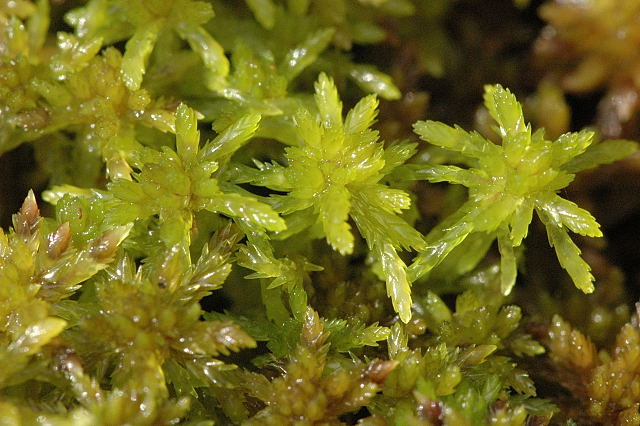


Structure and water-holding
Sphagnum plants are composed of branched stems with a dense head (capitulum) of growing tips and many leaves made of two cell types: green, living photosynthetic cells and large dead hyaline cells. The hyaline cells function like sponges, trapping and holding water inside the plant. This unusual internal structure enables Sphagnum to absorb and retain large volumes of water relative to its dry weight and to influence local water tables and soil moisture. For discussions of their remarkable water retention and related properties see water retention.
Ecological role and peat formation
Sphagnum is a primary agent in peatland development. Accumulating Sphagnum tissues decompose slowly in the cold, acidic, and waterlogged conditions they help create, producing peat — a carbon-rich organic deposit. Peatlands formed or dominated by Sphagnum are important carbon sinks, support specialized plant and animal communities, and act as natural water regulators. The relationship between Sphagnum and peat is central to understanding northern wetlands and is usually introduced with references to peat and bogs.
Characteristics and notable facts
- Acidifying influence: Sphagnum releases hydrogen ions into its surroundings, contributing to the low pH common in bogs.
- Slow decomposition: Cold, anoxic, and acidic conditions created by Sphagnum slow microbial decay, promoting peat accumulation.
- Habitat engineering: By holding water and modifying chemistry, Sphagnum creates conditions that favor other bog specialists and exclude many common vascular plants.
- Variation among taxa: Different Sphagnum species show variations in color, growth form, and habitat preference (hummocks, lawns, or hollows).
Uses, history and conservation
Humans have used Sphagnum and peat for centuries. Dried peat has been used as fuel in some regions, and harvested Sphagnum (peat moss) has been widely employed in horticulture as a soil amendment and for propagation. Historically, dried Sphagnum was also used as an absorbent dressing. Intensive peat extraction and drainage of peatlands have caused habitat loss, carbon emissions, and hydrological change, so conservation and restoration of Sphagnum-dominated bogs are current environmental priorities. Sustainable management aims to balance economic uses with peatland conservation and climate considerations.
Further reading: introductory treatments of bryophyte biology, peatland ecology, and habitat restoration provide more detail on Sphagnum's roles and management.
Related articles
Author
AlegsaOnline.com Sphagnum (peat moss): biology, ecology, and human uses Leandro Alegsa
URL: https://en.alegsaonline.com/art/92636
Sources
- theplantlist.org : "Sphagnum on theplantlist"