
Star apple (Chrysophyllum cainito)
A tropical fruit tree in the Sapotaceae family, known for round sweet fruit with a star-shaped seed pattern; valued fresh and in desserts across the Caribbean, Central America and other warm regions.
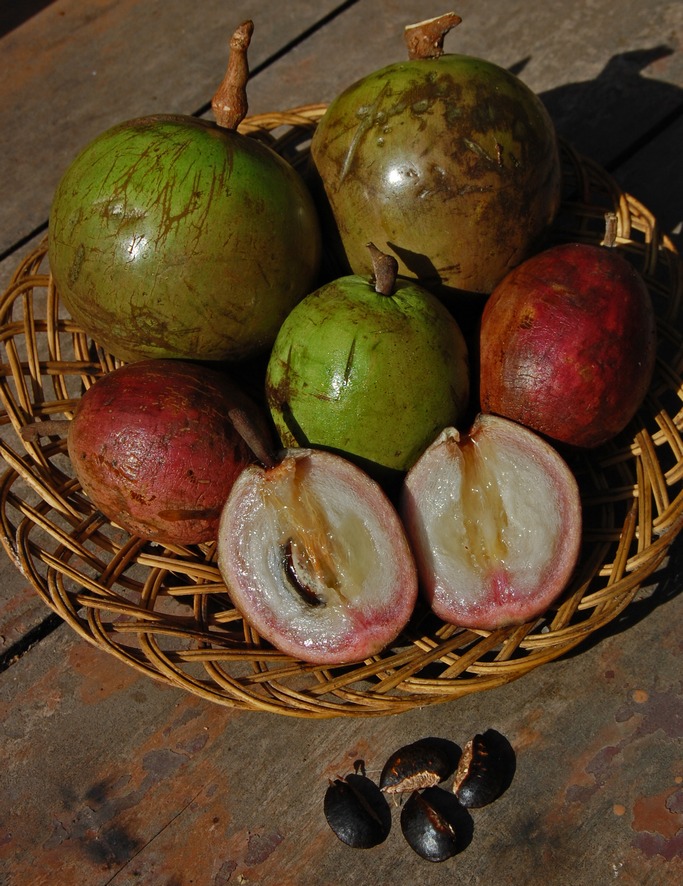
The star apple, Chrysophyllum cainito, is an evergreen tree and fruit widely grown in tropical regions. Its common names include star apple and caimito. The name "star apple" refers to the distinctive star-shaped arrangement of seed cavities visible when the ripe fruit is cut in cross-section. For botanical and identification details see Chrysophyllum cainito.
Image gallery
5 Images


Description
The tree produces glossy, oval leaves and bears round fruits roughly the size of small apples or oranges. Two common fruit color types are purple and green; the flesh is typically translucent, juicy and sweet, sometimes with a milky latex near the rind. The seeds sit in radial chambers that form the star pattern. The wood and bark contain latex typical of the Sapotaceae family.
Characteristics and cultivation
- Habit: medium-sized evergreen tree, often 10–20 meters tall in ideal conditions.
- Climate: strictly tropical to subtropical; frost-sensitive and requiring warm, humid conditions.
- Fruit: eaten fresh, sliced; skin is usually not eaten and can be astringent.
Native to the Caribbean and nearby tropical Americas, the species has been introduced across tropical Asia, Africa and the Pacific. It is commonly cultivated in home gardens and small orchards where rainfall and temperature support growth. Distribution notes and regional introductions are discussed in horticultural sources: distribution notes.
Uses, taste and notable facts
The pulp is prized for its sweet, mildly floral flavor and is used fresh, in smoothies, desserts, and sometimes preserves. Traditional medicinal uses and local culinary recipes exist where the fruit is grown. The fruit is not poisonous, but the skin and unripe flesh can be astringent. For recipes and culinary information see culinary uses.
Notable facts: the star pattern gives the fruit its common name; varieties differ in skin color and sweetness; and while generally eaten raw, the fruit must be fully ripe for best flavor. Gardeners should be aware of sticky latex and avoid planting where cold damage is possible.
Related articles
Author
AlegsaOnline.com Star apple (Chrysophyllum cainito) Leandro Alegsa
URL: https://en.alegsaonline.com/art/93422