
Addis Ababa–Djibouti Railway
Electrified standard-gauge international railway linking Addis Ababa with Djibouti, improving freight and passenger connections between landlocked Ethiopia and the sea.
Overview
The Addis Ababa–Djibouti Railway is a modern international rail link that connects the Ethiopian capital, Addis Ababa, with the coastal state of Djibouti. It provides Ethiopia, represented by Ethiopia, with a faster and higher-capacity corridor to maritime outlets on the Red Sea and the wider Indian Ocean. Built to replace an older metre-gauge line, the new route has been designed for heavier freight and quicker passenger services.
Image gallery
2 Images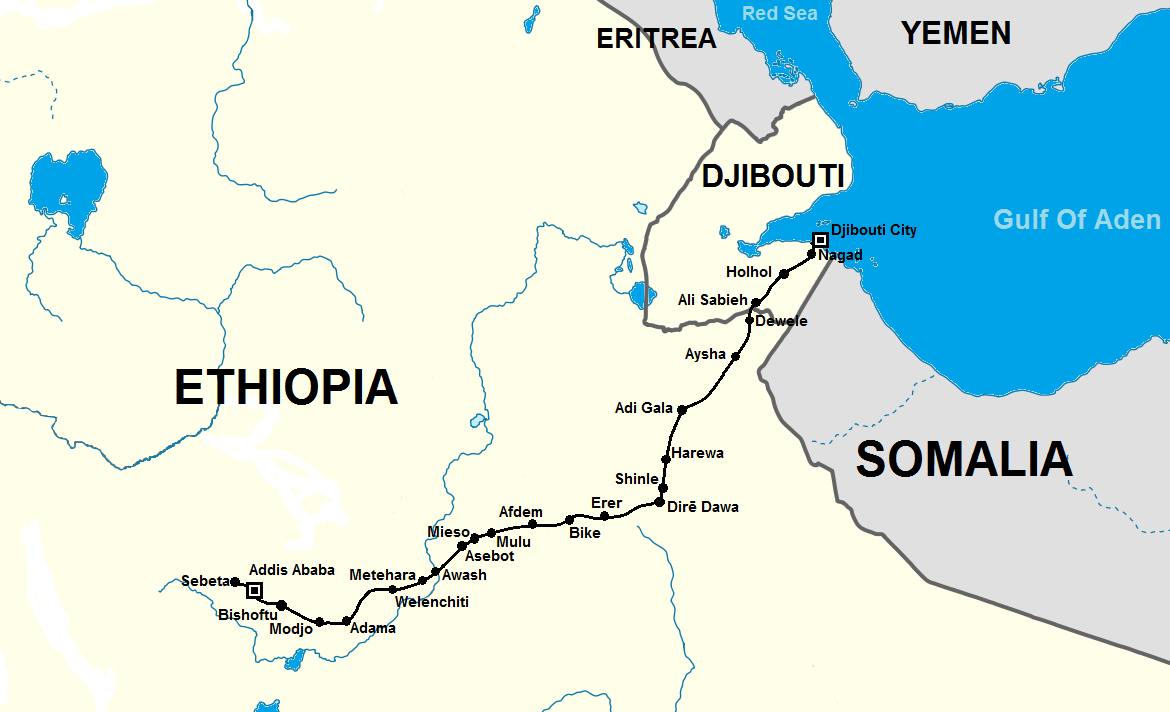

Characteristics and route
The railway is a standard-gauge, largely electrified line designed to handle both freight trains and scheduled passenger services. Key characteristics include:
- Modern track and signaling suited for higher speeds and heavier loads.
- Major terminals at Addis Ababa and the port area in Djibouti, with intermediate stations serving regional cities.
- Integration with port facilities at Djibouti to streamline import and export flows for landlocked Ethiopia.
History and construction
Constructed in the 2010s to address capacity limits of the historic line, the project combined international financing and engineering expertise. The new railway shortened transit times and replaced aging infrastructure with a purpose-built corridor intended to support economic growth through improved logistics.
Uses and importance
The line carries a mix of international freight, domestic cargo, and passenger trains. For Ethiopia, which lacks a coastline, the railway is a strategic trade artery: it reduces costs and delays for imports and exports while supporting industrial and commercial development along the route.
Notable facts and distinctions
Besides its economic role, the railway is notable for linking a populous inland capital directly with a major regional port, and for representing a shift toward modern, standard-gauge electrified rail in the Horn of Africa. Its operation illustrates how transport infrastructure can reshape regional trade and connectivity.
Related articles
Author
AlegsaOnline.com Addis Ababa–Djibouti Railway Leandro Alegsa
URL: https://en.alegsaonline.com/art/920
Sources
- africa.cgtn.com : "Ethiopia – Djibouti high speed railway finally completed"