
Air Florida Flight 90: 1982 Washington DC Crash and Rescue
Air Florida Flight 90 crashed into the Potomac River and 14th Street Bridge on Jan 13, 1982. The accident, caused by aerodynamic icing and pilot error, led to dramatic rescues and lasting changes to safety procedures.
Overview
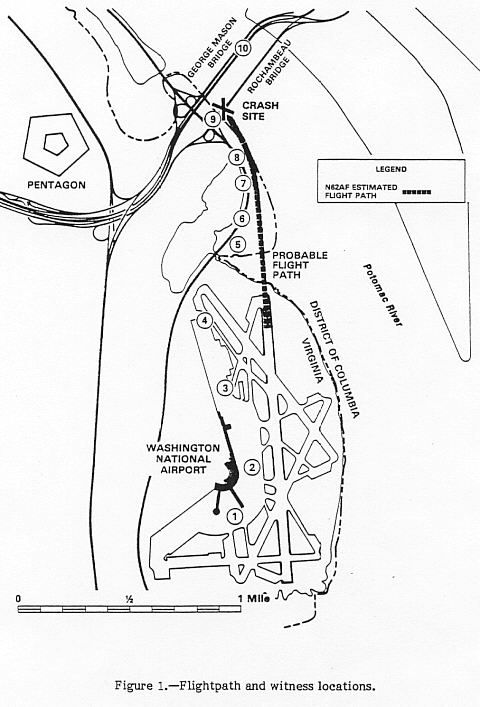
Air Florida Flight 90 was a scheduled domestic passenger service that crashed on January 13, 1982, shortly after takeoff from Washington National Airport. The Boeing 737 went down onto the 14th Street Bridge and into the Potomac River, striking occupied vehicles on the bridge that links Washington, D.C. and Arlington County, Virginia. Of the 79 people aboard (74 passengers and 5 crew) five initially survived, while 74 people on the airliner and four motorists on the bridge were killed. The crash took place within view of landmarks including the White House, the Jefferson Memorial, and The Pentagon.
Image gallery
4 Images


Aircraft and flight
The aircraft had been built in the late 1960s and previously operated by United Airlines before being acquired by Air Florida. On the morning of the accident the airplane attempted a takeoff in freezing weather with falling snow and sub-freezing temperatures. Investigators later examined whether ice and snow accumulation on the wings and engine inlets affected lift and thrust during the takeoff roll and initial climb.
Crash sequence and probable causes
The official investigation identified a combination of environmental and human factors. Accumulation of snow and ice on aerodynamic surfaces degraded lift; instrument indications and power settings did not correct for this condition. The National Transportation Safety Board (NTSB) attributed the accident primarily to crew errors in decision-making, aircraft configuration, and power application amid icing conditions. Contributing elements included inadequate use of available anti-icing measures, misinterpretation of airspeed and engine performance, and a failure to reject the takeoff when safe parameters were exceeded. In short, the airplane failed to achieve and sustain climb and descended into the river and bridge.
Rescue, heroism, and aftermath
Rescue efforts were a mix of spontaneous civilian action and organized emergency response. Drivers on the 14th Street Bridge and nearby people helped pull survivors from wreckage and from the icy water. Park police, fire and rescue units, and helicopter crews reached the site and took survivors to shore. Among the many acts of courage, passenger Arland D. Williams Jr. repeatedly helped others from the partially submerged fuselage into rescue lines and then waved them to safety; he ultimately drowned before he could be rescued and has been widely honored for his selflessness. President Ronald Reagan publicly praised those who assisted in the rescues during remarks that followed.
Investigation, safety changes, and legacy
The investigation led to clearer guidance and stricter procedures for deicing, engine anti-ice usage, and decision-making in winter operations. Airlines and regulatory agencies reinforced training on recognizing and responding to contamination of lifting surfaces, and the accident contributed to the growing emphasis on crew resource management and cockpit discipline in the 1980s. Air Florida itself ceased operations a few years later; while multiple factors affected the carrier, the crash and its financial and reputational consequences were part of the airline’s decline.
Key facts and notable points
- Date: January 13, 1982.
- Aircraft: Boeing 737-200 type, previously flown by United Airlines.
- Location: 14th Street Bridge and Potomac River, near the White House and other landmarks.
- Casualties: Most aboard were killed; several motorists on the bridge also died.
- Cause: NTSB cited pilot error and failure to properly address icing and aircraft configuration; environmental icing was a significant factor.
The accident remains a widely cited case in aviation safety studies because it combines environmental hazards, human error, and dramatic civilian rescue efforts. Memorials and remembrances honor the victims and the rescuers, and the episode is used in training to highlight how weather, equipment settings, and judgment converge to shape outcomes in flight operations.
Questions and answers
Q: What was the flight number of Air Florida Flight 90?
A: Air Florida Flight 90 was a scheduled U.S. domestic passenger flight from Washington National Airport to Fort Lauderdale – Hollywood International Airport.
Q: What type of aircraft was used for this flight?
A: The aircraft used for this flight was a Boeing 737-200 registered as N62AF.
Q: Who originally purchased the aircraft?
A: The aircraft had originally been purchased by United Airlines in 1969 and flown with the registration number of N9050U. It was sold to Air Florida in 1980.
Q: Where did the crash occur?
A: The crash occurred on January 13, 1982 and it struck the 14th Street Bridge, which carries Interstate 395 between Washington, D.C. and Arlington County, Virginia.
Q: How many people were on board during the crash?
A: The aircraft was carrying 74 passengers and five crewmembers during the crash.
Q: How many people survived the crash?
A: Four passengers and one flight attendant survived and were rescued from the crash.
Q: What caused the crash?
A: The cause of the crash was pilot error.
Related articles
Author
AlegsaOnline.com Air Florida Flight 90: 1982 Washington DC Crash and Rescue Leandro Alegsa
URL: https://en.alegsaonline.com/art/1614
Sources
- airdisaster.com : "AAR82-08"