
Adolfo Suárez Madrid–Barajas Airport
Principal international airport serving Madrid (IATA: MAD). Located in Barajas district, it is Spain's main air gateway with multiple terminals, major airline hubs, long-haul links and extensive ground transport.
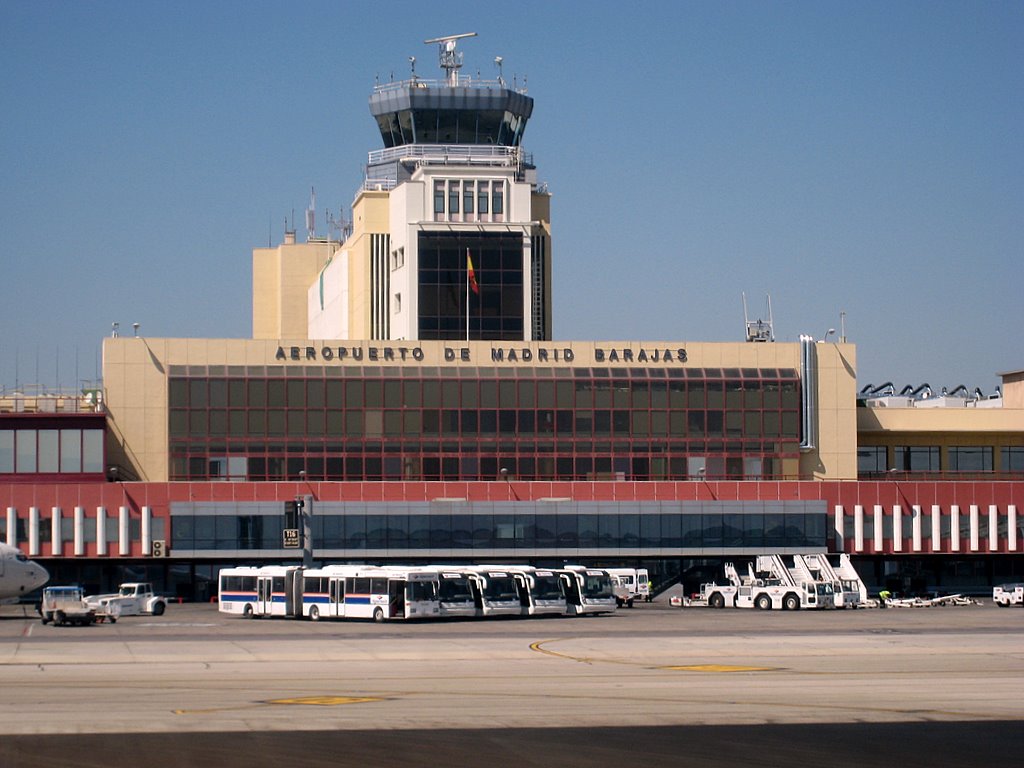
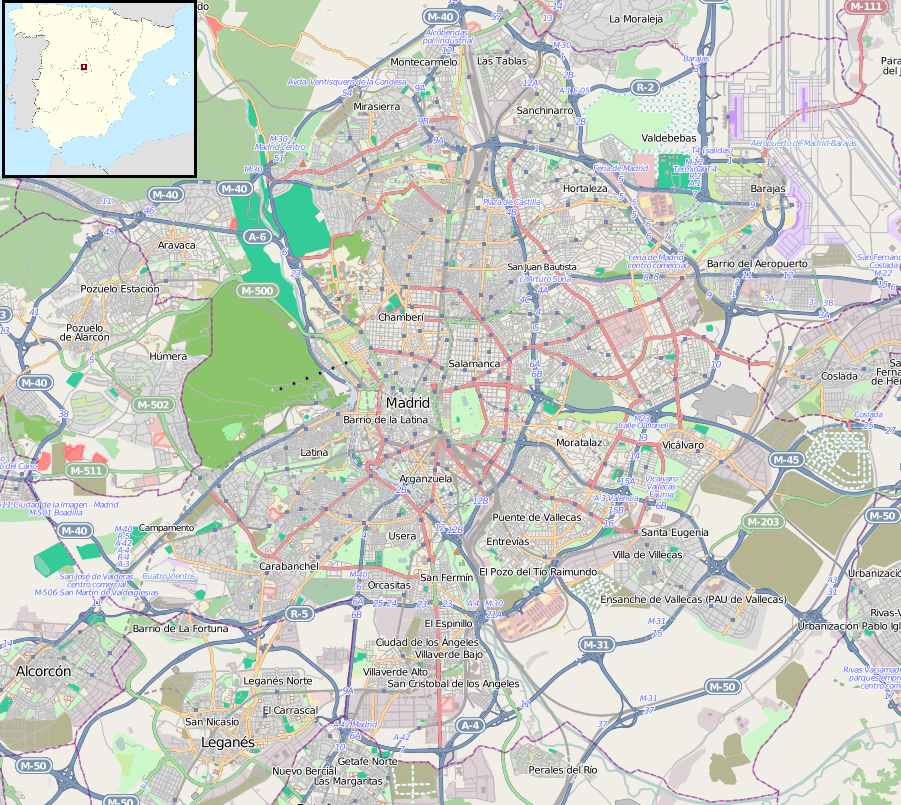
Adolfo Suárez Madrid–Barajas Airport (IATA: MAD) is the principal civilian airport serving Spain's capital city. It lies in the Barajas district to the northeast of central Madrid and functions as the country’s primary international gateway. The airport handles a mix of domestic, European and long-haul flights and serves as a major hub for Spanish carriers.
Image gallery
10 Images





Layout and facilities
The airport complex comprises several passenger terminals grouped around a system of runways and taxiways. Terminals are commonly referred to as T1, T2, T3 and T4, with an adjoining satellite concourse (T4S) that handles many long-haul and intercontinental services. Terminal 4 is notable for its modern architecture and large, open interior spaces. Facilities include extensive baggage handling systems, lounges, retail and dining areas, cargo terminals and maintenance zones.
History and development
Origins of the site trace back to the early 20th century when Madrid required a larger airfield to support civil aviation. Across decades the airport expanded through successive terminal and runway projects to meet rising passenger and cargo demand. In 2014 the national government formally renamed the airport in honor of Adolfo Suárez, a key figure in Spain’s democratic transition.
Transport links and access
- Metro: connected by Madrid Metro services, providing direct links to central neighborhoods and the city rail network.
- Commuter rail: Cercanías trains serve certain terminals and offer rapid access to major railway stations.
- Road and bus: airport express buses, long‑distance coaches, local buses and taxi services operate round the clock.
- Car: the site is accessible via Madrid’s orbital and radial roads, with on‑site parking and drop‑off areas.
These connections make the airport readily reachable for passengers, employees and freight operators, and support frequent transfers between air and surface transport.
Role and notable features
Madrid–Barajas is one of Spain’s busiest airports and a key European hub, particularly for routes between Europe and Latin America. Its terminals accommodate a broad spectrum of carriers, from national flag carriers to low‑cost and long‑haul airlines. Architecturally, Terminal 4 has been widely cited for its design approach, and the airport continues to evolve through infrastructure upgrades and service improvements to address capacity, efficiency and passenger experience.
Beyond passenger travel, the airport supports significant cargo operations and logistics activity, contributing to Madrid’s role as a commercial and cultural center in the region.
Related articles
Author
AlegsaOnline.com Adolfo Suárez Madrid–Barajas Airport Leandro Alegsa
URL: https://en.alegsaonline.com/art/1049
Sources
- elmundo.es : "El aeropuerto de Madrid se llama desde hoy Adolfo Suárez"
- ecquants.com : "Madrid airport - Economic and social impact"
- aena.es : "Air Navigation"
- aena-aeropuertos.es : Aena.es Madrid Barajas History