
Song of the South (1946 film)
Song of the South is a 1946 Walt Disney feature blending live action and animation, adapted from Joel Chandler Harris's Uncle Remus tales; famous for 'Zip-a-Dee-Doo-Dah' and controversial for its racial portrayals.
Song of the South is a 1946 American film produced by the Walt Disney studio that mixes live-action drama with animated sequences. The story adapts the Uncle Remus tales collected by Joel Chandler Harris and centers on a young boy and an elderly storyteller whose folktales are shown through animated shorts. Production and studio credits are detailed in contemporary accounts and summaries of the film industry; see production notes and the studio overview at Walt Disney. The picture was distributed by RKO Radio Pictures after its premiere on November 12, 1946 via RKO.
Image gallery
6 Images
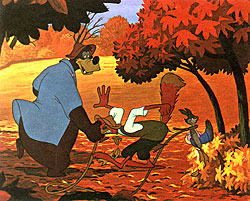


Format, story and artistic elements
The film alternates between filmed sequences and traditional cel animation. Its structure places Uncle Remus, an African American storyteller, at the center of the narrative; his folktales provide the animated vignettes. Visually, the animation was typical of the period and designed to appeal to family audiences, while the live-action scenes reflect mid-20th-century filmmaking techniques and casting. The song "Zip-a-Dee-Doo-Dah," introduced in the film, achieved broad popular and critical recognition and later won the Academy Award for Best Original Song.
Historical context and reception
On release, the film received a mixed response: some praised its technical achievements and musical numbers, while others questioned its depiction of race and historical setting. Over time the film has been re-evaluated repeatedly within changing cultural conversations about representation, memory, and how popular media portrays the American South. Discussions by historians and critics are collected in many retrospectives; for a general survey see reporting on the film's controversies at critical summaries and perspectives from African American audiences.
Controversy, availability, and corporate decisions
Because many viewers and scholars consider elements of the film to romanticize plantation-era life and to present racial stereotypes, the studio has not given the film a wide release in the United States on modern home video. Limited editions and screenings have appeared in other territories at various times; documented home-market releases have occurred in parts of Asia, Europe and South America. In response to broader conversations about racial justice—amplified by events such as the George Floyd protests—the company has revisited how elements of its past catalog and theme-park attractions relate to contemporary values. For example, a long-running attraction inspired by the film has been announced for retheming toward a new property; see the studio statement about the Princess and the Frog-related update.
Legacy and notable facts
- "Zip-a-Dee-Doo-Dah" became a cultural touchstone beyond the film and remains recognizable to many listeners.
- The film is often cited in discussions about how popular entertainment has handled race and historical memory in the United States.
- Scholars and film historians use the movie as a case study in adaptation, the intersection of live action and animation, and changing standards of acceptable representation.
Because the film sits at the intersection of artistic achievement, popular songs, and difficult questions about historical portrayal, it continues to prompt debate. Readers seeking detailed archival information, release history or scholarly analysis can consult specialized film histories and archives or follow contemporary reporting and institutional statements linked above.
Related articles
Author
AlegsaOnline.com Song of the South (1946 film) Leandro Alegsa
URL: https://en.alegsaonline.com/art/91822
Sources
- snopes.com : "Disney (Song of the South)"