
Sorcerer (1977) — Friedkin’s tense thriller remake
Sorcerer (1977) is a dark, suspenseful adventure-thriller directed by William Friedkin, a reinterpretation of Le Salaire de la peur/The Wages of Fear known for intense setpieces and a synth score by Tangerine Dream.
Overview
Sorcerer is a 1977 adventure-thriller film directed by William Friedkin. It is a new cinematic take on Georges Arnaud's 1950 novel Le Salaire de la peur and stands as a remake of Henri-Georges Clouzot's influential 1953 film The Wages of Fear. Friedkin moved the story to a different setting and tone while preserving the central premise: desperate men hired to transport unstable explosive cargo across hazardous terrain. The film is remembered for its relentless sense of danger, grim atmosphere and uncompromising realism.
Image gallery
4 Images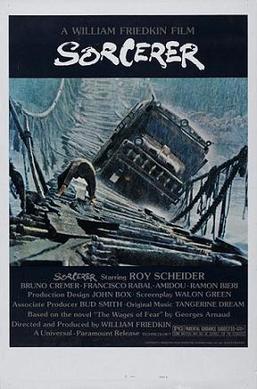


Plot, cast and characters
The narrative follows four dislocated, morally ambiguous drivers who accept a deadly job hauling nitroglycerin through jungle, mountains and mud to stop a catastrophic blowout. The danger is constant: rough roads, failing vehicles and any sudden jolt could trigger an explosion. The cast centers on a small ensemble and emphasizes stoicism and tension over melodrama.
- Roy Scheider — one of the principal leads and a recognizable face of 1970s American cinema; see Roy Scheider for more on his career.
- Bruno Cremer — portrays a hardened European roadman.
- Francisco Rabal — brings an understated menace and world-weariness.
- Amidou and Ramon Bieri — round out the team of drivers with contrasting motivations.
The ensemble approach keeps the focus on survival rather than backstory, and the film’s lengthy traveling sequences are staged to amplify suspense through sound, weather and the threat posed by the volatile cargo.
Production involved extensive location shooting and difficult practical effects, and Friedkin pushed for authenticity in vehicle handling and road conditions. The film’s electronic score, composed and performed by Tangerine Dream, created a modern, unsettling sound world that contrasted with more traditional orchestral scores of the era. Major studios were involved in the film's release and distribution, including arrangements with large distributors such as Paramount Pictures.
Legacy and reception
Upon its initial release Sorcerer struggled at the box office and attracted mixed reviews. Its commercial failure has often been attributed in part to unfortunate timing: it opened the same year that a major science-fiction blockbuster changed audience expectations. Critics and viewers at the time found the film too bleak or slow; however, in later decades Sorcerer has been reassessed by many critics and film historians who praise its technical boldness, pacing and the nerve-racking truck sequences. Restoration efforts and reissues have allowed contemporary audiences to see the film in improved prints, contributing to a growing appreciation of Friedkin’s uncompromising approach.
Today Sorcerer is discussed as a distinctive entry in 1970s American cinema: a remake that reimagines its source material with a darker, more ambiguous sensibility. Its strengths—sustained tension, practical filmmaking craft and an evocative electronic score—make it a significant, if divisive, thriller. For viewers interested in studies of suspense, risk and moral ambiguity on film, Sorcerer remains a frequently recommended, challenging work that rewards patience and attention.
Related articles
Author
AlegsaOnline.com Sorcerer (1977) — Friedkin’s tense thriller remake Leandro Alegsa
URL: https://en.alegsaonline.com/art/91964