
Sirenidae — the sirens: aquatic, paedomorphic salamanders
Sirenidae (sirens) are an unusual family of aquatic salamanders with external gills and no hind limbs, native to the southeastern United States and parts of northern Mexico. Overview, traits, and conservation.
Overview
Sirenidae, commonly called sirens, are a small family of mostly aquatic amphibians. They belong to the larger group of salamanders and are notable for retaining larval traits into adulthood (paedomorphosis), including prominent external gills. For a general classification context see family Sirenidae and broader amphibian relationships with salamanders.
Image gallery
4 Images


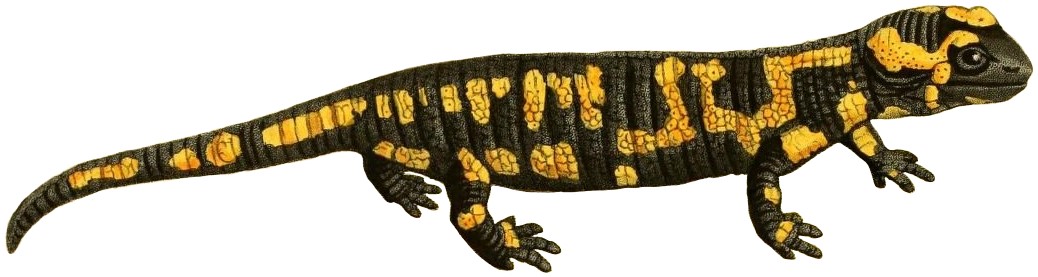
Distinctive characteristics
Sirens have a highly specialized body plan adapted to an aquatic life. Key features include:
- Elongated, eel-like body with a laterally compressed tail suited to swimming.
- Very small, reduced forelimbs and a complete absence of hind limbs, giving them an unusual silhouette among salamanders.
- Adult external gills that remain visible for gas exchange; these complement cutaneous (skin) respiration and allow life entirely in water (gills, aquatic adaptations).
- Sensory adaptations such as a lateral line-like system for detecting water movements.
Taxonomy and notable species
Two genera are commonly recognized within Sirenidae: Siren and Pseudobranchus. Well-known members include the greater siren and the lesser siren in the genus Siren, and dwarf sirens in Pseudobranchus. These taxa are distinct from other aquatic salamanders because of their limb reduction and persistent larval features.
Distribution and habitat
Sirens are largely restricted to warm, freshwater environments of the southeastern United States and adjacent regions of northern Mexico. They inhabit slow-moving or still waters such as marshes, swamps, ponds and vegetated canals, often hiding among submerged plants and detritus. Populations may retreat into mud or moist burrows during droughts.
Behavior, diet, and reproduction
Mostly nocturnal and secretive, sirens feed on invertebrates, small fishes and other aquatic prey. Reproduction occurs in water: females lay eggs among vegetation or debris, and hatchlings emerge as aquatic juveniles that resemble miniature adults. Because adults retain larval traits, their life cycle differs from many terrestrial salamanders.
Conservation and human interest
Several siren species face threats from wetland drainage, water pollution and habitat alteration. Their unusual biology makes them of interest to researchers studying development, respiration and evolutionary adaptations to aquatic life. For regional information see southeastern United States and northern Mexico. Additional resources on aquatic amphibians are available via general amphibian references (family overview, respiratory adaptations).
Related articles
Author
AlegsaOnline.com Sirenidae — the sirens: aquatic, paedomorphic salamanders Leandro Alegsa
URL: https://en.alegsaonline.com/art/90756
Sources
- commons.wikimedia.org : Sirenidae