
Skink (Scincidae): biology, behavior, and natural history
Skinks are a diverse family of smooth-scaled lizards (Scincidae) found worldwide. This article outlines their anatomy, behavior, diet, evolution, ecological roles and how they differ from other reptiles.
Overview
Skinks are members of the family Scincidae, one of the largest lizard families. They occur on most continents and many islands and include more than 1,500 species. Their forms range from small, short-legged ground dwellers to elongated, nearly legless types that resemble snakes. Typical habitats include dry scrub, grassland, forest floor, coastal sand, and arboreal canopies.
Image gallery
10 Images




Key characteristics
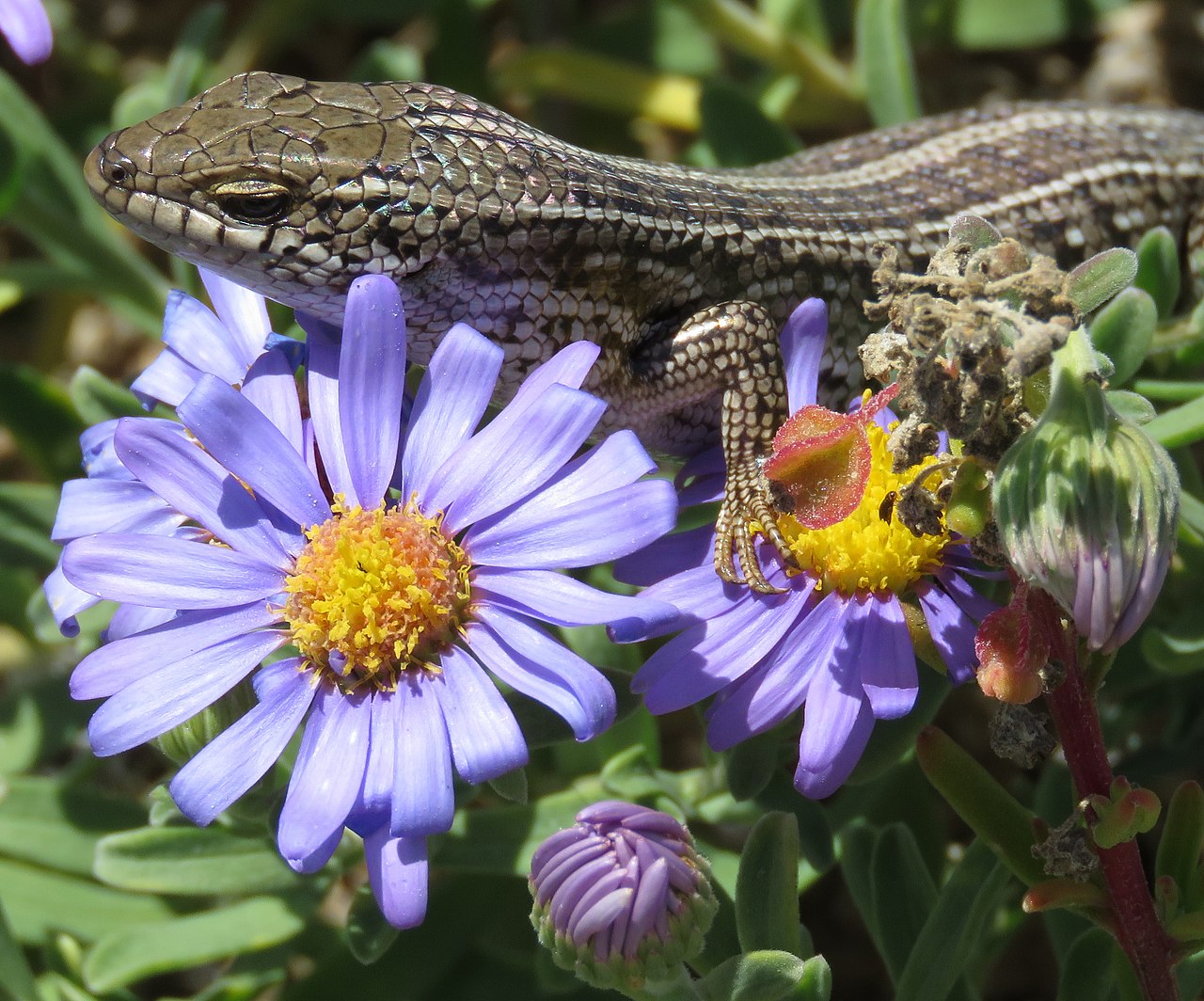
Skinks are often recognized by their smooth, shiny scales and relatively streamlined bodies. Many species have reduced limbs and necks; in some, limbs are absent and the animals move with serpentine motions. A common defensive trait is tail autotomy, the ability to detach a tail tip to distract predators, followed by tail regeneration. Size varies widely: many adults measure around 12 cm, while larger species can approach 30–35 cm.
- Scales and skin: glossy, often overlapping; some have rows of osteoderms (bony plates) under the skin.
- Limbs: from fully developed to greatly reduced or absent.
- Sensory features: use of tongue and Jacobson’s organ for scenting prey.
- Locomotion: terrestrial burrowers, climbers, or semi-fossorial runners.
Diet, behavior and reproduction
Most skinks are primarily insectivorous, feeding on beetles, crickets, ants and other small arthropods; some also take worms, millipedes, slugs and snails, and a few species include fruit or plant matter in their diets. Many skinks dig or use existing burrows to escape heat and predators and to find prey — a behavioral trait noted across the family as a fondness for burrowing. They locate food partly by tongue-flicking to sample chemical cues and may pursue small moving prey or ambush it from cover.
Reproductive strategies vary: most skinks lay eggs (oviparity), but live-bearing (viviparity) has evolved independently in several lineages, especially in cooler climates where retaining embryos internally can be advantageous.
Evolutionary history and fossil record
Fossil evidence indicates that lizard jawbones similar to those of skink-like reptiles appear as early as the Early Cretaceous, roughly 140 million years ago. Definitive fossils attributable to modern skink lineages are more fragmentary and become clearer in later periods; some analyses place unequivocal Scincidae remains in deposits from the Miocene and younger. Molecular studies suggest a deep and complex history with multiple radiations tied to continental movements and climatic shifts.
Ecological role and human interactions
Skinks perform important ecological functions: they help control insect populations, act as prey for birds and mammals, and contribute to nutrient cycling through their foraging and burrowing. In many regions they are common in gardens and agricultural landscapes. Some species are popular in the pet trade for their manageable size and often docile temperament; others face pressures from habitat loss, invasive predators and collection.
Distinctions and notable facts
Skinks differ from snakes and many other lizards by retaining visible eyelids (in most species), a less elongated skull, and in many cases, a more rounded, smooth-bodied appearance. Limb reduction in skinks is an example of convergent evolution: separate skink lineages have independently evolved reduced limbs in response to a burrowing or grass-swimming lifestyle. For further general information on lizards see lizards, and for taxonomic listings consult resources linked through family pages and species catalogs.
Related articles
Author
AlegsaOnline.com Skink (Scincidae): biology, behavior, and natural history Leandro Alegsa
URL: https://en.alegsaonline.com/art/90934
Sources
- blogs.scientificamerican.com : Scientific American — Skinks, skinks, skinks
- species.wikimedia.org : Scincidae