
Skipjack tuna (Katsuwonus pelamis)
Skipjack tuna is a small, fast-growing tropical tuna species widely caught for canned “light” tuna; known for schooling behavior, global distribution, and importance to fisheries.
Overview
The skipjack tuna (Katsuwonus pelamis) is a pelagic fish in the tuna family (Scombridae). It is the sole species in its genus and occurs throughout warm and tropical oceans worldwide. Skipjack form large, often visible schools and are an essential target for commercial and artisanal fisheries because of their abundance, rapid growth and frequent availability.
Image gallery
10 Images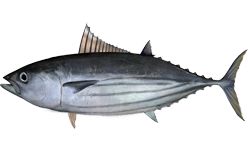




Biology and identification
Skipjack are streamlined and muscular, adapted for sustained swimming. They are smaller than many other tunas, with a cylindrical body, dark back and silvery belly marked by several distinct horizontal bands or stripes on the lower sides. They feed on small fish, crustaceans and cephalopods and reproduce by broadcast spawning in warm surface waters; populations grow quickly because individuals mature early and produce many eggs.
Fisheries, uses and culinary role
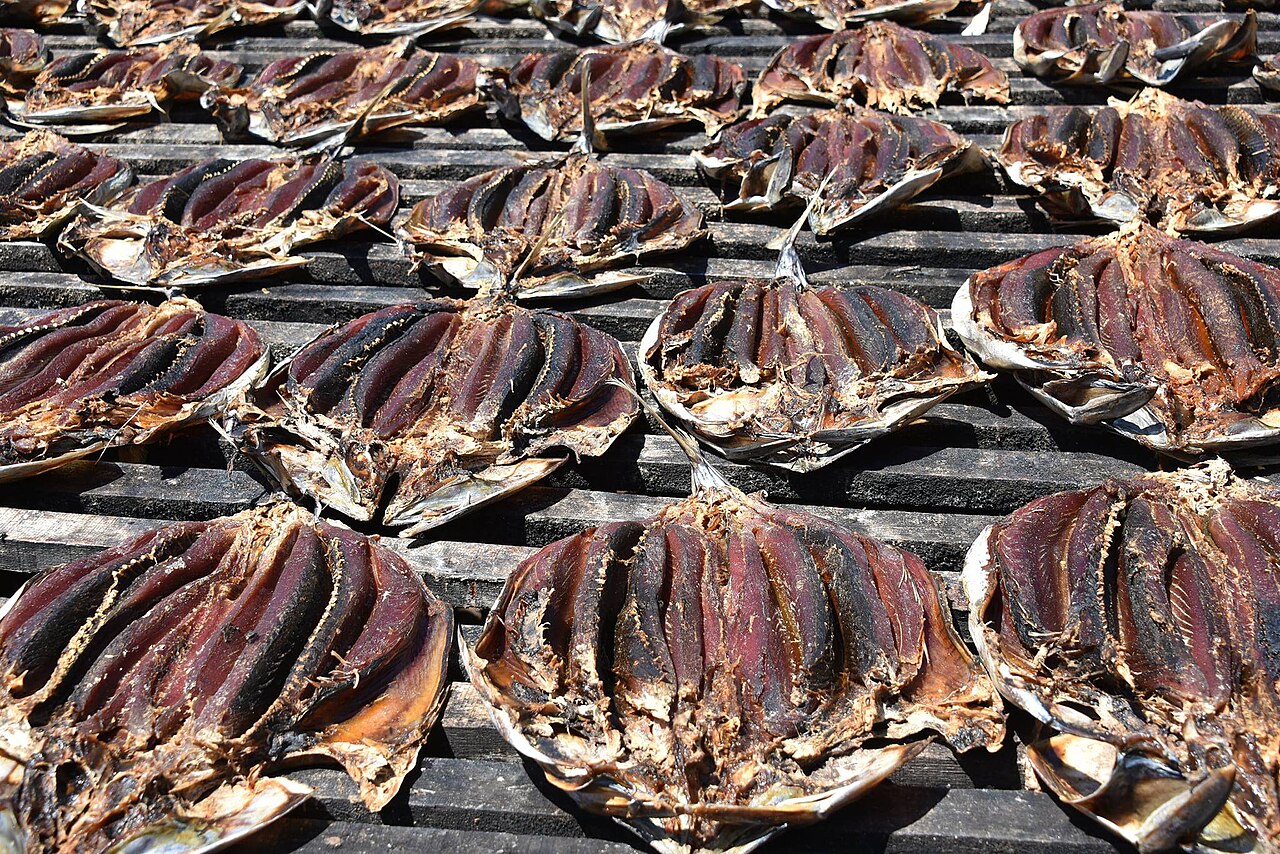
Skipjack is one of the most heavily fished tuna species and is a principal source of canned "light" tuna. Common capture methods include purse seines (often associated with fish-aggregating devices), pole-and-line, and longline. Its flesh is darker and oilier than albacore, rich in protein and omega-3 fatty acids, and is marketed fresh, frozen, canned or processed into pet food and fishmeal.
Distinguishing features and fishing methods
- Key field marks: compact size, tapered head and horizontal belly stripes.
- Behavior: surface-schooling, often around floating objects or dolphins.
- Common gears: purse seine, pole-and-line, and to a lesser extent longline.
Conservation and management
Because skipjack reproduce rapidly it resists depletion better than larger tunas, and major assessments list it as relatively low risk. Nevertheless, local overfishing, juvenile bycatch and impacts of fish-aggregating devices are management concerns. Regional fisheries management organizations monitor stocks and set measures to reduce bycatch and protect sustainability; consumers also encounter seafood labels and certification schemes aimed at promoting responsible harvest.
Related articles
Author
AlegsaOnline.com Skipjack tuna (Katsuwonus pelamis) Leandro Alegsa
URL: https://en.alegsaonline.com/art/90941