
Siberian roe deer (Capreolus pygargus)
A medium-sized deer of northeastern Asia, the Siberian roe deer occupies varied habitats across Siberia, Mongolia, Central Asia and East Asia and is notable for seasonal breeding and adaptable browsing habits.
The Siberian roe deer (Capreolus pygargus) is a small to medium-sized deer native to broad areas of northeastern Asia. It belongs to the genus Capreolus and is closely related to the European roe deer; together these animals are commonly called roe deer. The species is agile and generally solitary or found in small groups, adapting to a range of forest and steppe environments.
Image gallery
7 Images


Identification and characteristics
Siberian roe deer have a compact, graceful build with relatively short legs and a short tail. Their coat changes with the seasons: a reddish-brown or russet coat in summer and a duller, grayish tone in winter. Males (bucks) grow short, upright antlers that are shed and regrown each year. Behaviorally they are predominantly browsers, feeding on leaves, shoots, grasses, buds and agricultural crops when available, and are most active at dawn and dusk.
Distribution and habitat
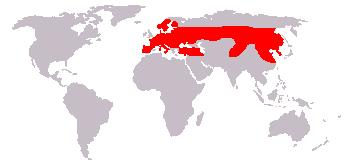
The species has a wide range across northeastern Asia and is found in a variety of habitats from woodlands to open steppes and mountain valleys. Important parts of its range include northeastern Asia and specifically Siberia, Mongolia, Kazakhstan, the Tian Shan Mountains, Eastern Tibet, the Korean peninsula and parts of northeastern China. Within this broad area the species occupies mixed forests, forest–steppe mosaics and higher valleys where cover and forage are available.
Reproduction and lifecycle
Roe deer follow a seasonal reproductive cycle. Females typically give birth to one or two fawns each year. As with other roe deer, the species shows reproductive adaptations such as a delayed implantation or paused embryonic development that times birth to favorable spring conditions. Fawns are hidden for their first weeks of life and develop quickly under maternal care.
Conservation, interactions and importance
Across most of its range the Siberian roe deer is not considered globally threatened and remains widespread, but local populations can be affected by habitat loss, agricultural expansion and hunting. It is a valued game species in several countries and plays an important ecological role as a browser that influences vegetation structure. Predators include large carnivores native to the region and human hunting remains a significant mortality factor in some areas.
Notable distinctions
- Compared with the European roe deer, the Siberian roe deer is generally adapted to colder, more continental climates and may be larger with subtle skull and antler differences.
- The two species have overlapping features and where ranges meet there can be variation and local differences in appearance and behavior.
For additional species-level information and regional guides consult specialist sources and regional faunal surveys (Capreolus overview, range summaries, Siberia references, Mongolia data, Kazakhstan records, Tian Shan studies, Tibetan accounts, China sources).
Related articles
Author
AlegsaOnline.com Siberian roe deer (Capreolus pygargus) Leandro Alegsa
URL: https://en.alegsaonline.com/art/90165