
Sierra newt — a mountain subspecies of the California newt
The Sierra newt (Taricha torosa sierrae) is a poisonous newt native to the Sierra Nevada. This article summarizes its appearance, life cycle, habitat, threats, and differences from coastal forms.
Overview
The Sierra newt is a mountain-dwelling subspecies of the California newt often treated as Taricha torosa sierrae. It is native to the Sierra Nevada region and spends parts of its life both in water and on land. Like other members of its genus, it produces a powerful toxin that deters many predators.
Image gallery
4 Images


Description and biology
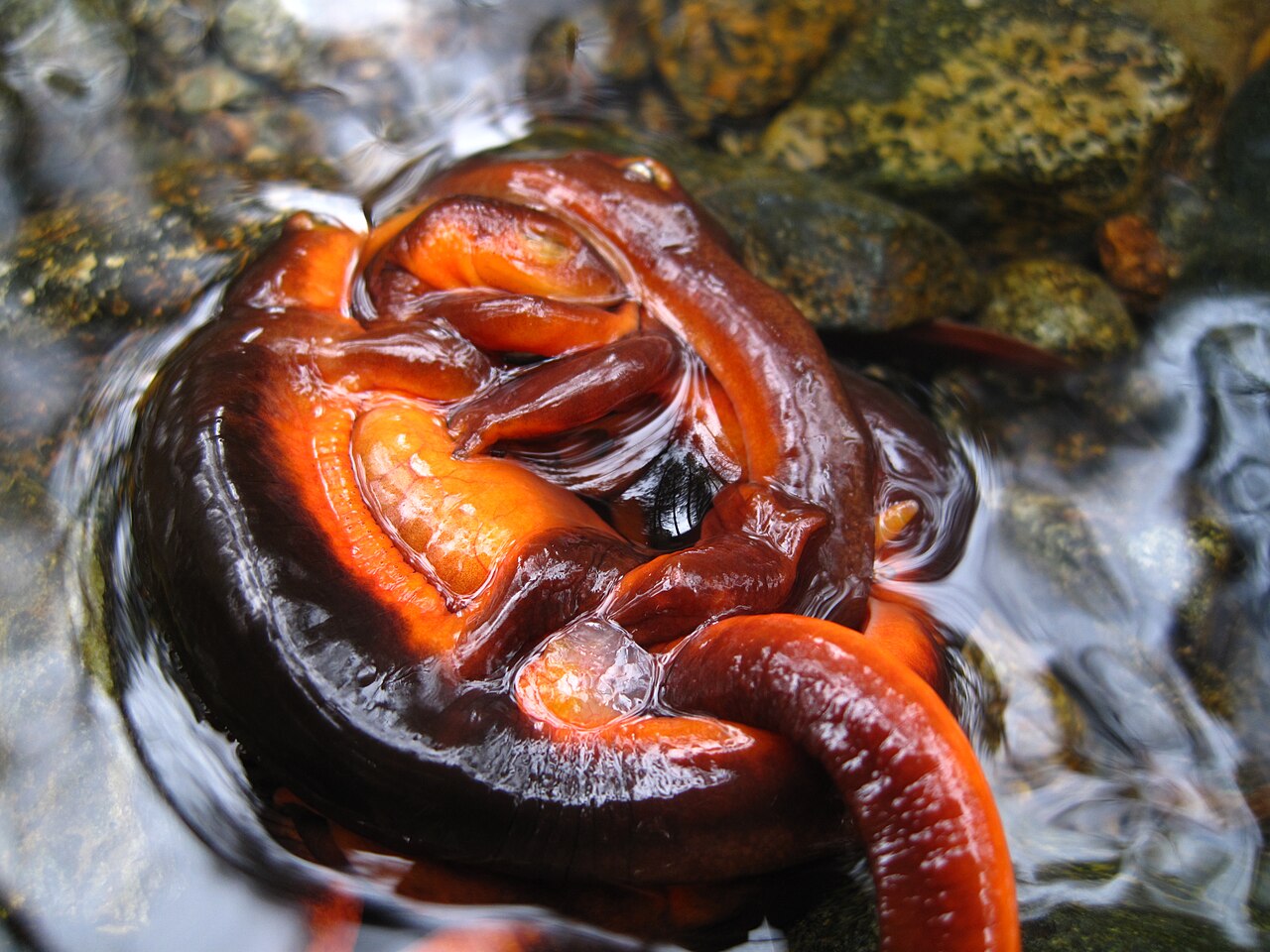
Adults are stocky salamanders with rough, leathery skin, typically darker on the back and paler or yellowish on the belly. They feed on invertebrates such as worms, slugs and aquatic insects. The species carries tetrodotoxin in its skin and eggs, a potent neurotoxin that makes them hazardous if ingested; this chemical defense is one of its most notable biological traits.
Habitat and range
Sierra newts are associated with montane and foothill habitats where they have access to breeding ponds, marshes or slow-moving streams. Outside of the breeding season they are terrestrial and use forest litter and rocky slopes. Their distribution is a subset of the broader California newt complex and is most closely tied to watersheds of the Sierra Nevada.
Reproduction and life cycle
Breeding occurs in water: males perform courtship displays and females deposit eggs in strings attached to submerged vegetation or rock. Larvae are aquatic and undergo metamorphosis before moving onto land. Individuals may return to breeding sites seasonally. Juveniles and adults differ in habitat use and diet as they mature.
Conservation and threats
Populations face pressures common to many amphibians. Major threats include habitat loss and fragmentation, road mortality during migrations to breeding sites, pollution and altered water flows. Disease and invasive species can also affect local populations. Conservation actions emphasize protecting breeding ponds, maintaining connectivity, and reducing road impacts.
Distinctive facts
- The Sierra newt is part of the wider California newt complex; taxonomic treatments vary in how they divide coastal and inland populations—see Taricha torosa sierrae for the subspecies name.
- Its tetrodotoxin makes it dangerous to ingest; however, many natural predators avoid it or have evolved resistance in some local cases.
- Because of its dual aquatic and terrestrial life stages, protecting both kinds of habitat is essential for its survival.
Related articles
Author
AlegsaOnline.com Sierra newt — a mountain subspecies of the California newt Leandro Alegsa
URL: https://en.alegsaonline.com/art/90287