
Sika deer (Cervus nippon)
Sika deer (Cervus nippon) are medium-sized deer native to East Asia, known for spotted coats, vocalizations, and several distinct subspecies; they have been introduced worldwide and face variable conservation issues.
Overview
The sika deer (Cervus nippon) is a member of the deer family, often referenced within the broader Cervidae. Native to East Asia, it occupies a range of forested habitats and has a reputation for its spotted coat and vocal behavior. Several subspecies are recognized across its native range, and some populations have been established by introduction elsewhere in the world.
Image gallery
10 Images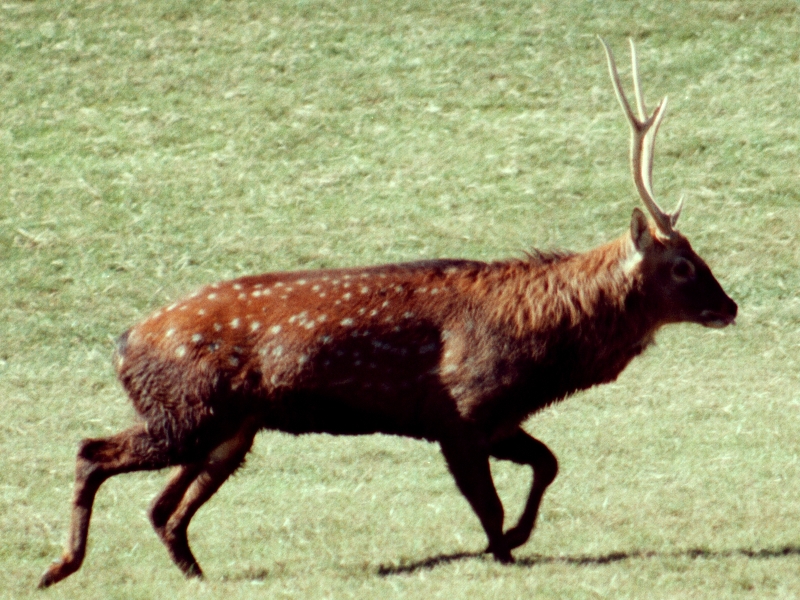


Physical characteristics and behavior
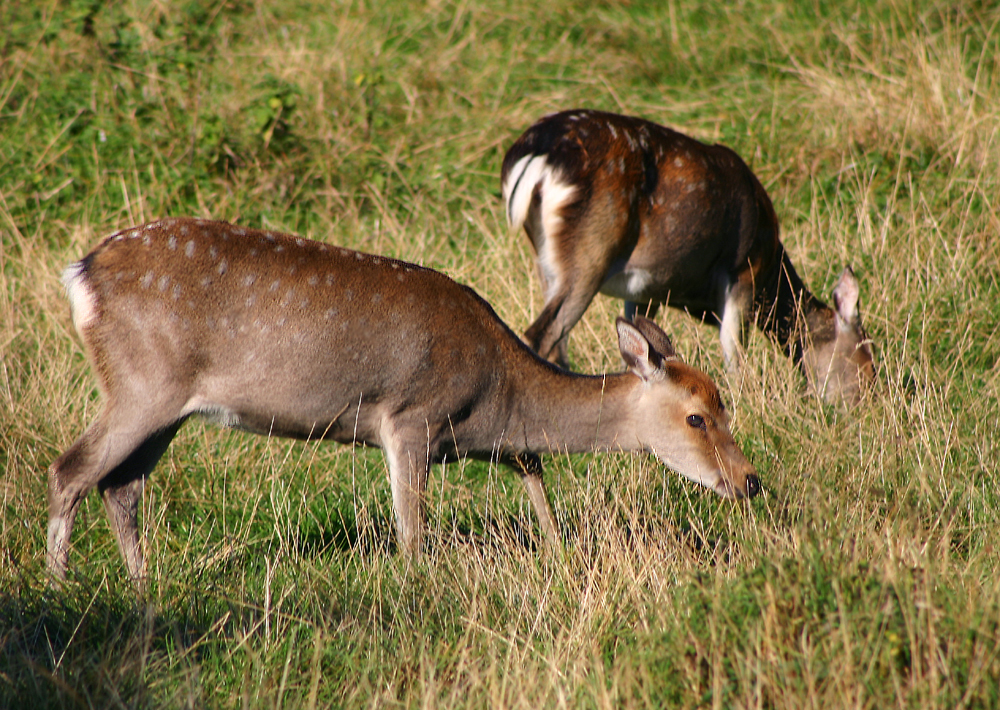
Sika deer are generally medium-sized, with males (stags) typically larger than females (hinds). Adult males grow branched antlers each year and use them during the autumn rut. Coat coloration ranges from reddish-brown with white spots to darker tones in northern populations; some island subspecies retain spots into adulthood. Sika are both browsers and grazers and are known for a distinctive repertoire of calls, from sharp whistles to high-pitched barks and loud rutting bellows.
Habitat, diet and reproduction
They inhabit mixed deciduous and evergreen forests, as well as parkland and wetlands, feeding on grasses, leaves, buds, bark and fruit. Breeding usually occurs in autumn; after a gestation of several months hinds give birth to one or occasionally two spotted fawns in spring or early summer. Young are hidden by the mother for protection in their first weeks.
Human interactions and conservation
Sika deer are culturally significant in parts of their native range—for example, free-ranging sika are a familiar feature at temples and parks in Japan. Introduced populations in Europe, North America and Oceania can become invasive, competing with native species and hybridizing with related deer such as red deer. Conservation status varies by subspecies: some populations are secure, while others are threatened by habitat loss, hunting and genetic dilution.
Notable distinctions
- Several geographically distinct subspecies with varying sizes and coat patterns.
- Capable of hybridizing with other Cervus species, which poses conservation challenges.
- Adaptable to a range of forested environments but sensitive to intensive land use changes.
For further general information on deer classification and regional ecology see resources on the family Cervidae and the fauna of East Asia.
Related articles
Author
AlegsaOnline.com Sika deer (Cervus nippon) Leandro Alegsa
URL: https://en.alegsaonline.com/art/90356
Sources
- iucnredlist.org : "Cervus nippon"
- commons.wikimedia.org : Sika Deer