
Siberian tiger (Amur tiger) — Panthera tigris tigris
The Siberian (Amur) tiger is the largest living tiger, native to the Russian Far East, parts of China and the Korean peninsula. It is endangered, with several hundred individuals remaining in the wild.
Overview
The Siberian tiger, also called the Amur tiger (Panthera tigris tigris), is the largest surviving tiger population and among the largest living cats. It is adapted to cold temperate forests and plays a vital role as an apex predator in its ecosystem. In 2017 the Cat Specialist Group revised felid taxonomy and treated mainland Asian tigers under the name P. t. tigris, a decision reflected in contemporary conservation literature.
Image gallery
10 Images




Range and habitat
Historically widespread across northeastern Asia, the modern stronghold of the Siberian tiger is the Russian Far East. Most animals occur in and around protected areas within eastern Russia, including mixed conifer and birch woodlands. Smaller, recovering populations and isolated individuals are found in northeastern China and, occasionally, near the border regions of the Korean peninsula; these areas are represented in international conservation work through cooperation with groups operating in China and the DPRK (North Korea). The subspecies prefers dense forest with plentiful ungulate prey and adequate cover for hunting, including birch and mixed broadleaf stands referenced by researchers as characteristic habitat types.
Physical characteristics
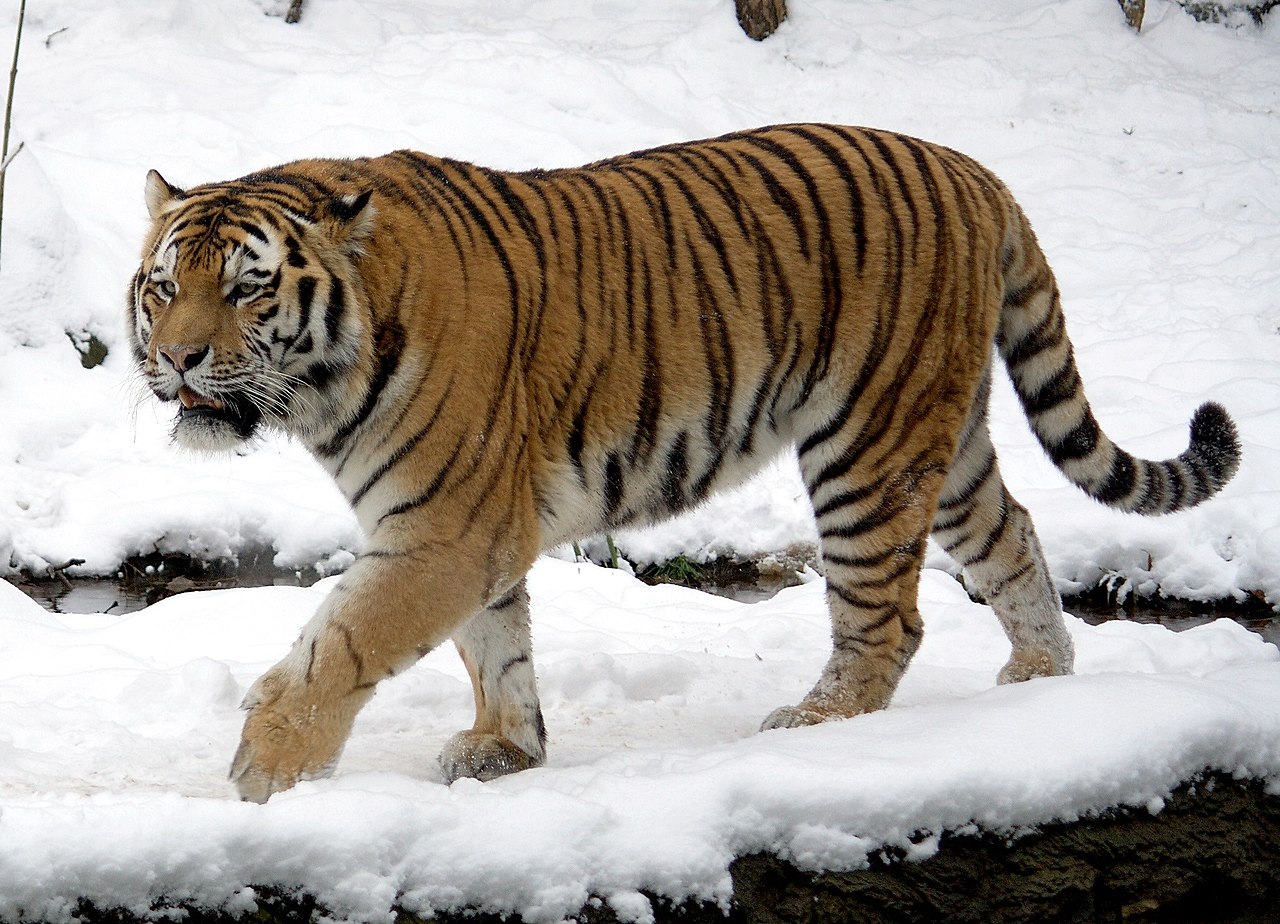
Siberian tigers have a relatively pale, thick coat and a dense underfur that insulates against harsh winters. They are robustly built with large skulls and powerful limbs suited for stalking and ambushing prey in deep snow. Males are substantially larger than females; individuals of this population are generally the largest of all tiger groups, with exceptional specimens reaching weights reported near the upper limits for tigers.
Behavior and diet
These tigers are solitary, territorial animals with large home ranges that reflect prey availability and habitat quality. Their diet consists mainly of large ungulates such as deer and wild boar, supplemented by smaller mammals when necessary. Breeding, rearing of cubs and territorial marking follow patterns typical of large solitary felids: females rear cubs alone and offspring disperse as they mature.
Threats and conservation
- Main threats: poaching for parts, illegal trade, habitat loss and fragmentation, and declines in wild prey populations.
- Conservation measures: protected reserves, anti-poaching patrols, cross-border cooperation, and monitoring through camera traps and field surveys. Captive breeding and reintroduction efforts complement in situ work.
History and notable facts
The Siberian tiger’s range and numbers were dramatically reduced during the 19th and 20th centuries by hunting and habitat conversion; sustained conservation efforts since the late 20th century have helped stabilize and slowly increase some populations. Today there are only a few hundred individuals estimated in the wild, making continued protection and international collaboration essential to preserve this flagship species and the forest ecosystems it inhabits.
Related articles
Author
AlegsaOnline.com Siberian tiger (Amur tiger) — Panthera tigris tigris Leandro Alegsa
URL: https://en.alegsaonline.com/art/90166
Sources
- iucnredlist.org : "Panthera tigris ssp. altaica"
- dx.doi.org : 10.2305/IUCN.UK.2011-2.RLTS.T15956A5333650.en
- animals.nationalgeographic.com : "Siberian Tigers, Siberian Tiger Pictures, Siberian Tiger Facts"
- theanimalspot.com : "Amur Tiger"
- aquaticcommunity.com : "Siberian Tiger Facts"