
Shen Kuo (Shěn Kuò): Song dynasty polymath and scientist
Shen Kuo (1031–1095) was a Song dynasty polymath—scientist, official and writer—best known for the Dream Pool Essays, early descriptions of the magnetic compass, and observations on geology and astronomy.
Overview
Shen Kuo (沈括, Shěn Kuò, Shen K'uo; 1031–1095) was a prominent scientist and statesman of the Northern Song dynasty. A trained administrator and a lifelong scholar, he is often described as a polymath: his interests and writings ranged across astronomy, geology, engineering, botany, mathematics and the visual arts. His most famous work is a wide-ranging collection of essays and notes generally known in English as the Dream Pool Essays.
Image gallery
10 Images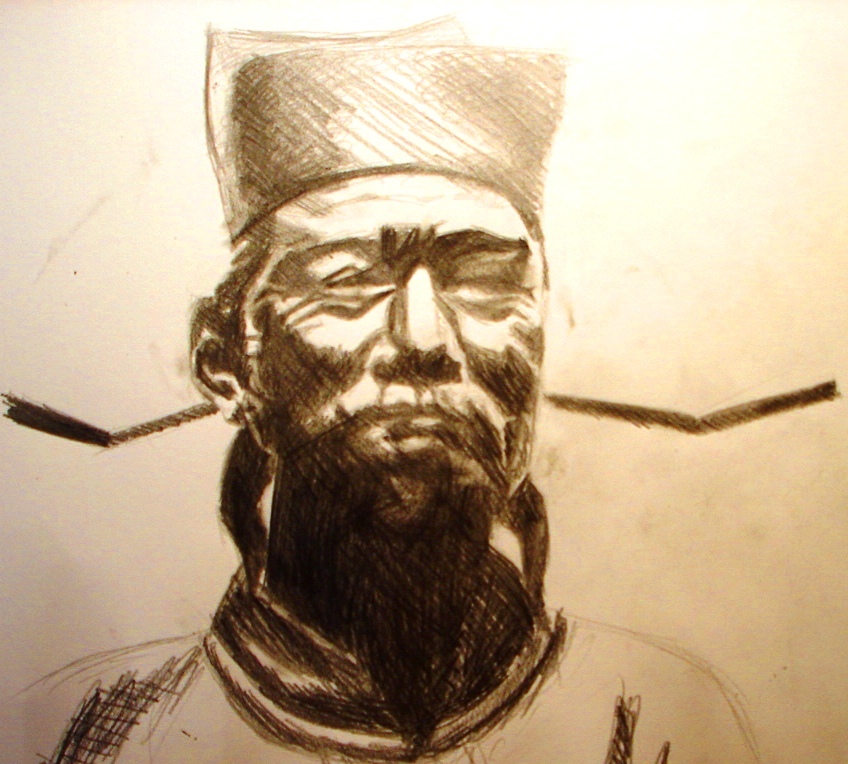




Major works and observations
The Dream Pool Essays (compiled around 1088) collects Shen's practical observations, experiments and technical descriptions. It includes the earliest surviving Chinese accounts that make the function and maritime use of the magnetic compass explicit, and it records systematic astronomical observations. Shen used instruments and recorded measurements to improve calendrical accuracy and to describe celestial phenomena, linking careful record keeping with practical administration (astronomy).
Scientific contributions
Shen Kuo offered early hypotheses about Earth's changing environment. Noting fossilized bamboo and other subtropical plants in far northern strata, he argued that climate and geography had altered over long periods, an idea that anticipated later discussions of climate change and geological transformation. He also discussed soil deposition, uplift of land, and basic stratigraphy, using field evidence to challenge purely speculative models of the natural world.
Technology, techniques and the arts
Beyond theoretical observations, Shen described technical processes—casting, mining, and printing methods of his time—and documented innovations, such as movable type already in use by contemporaries. He combined scientific curiosity with cultured pursuits: he wrote about music, practiced painting, and valued calligraphy as part of an integrated intellectual life. His notes also reflect engagement with moral and natural inquiry influenced by philosophy.
Career and legacy
As an official Shen held a variety of provincial and central government posts. His practical work in surveying, hydraulic projects and military logistics informed his scientific notes; at times political rivalries curtailed his promotions, but his writings circulated widely. Later scholars have regarded Shen as a model of empirical inquiry in medieval China and a bridge between scholarly administration and practical science.
Notable facts
- Shen's Dream Pool Essays is a miscellany mixing empirical reports, technical instructions and personal reflection.
- He provided one of the earliest detailed descriptions of a needle that aligns with the Earth's magnetic field and its application to navigation (magnetic compass).
- His geological reasoning from fossils to changing climates represents an early, cautious recognition that environments are not static (climate change).
- Shen combined administrative duties with scientific observation, exemplifying the scholar-official ideal of the Song era (polymath, statesman).
For further reading and primary-source excerpts, see collections and translations linked in modern bibliographies and academic treatments (沈括, Shěn Kuò, Shen K'uo). Contemporary discussions keep returning to his blended role as observer, inventor and cultural practitioner.
Related articles
Author
AlegsaOnline.com Shen Kuo (Shěn Kuò): Song dynasty polymath and scientist Leandro Alegsa
URL: https://en.alegsaonline.com/art/89650