
Shantungosaurus — giant Late Cretaceous hadrosaur from Shandong, China
Shantungosaurus is a very large hadrosaurid dinosaur from the Upper Cretaceous Wangshi Formation of Shandong, China, known from several incomplete skeletons and notable for its huge size and dental battery.
Overview
Shantungosaurus is a genus of very large hadrosaurid (duck-billed) dinosaur that lived during the Late Cretaceous. The type species, often referred to in literature as Shantungosaurus giganteus, was discovered in the Wangshi Formation on the Shandong Peninsula of eastern China. As a member of the broad hadrosaur group (hadrosaur), it shared many typical features of these herbivores but stood out because of its exceptional bulk and length.
Image gallery
10 Images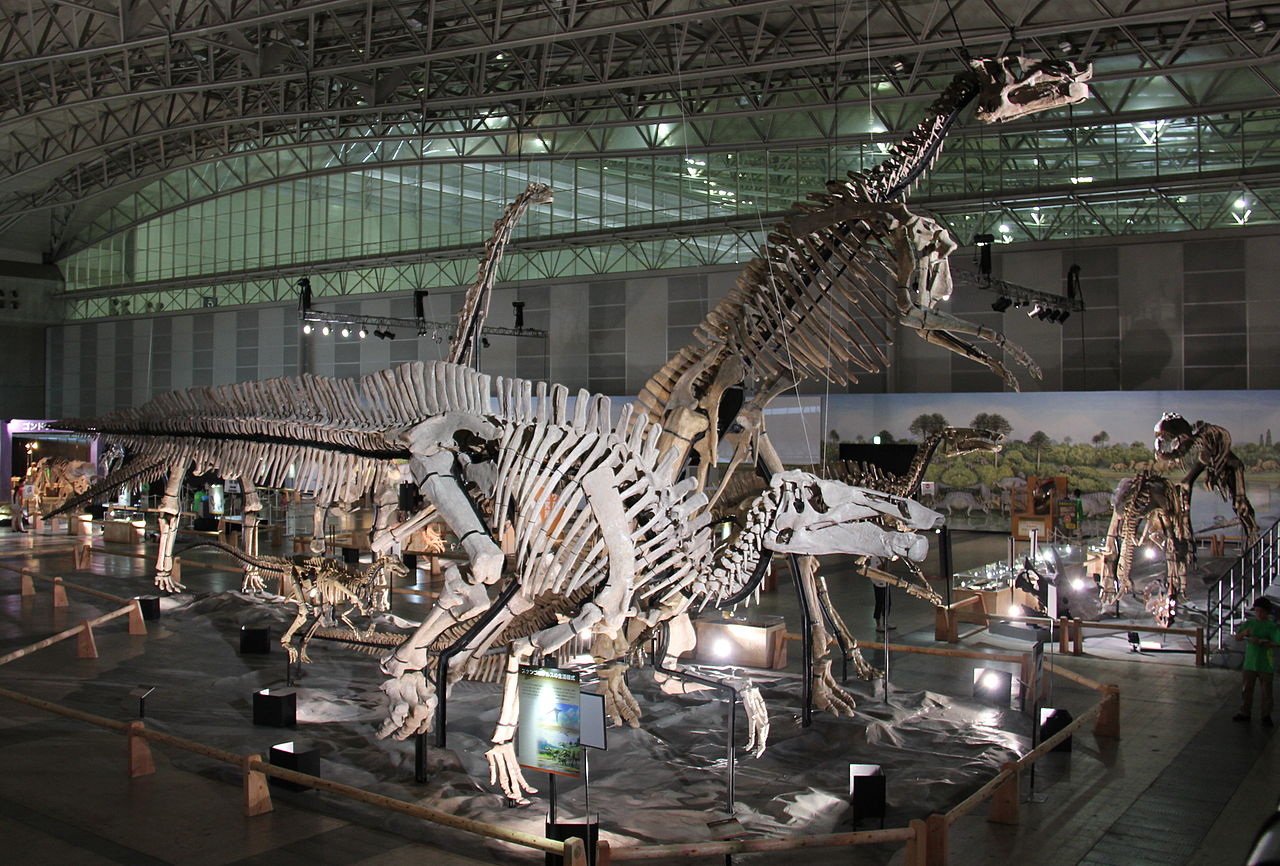



Anatomy and distinguishing features
Shantungosaurus combined classic hadrosaur traits — a toothless beak and complex chewing batteries — with proportions that made it among the largest non-sauropod dinosaurs known. The skull of the type specimen measures over 1.6 metres in length and the jaws together contained a dense array of grinding teeth, commonly estimated at roughly 1,500 dental elements across the battery. Like other hadrosaurs it had a broad, flattened beak and cheeks adapted to processing large amounts of plant material. Its tail was unusually long and robust, interpreted as a counterbalance to a massive torso centered over powerful hips.
Discovery and research history
Fossils of Shantungosaurus were first described in the early 1970s after fieldwork in the Wangshi Formation. Several incomplete skeletons have been recovered, allowing paleontologists to reconstruct body proportions more confidently than for many other hadrosaurs. A medium-sized mounted skeleton is exhibited at the Geological Institute in Beijing (Beijing), while larger composite reconstructions have been displayed elsewhere. The remains come from marine-influenced continental deposits of the Upper Cretaceous (Upper Cretaceous) and have contributed to understanding of Asian dinosaur faunas.
Paleobiology, behavior and ecology
As a herbivore, Shantungosaurus likely fed on a wide range of Cretaceous plant matter, using its extensive dental batteries to grind tough vegetation. Limb proportions indicate it could adopt both bipedal and quadrupedal postures — running or rearing on two legs and walking on all fours while foraging. Large openings near the nose region have been interpreted as evidence for soft-tissue structures; some researchers have suggested a loose flap or inflatable nasal chamber could have been present, possibly used in social signaling or sound production (nostril area).
Size estimates and significance
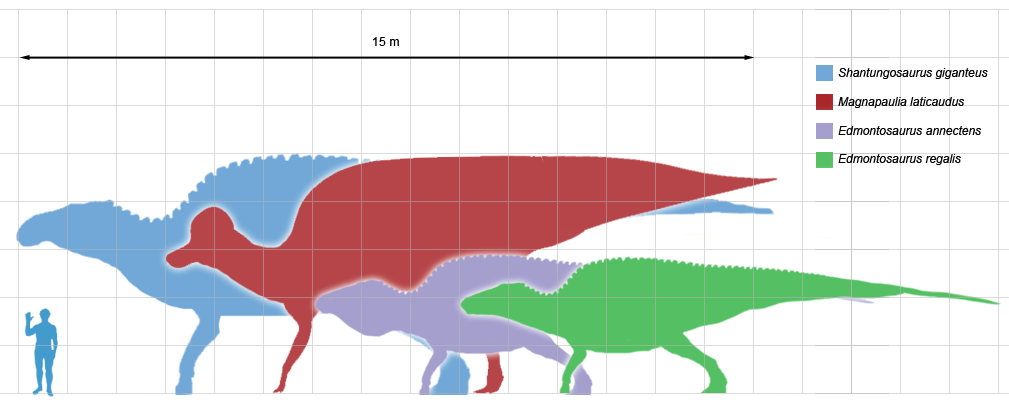
Shantungosaurus ranks among the largest known hadrosaurs and the largest ornithischian dinosaurs known from relatively complete skeletons. Museum mounts and composite reconstructions range from roughly 14.7 metres to about 17 metres in length, and weight estimates vary by research method but have placed large individuals in the multi-tonne range. Because these figures are based on incomplete material and composite mounts, they are treated cautiously in scientific discussion, yet the genus is consistently recognized as unusually large for a duck-billed dinosaur (ornithischian, non-sauropod).
Context, classification and notable facts
- Geographic and stratigraphic context: fossils come from Shandong (Shandong) in eastern China, an area that has produced many important Late Cretaceous vertebrates.
- Taxonomic placement: Shantungosaurus is placed within the family Hadrosauridae and is frequently discussed alongside other large Asian hadrosaurs in studies of evolution and biogeography.
- Specimens and display: multiple incomplete skeletons form the basis of scientific study, and mounted examples have helped popularize the animal in museums (Beijing).
- Functional anatomy: long tail for balance, extensive dental batteries for processing plants, and possible nasal soft tissues for communication are among the notable functional interpretations found in the literature.
Shantungosaurus remains an important example of extreme body size in ornithopod dinosaurs and a key taxon for understanding Late Cretaceous ecosystems in Asia. Ongoing study of additional material and refined biomechanical analyses continue to refine its life appearance, biology and precise place in hadrosaur evolution.
hadrosaur | Upper Cretaceous | Shandong | China | Beijing | ornithischian | non-sauropod | nostrils
Related articles
Author
AlegsaOnline.com Shantungosaurus — giant Late Cretaceous hadrosaur from Shandong, China Leandro Alegsa
URL: https://en.alegsaonline.com/art/89473
Sources
- doi.org : 10.1007/s10114-005-0808-x