
Sesame (Sesamum indicum): plant, seeds, uses and cultivation
Sesame is an ancient oilseed crop grown for its nutrient-rich seeds and oil. This article explains its botany, history, culinary and industrial uses, cultivation, nutrition, and health considerations.
Overview
Sesame (Sesamum indicum) is a small annual flowering plant cultivated for its edible seeds and the oil they yield. The species belongs to the genus Sesamum and typically develops as a bushy plant that often reaches about 2–3 feet in height. As a flowering plant it produces narrow leaves and tubular flowers that develop into elongated seed pods.
Image gallery
10 Images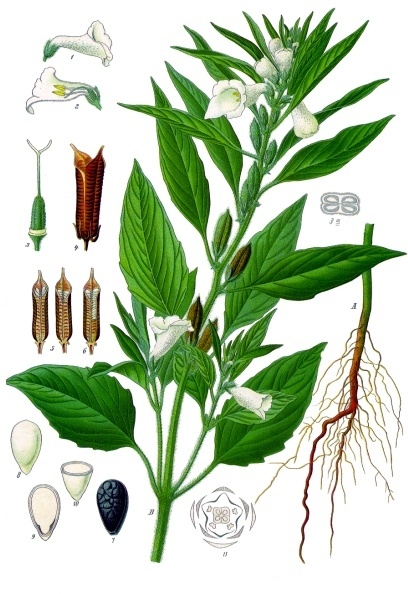


Botanical characteristics and varieties
Sesame plants bear pods (capsules) that split open when ripe to release numerous flat, oval seeds. Seed color varies by variety and processing: common types include white, tan, golden and black seeds. Some commercial forms are hulled (outer coat removed) while others are sold whole, toasted or raw. The plant is noted for its drought tolerance and ability to grow on relatively poor soils.
History and origin
Domesticated in ancient times, sesame is among the oldest oilseed crops known to humanity. It has long-standing cultivation in parts of Africa and South Asia and has been exchanged along trade routes for millennia. Historical records and archaeological finds indicate its use as both a food and an oil source in many traditional societies. For botanical context see flowering plant and more on the genus at Sesamum.
Uses and nutritional profile
- Culinary: seeds are sprinkled on breads and pastries, pressed into oil, or ground into pastes such as tahini and used in sauces and confections.
- Industrial and traditional: sesame oil is used in cooking, cosmetics and sometimes in traditional medicines.
- Nutrition: seeds are calorie-dense and provide fats (largely unsaturated), plant protein, and minerals such as calcium and iron; they also contain natural antioxidants.
Cultivation, processing and economic importance
Sesame adapts to warm climates and is often sown where seasonal rains allow seed maturation. Harvesting may be manual or mechanized; drying and careful handling are important to prevent shattering of pods and seed loss. After harvest seeds can be roasted, hulled or cold-pressed for oil. Sesame contributes to local economies in producing regions and is traded globally as a food commodity.
Health, safety and notable facts
While nutritious for many, sesame is a recognized allergen for some people and is increasingly listed on food labels in jurisdictions where it is a concern. The seeds and oil are celebrated in many cuisines and cultures, appearing in traditional sweets and rituals. As one of the world's oldest cultivated oilseeds, sesame continues to be valued for its flavor, shelf-stable oil and diverse culinary applications.
Related articles
Author
AlegsaOnline.com Sesame (Sesamum indicum): plant, seeds, uses and cultivation Leandro Alegsa
URL: https://en.alegsaonline.com/art/89142