
Silk tree (Albizia julibrissin) — description, history, uses, and ecology
Albizia julibrissin, the silk tree or mimosa, is an ornamental Asian tree with feathery bipinnate leaves and pink powder‑puff flowers. Overview of identification, range, cultivation, uses and ecological concerns.
Overview
The silk tree, Albizia julibrissin, is a small to medium deciduous tree prized for its airy canopy, fern‑like bipinnate leaves and showy pink powder‑puff flowers. Native to a broad band of Asia from eastern Iran east through China and Korea, it has been widely planted as an ornamental in temperate and subtropical regions. For a concise taxonomic summary see species entry and for information about related species consult the genus Albizia.
Image gallery
10 Images


Description and identification
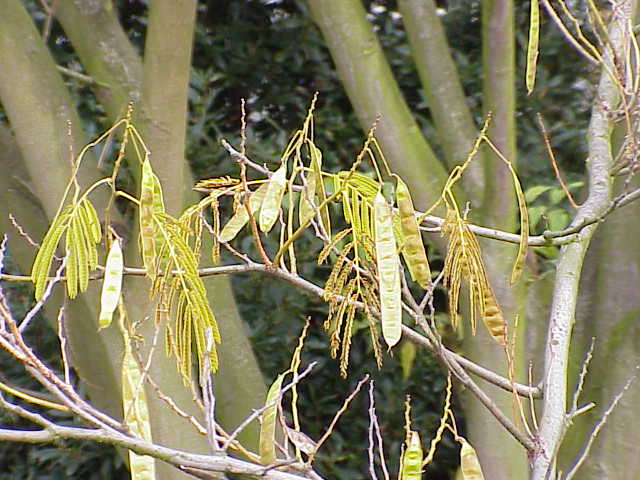
Leaves are bipinnate, composed of many small leaflets which often fold at night. Flowers appear in summer as clusters of long, filamentous stamens that give a silky, pom‑pom appearance and attract bees and hummingbirds. Fruits are flattened, dehiscent seed pods that mature in autumn. For regional morphological details see regional flora.
Native range and introduction
Albizia julibrissin is native to parts of temperate and subtropical Asia, stretching from the area of eastern Iran to China and Korea. The genus name commemorates an Italian naturalist who helped introduce species into European gardens; historical notes on introduction are summarized at introduction history and biographical background at biographical source.
Name and etymology
The specific epithet reflects a Persian phrase meaning "silk flower," referring to the silky texture of the stamens. For linguistic background and the name's origin consult name origin.
Cultivation and uses
Because it grows quickly and produces abundant flowers, the silk tree is commonly used in parks, larger gardens and along streets for quick shade and ornamental effect. It tolerates a variety of soils and periods of drought once established. Some traditional uses and ethnobotanical notes are summarized at regional uses and in broader cultural contexts at cultural notes.
Ecology and impacts
While attractive in cultivation, in some introduced regions Albizia julibrissin naturalizes and spreads into disturbed habitats. This can alter native plant communities and complicate restoration efforts. Distribution records and status reports are available at distribution reports.
Pests, diseases and management
The species is susceptible to several pests and diseases, including leaf feeders and vascular wilts that can reduce vigor and lifespan. Practical management and plant health guidance can be found at plant health notes. Where it behaves invasively, recommendations include monitoring seed set, removing seedlings, and consulting local control guidance such as distribution reports and control guidance.
Similar species and common confusion
Albizia julibrissin is often called "mimosa" in horticultural trade, but it is distinct from true Mimosa species. Both belong to the legume family and share a similar leaf form, which can lead to confusion; see genus overview for comparisons.
- Key features: bipinnate leaves, night folding leaflets, pink powder‑puff flowers, flat pods.
- Common uses: ornamental shade tree, pollinator resource, rapid establishment in landscapes.
- Concerns: can naturalize outside its native range, vulnerable to pests and disease; consult local guidance before planting.
For more detailed botanical descriptions, management recommendations and cultural history consult the linked summaries and regional resources: species entry, regional flora, distribution reports, regional uses, cultural notes, genus overview, biographical source, introduction history, name origin, and plant health notes.
Questions and answers
Q: What is a silk tree?
A: Silk tree is a species of the genus Albizia native to southeast and east Asia, from east Iran to China and Korea. It is sometimes incorrectly called Albizzia.
Q: Who introduced silk tree to Europe?
A: Italian noble Filippo del Albizzi introduced silk tree to Europe in the middle of the eighteenth century.
Q: What is the botanical name for silk tree?
A: The botanical name for silk tree is Albizia julibrissin.
Q: What is the meaning of the specific name julibrissin?
A: The specific name julibrissin is a corruption of "Gul-i Abrisham" (گل ابریشم) from Farsi language, which means "silktree," named by its flowers.
Q: What does "Gul" mean in Farsi language?
A: "Gul" (گل) means "flower" in Farsi language.
Q: What does "Abrisham" mean in Farsi language?
A: "Abrisham" (ابریشم) means "silk" in Farsi language.
Q: From which countries is silk tree native?
A: Silk tree is native to southeast and east Asia, from east Iran to China and Korea.
Related articles
Author
AlegsaOnline.com Silk tree (Albizia julibrissin) — description, history, uses, and ecology Leandro Alegsa
URL: https://en.alegsaonline.com/art/90414