
Dopamine: roles, synthesis, clinical importance, and behavioral effects
Dopamine is a catecholamine neurotransmitter involved in movement, motivation, reward, learning and several medical disorders such as Parkinson's disease, ADHD and addiction.
Overview
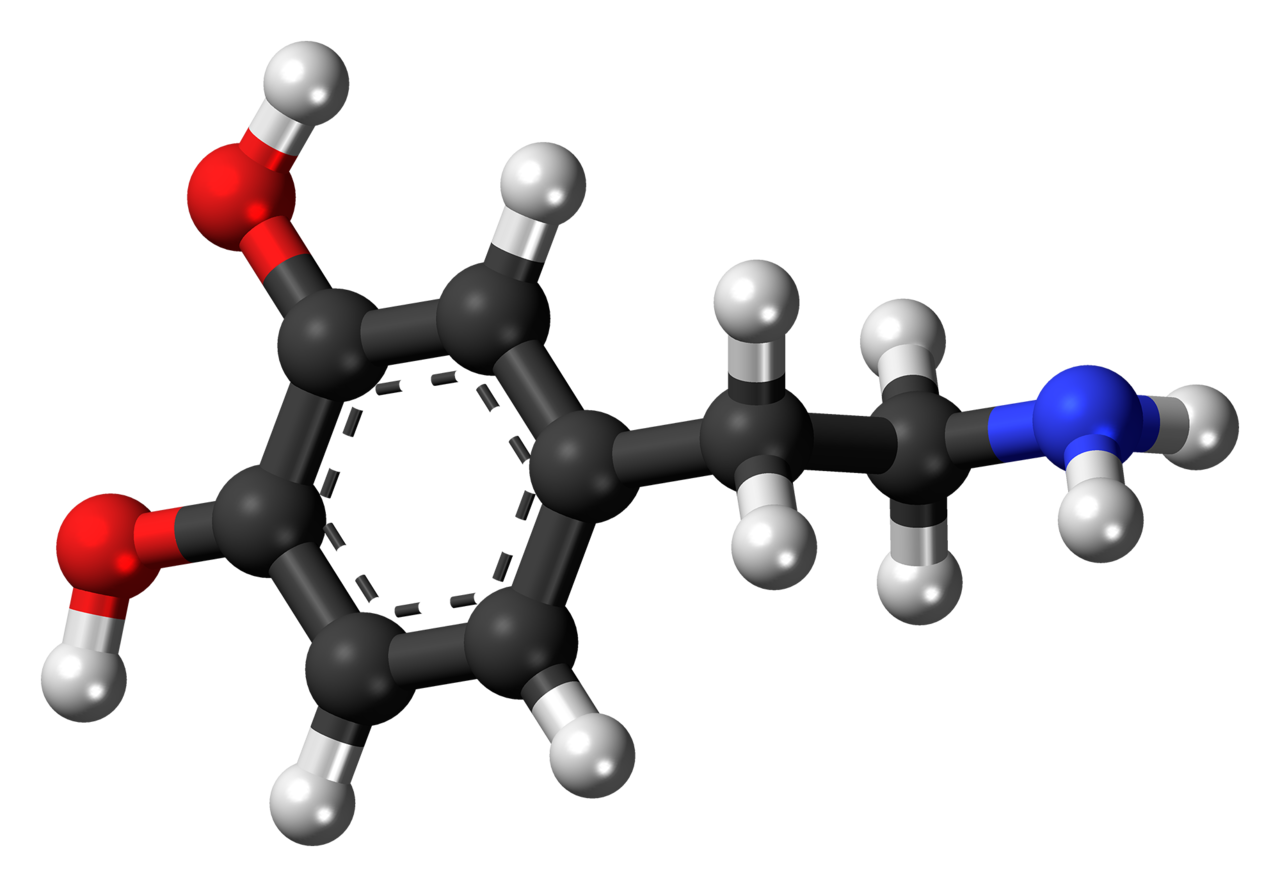
Dopamine is a chemical messenger found in the central and peripheral nervous systems. As a neurotransmitter, it helps nerve cells communicate and influences a wide range of physiological and psychological processes. Dopamine is present across many species — from invertebrates to mammals — and contributes to basic functions in both animals and humans. It is commonly associated with feelings of reward, but its roles are broader and include controlling movement, regulating hormone release, and shaping learning and decision-making.
Image gallery
5 Images


Synthesis, receptors and pathways
Dopamine is synthesized in neurons from the amino acid tyrosine through an intermediate called L-DOPA; this step is central to medical treatments for dopamine deficiency. Dopaminergic neurons are concentrated in brain regions such as the substantia nigra and the ventral tegmental area, and they project to many targets. Dopamine acts on several receptor subtypes (commonly labelled D1–D5) that have different effects on neuronal activity. After release, dopamine is cleared by reuptake into cells and enzymatic breakdown, processes that shape how long its signals last.
Primary functions
Dopamine contributes to multiple, partly overlapping brain functions. These include:
- Motor control — enabling coordinated voluntary movement and posture.
- Reward and motivation — signaling outcomes that are better or worse than expected, which helps guide learning and goal-directed behavior.
- Cognitive processes — affecting attention, working memory and flexibility in thinking.
- Endocrine regulation — modulating hormones such as prolactin in the pituitary gland.
These roles arise from different dopaminergic circuits rather than a single uniform effect; for example, the pathways that influence movement are distinct from those that mediate reward.
Clinical significance and disorders
A shortage of dopamine in motor pathways is a hallmark of Parkinson's disease, producing tremor, stiffness and slowness of movement; treatment often includes the precursor L-Dopa to raise brain dopamine levels. Alterations in dopamine signaling are also implicated in neurodevelopmental and psychiatric conditions such as ADHD and aspects of schizophrenia, though these disorders are complex and involve many other systems. Dopamine’s role in reward circuitry links it to substance use disorders and compulsive behaviors.
Pharmacology, drugs and behaviour
Many medications and recreational drugs change dopamine function. Stimulants increase dopaminergic signaling and are used medically for conditions like ADHD but can also produce dependence. Substances such as cocaine and amphetamines directly affect dopamine reuptake or release; nicotine and other drugs modulate dopamine indirectly. Experimental and clinical studies use biochemical and imaging approaches to study how these agents alter dopamine transmission and behavior.
Distinctions and further notes
It is important to avoid simplistic statements that dopamine is merely a "pleasure chemical." Its contribution to reward is more about learning, motivation and prediction than raw hedonic feeling. Research continues to refine how dopamine interacts with other neurotransmitters and hormones to shape complex behaviour. For introductory definitions and broader context see summaries on basic signal transmission, the role of the brain in neuromodulation, and clinical discussions of Parkinson's disease. For further reading, consult specialized reviews and trustworthy educational resources listed by professional medical and neuroscience organizations.
Related articles
Author
AlegsaOnline.com Dopamine: roles, synthesis, clinical importance, and behavioral effects Leandro Alegsa
URL: https://en.alegsaonline.com/art/28518