
Savannah monitor (Varanus exanthematicus)
A medium-sized African monitor lizard, the savannah monitor (Varanus exanthematicus) is ground-dwelling, burrow-building and feeds mainly on hard-shelled invertebrates; commonly kept in captivity.
Savannah monitor refers to Varanus exanthematicus, a medium-sized monitor lizard native to sub-Saharan Africa. Often called Bosc's monitor in the pet trade, it is recognized for a robust body, a blunt snout and a generally terrestrial lifestyle. The species belongs to the genus Varanus, which includes many other monitor lizards such as the larger Nile monitor; for a general overview of monitor lizards see monitor lizards.
Image gallery
5 Images


Distribution and habitat
The savannah monitor ranges widely across tropical Africa. Its distribution is concentrated in the broad belt of sub-Saharan savannah and open woodland: from the western Sahel and coastal West Africa through inland regions and eastward into Sudan. Typical range references include regional summaries and maps such as range maps and broader regional treatments for sub-Saharan Africa and specific countries like Senegal and Sudan. Populations extend southward toward central river basins near the Congo and the Great Rift Valley in places where habitat remains suitable.
Appearance and behavior
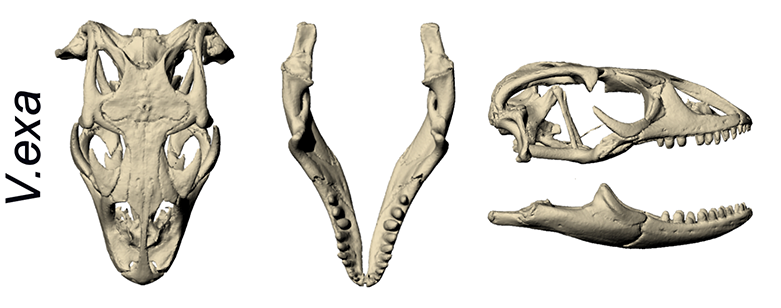
Savannah monitors have a stout build, strong jaws adapted to crush prey, short limbs relative to some arboreal monitors and a thick tail. Their coloration tends toward sandy, tan or brown tones with darker spots or bands, providing camouflage in dry grass and scrub. They are primarily ground-dwelling and make extensive use of burrows for shelter and nesting; their terrestrial habits are well documented in field notes and natural history accounts (ground-dwelling).
Diet and ecology
Diet studies from parts of West Africa show a strong preference for hard-bodied invertebrates. Typical food items include:
- arthropods — large insects, beetles and their larvae
- molluscs — snails and other shelled prey
- occasional small vertebrates, eggs and carrion
Research from countries such as Senegal and Ghana indicates that molluscs and arthropods make up the bulk of wild diets. Field observations and stomach-content analyses cited in ecological summaries support this picture (arthropods, molluscs).
Reproduction, human interactions and conservation
Savannah monitors are oviparous, laying clutches of eggs in burrows or sheltered nests where the developing young benefit from stable temperatures and humidity. They are popular in the international pet trade because of their manageable size and generally calm temperament compared with larger monitors; captive care guides and trade reports discuss husbandry and welfare considerations (pet care, regional trade). While not among the most threatened reptiles globally, local population declines can occur from habitat loss and over-collection, so monitoring and sustainable management are important.
Notable distinctions
Compared with some related species, the savannah monitor is less arboreal and more robustly built than the Nile monitor. Its diet specialization on hard-shelled invertebrates and its burrowing habits help distinguish it ecologically from more aquatic or tree-dwelling monitors. For further species-level details and identification keys consult regional herpetological resources and field guides (Africa, West Africa).
Questions and answers
Q: What is a Savannah monitor?
A: A Savannah monitor, also known as Bosc's monitor, is a medium-sized monitor lizard from Africa.
Q: What is the scientific name of the Savannah monitor?
A: The scientific name of the Savannah monitor is Varanus exanthematicus.
Q: Where is the range of the Savannah monitor?
A: The range of the Savannah monitor extends throughout sub-Saharan Africa, from Senegal east to Sudan and south almost to the Congo River and Great Rift Valley.
Q: Where do Savannah monitors stay?
A: Savannah monitors are ground-dwelling species that shelter in burrows, although they can sometimes be found in bushes or low trees.
Q: What is the diet of Savannah monitors?
A: Savannah monitors feed almost exclusively on arthropods and molluscs.
Q: Where has information about the diet of Savannah monitors been recorded?
A: Information about the diet of Savannah monitors in the wild has been recorded in Senegal and Ghana.
Q: Can Savannah monitors be found in areas other than sub-Saharan Africa?
A: No, Savannah monitors are only found in sub-Saharan Africa.
Related articles
Author
AlegsaOnline.com Savannah monitor (Varanus exanthematicus) Leandro Alegsa
URL: https://en.alegsaonline.com/art/87609