
Sawfly (suborder Symphyta) — plant-feeding hymenopterans
Sawflies are plant-eating insects in the suborder Symphyta of Hymenoptera. They have broad waists, caterpillar-like larvae and a saw-like ovipositor; some species can defoliate trees and crops.
Overview
Sawflies are a group of mostly herbivorous insects classified within the suborder Symphyta of the order Hymenoptera. Unlike the more familiar ants, bees and wasps, sawflies retain a broad junction between thorax and abdomen rather than the narrow "wasp waist" typical of many other hymenopterans. The common name refers to the saw-like cutting organ used by females to open plant tissue and insert their eggs.
Image gallery
10 Images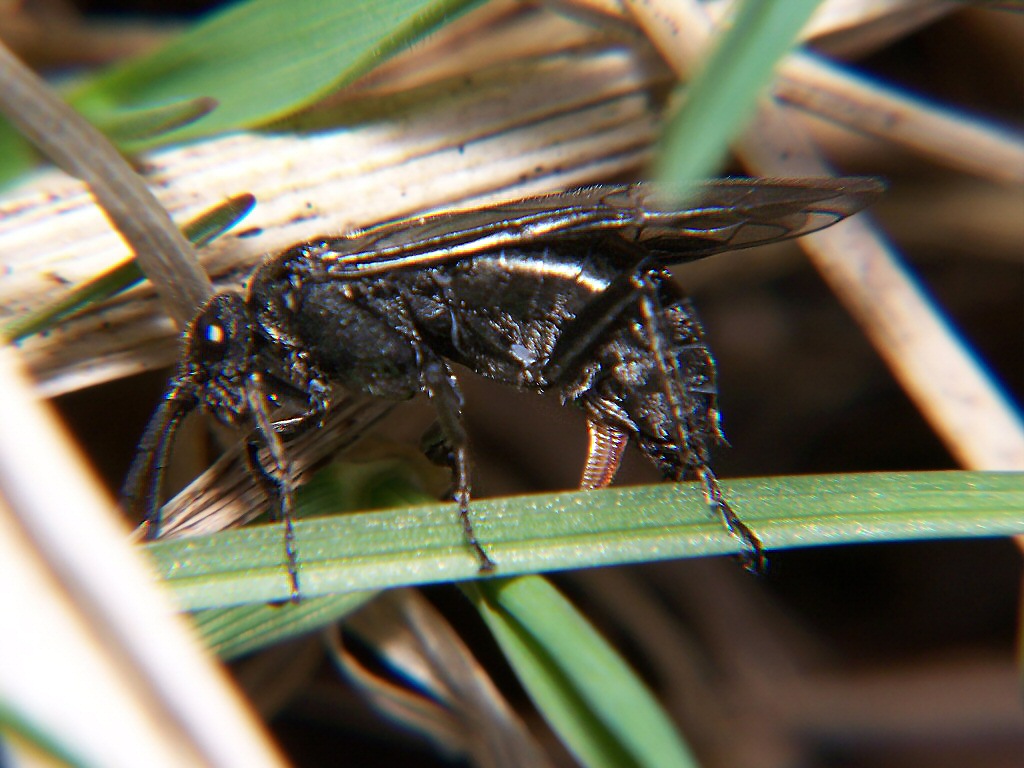
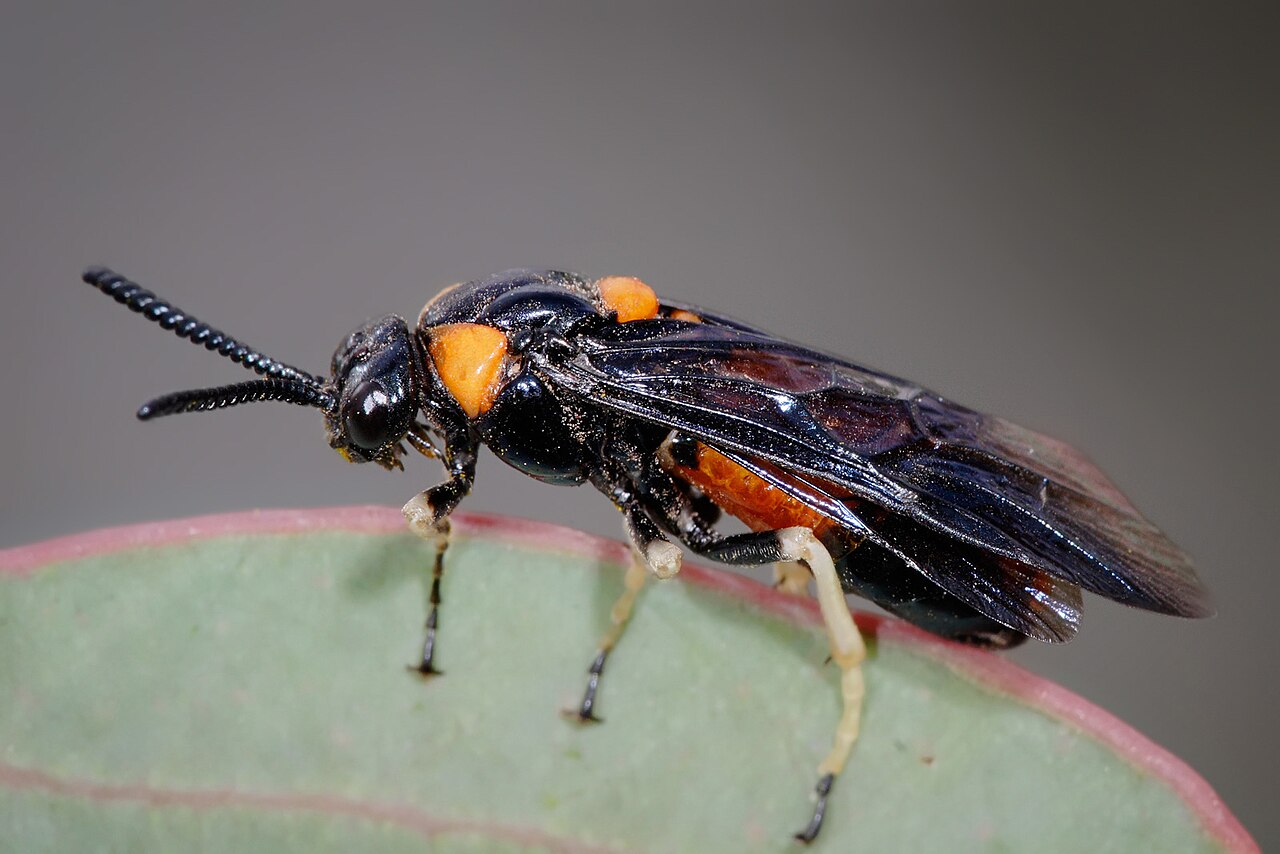


Physical characteristics
Sawflies vary in size and colour but share several distinctive features. Adults typically have two pairs of membranous wings and antennae of varying forms. The females possess an ovipositor that is serrated or blade-like, which gives the group its name and permits eggs to be placed within stems, leaves or needles. Their larvae often resemble caterpillars (the immature stage of moths and butterflies) but can be distinguished by having more prolegs and by details of head structure and leg arrangement.
Lifecycle and behaviour
Life cycles commonly include egg, larval, pupal and adult stages. Eggs are deposited into plant tissue using the saw-like ovipositor; after hatching, larvae feed externally on leaves, needles or other plant parts. Many species complete development in one season, with pupation occurring in soil, leaf litter or within plant material. Some sawflies can produce several generations per year depending on climate and host plant availability. Natural enemies include birds, predatory insects and parasitic wasps.
Diversity and classification
The Symphyta are conventionally treated as several superfamilies and multiple families; the superfamily Tenthredinoidea contains most described species. Globally there are several thousand described sawfly species — commonly cited totals are around 7,000 species, with the family Tenthredinidae accounting for a large share. Fossil records and an extinct superfamily also document an evolutionary history that spans tens of millions of years. For identification and taxonomic information see specialist literature and regional keys.
Ecology and economic importance
As plant feeders, sawflies play roles in food webs and plant population dynamics. Some species are minor herbivores with little economic impact, while others may occur in outbreaks that cause significant defoliation of trees, shrubs or crops. Notable situations include sawfly damage to conifers, fruit trees and ornamental plants where larval feeding reduces growth or aesthetic value. Outbreaks can be controlled by manual removal, biological control agents and, where necessary, targeted insecticides. For forestry and agricultural management resources consult regional guidance and pest management services (further reading).
Identification tips and notable distinctions
Key traits that help distinguish sawflies from similar insects include the broad connection between thorax and abdomen, the saw-like ovipositor in females and the larval body plan. To help remember differences, see the short lists below.
- Sawfly adults: two pairs of wings, broad waist, serrated ovipositor (more on anatomy).
- Sawfly larvae: caterpillar-like but with more than five pairs of prolegs and no crochets; feed openly on plants (larval features).
- Distinctions: not moth caterpillars; not narrow-waisted wasps—see comparative guides (comparison).
Examples and resources
Common genera and species differ by region; some genera are frequently encountered in gardens and forests. For identification keys, distribution data and management advice consult entomological guides and regional databases (identification resources, management and impact). Sawflies are a diverse and ecologically significant component of many terrestrial ecosystems, and understanding their biology helps in both conservation and pest management contexts.
Questions and answers
Q: What is a sawfly?
A: A sawfly is an insect in the suborder Symphyta of the order Hymenoptera that largely feeds on plants.
Q: How are sawflies different from other Hymenoptera?
A: Sawflies differ from most other Hymenoptera by their broad connection between the abdomen and the thorax and their caterpillar-like larvae.
Q: Why are they called sawflies?
A: They are called sawflies because of the saw-like appearance of the ovipositor that females use to cut into plants where they lay their eggs.
Q: What is the Tenthredinoidea superfamily?
A: The Tenthredinoidea superfamily is the largest superfamily of sawflies with approximately 7,000 species worldwide belonging to six families.
Q: Can sawflies damage forests and plants?
A: Yes, large populations of certain sawfly species may cause economic damage to forests and cultivated plants.
Q: How many superfamilies of Symphyta are currently treated?
A: As of 2013, Symphyta are treated as nine superfamilies (one extinct) and 25 families.
Q: Which family in Tenthredinoidea is the largest?
A: Tenthredinidae is the largest family in the Tenthredinoidea superfamily with some 5,500 species.
Related articles
Author
AlegsaOnline.com Sawfly (suborder Symphyta) — plant-feeding hymenopterans Leandro Alegsa
URL: https://en.alegsaonline.com/art/87673
Sources
- biotaxa.org : "Order Hymenoptera In: Zhang Z.-Q. (ed) Animal biodiversity: an outline of higher-level classification and survey of taxonomic richness"
- doi.org : 10.11646/zootaxa.3703.1.12