
Sarabande: Baroque dance and musical movement
A sarabande is a slow, stately dance in triple meter that became a standard movement in Baroque suites and later inspired composers into the 20th century.
Overview
The sarabande is a slow dance in simple triple meter that became a prominent instrumental movement during the Baroque era. Often written for keyboard or small ensembles, the sarabande is valued for its solemn character and expressive weight. The Italian spelling sarabanda and other historical names reflect its spread across Europe. For a general sense of its dance origins see dance and its connection to the broader Baroque style in Baroque music.
Image gallery
2 Images
Musical characteristics
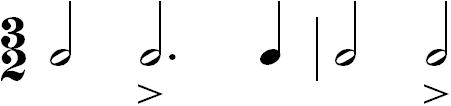
Musically, a sarabande typically appears in a slow 3/4 or simple triple pulse (triple meter) with a distinctive emphasis on the second beat of the bar. Performers and editors often describe the first beat as shortened or lightly articulated so that beat two takes on a gentle accent, producing a dignified, lingering effect. Sarabandes in Baroque suites usually follow a binary form (binary), with two repeated sections that balance contrast and return.
Placement in the suite and related dances
The sarabande commonly appears as one movement within the sequence of dances that make up a Baroque suite. A typical order found in many collections places an Allemande, a Courante, the Sarabande itself, and a Gigue. Composers sometimes inserted additional dances, such as Bourrées or minuets, between or around these core movements. Collections and suites are discussed under suite literature.
Origins and historical development
The sarabande traces its roots back to the Spanish-speaking world and the Americas, where forms called "zarabanda" and related popular dances circulated in the 16th and 17th centuries; some sources point to Central American origins and Iberian popular culture (Central America). It reached France, England and Italy and was transformed from a livelier folk or street dance into a slower, courtly instrumental movement during the 17th century (17th century) and the early 18th century (early 18th century). Important early adopters included keyboard and ensemble composers who integrated the sarabande into the standard suite model.
Uses, influence and notable composers
Throughout the Baroque period many composers wrote sarabandes for harpsichord, lute, and chamber groups. Famous practitioners and influences include Claudio Monteverdi and Arcangelo Corelli, among others. The sarabande persisted beyond the Baroque: composers in the 20th century fashioned slow, reflective movements labeled "Sarabande," including works by Debussy, Satie, Herbert Howells, and Benjamin Britten. A related and widely used theme known as La Folia (sometimes called La folie espagnole) provided a harmonic pattern and melody that many composers varied and referenced across eras.
Notable features and listening tips
- Tempo and mood: slow, grave, and stately—listen for sustained, expressive lines.
- Meter and accent: triple meter with an emphasized second beat (3/4 feel).
- Form and ornament: commonly binary with repeats; performers often add Baroque ornamentation and subtle rubato.
- Context: usually situated in a suite after an Allemande and Courante, before a Gigue; see references on suite structure.
For further reading on period sources, dance practice, and modern interpretations, consult specialist studies and scored editions that treat tempo, articulation, and the characteristic emphasis on the second beat. Historical examples and modern arrangements reveal how the sarabande moved from popular roots to a refined, introspective art-music form cherished by composers and listeners alike.
Related topics: Italian sarabanda, dance forms, and the evolution of the Baroque suite provide broader context for understanding this movement's role in Western art music.
Additional resources and editions can be sought through music libraries and critical editions that document variants and ornamentation practices associated with the sarabande tradition.
Related articles
Author
AlegsaOnline.com Sarabande: Baroque dance and musical movement Leandro Alegsa
URL: https://en.alegsaonline.com/art/87289